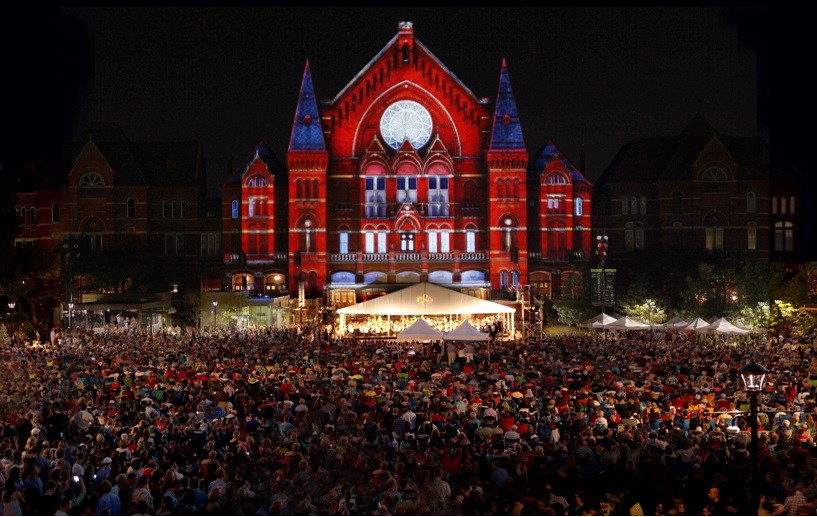
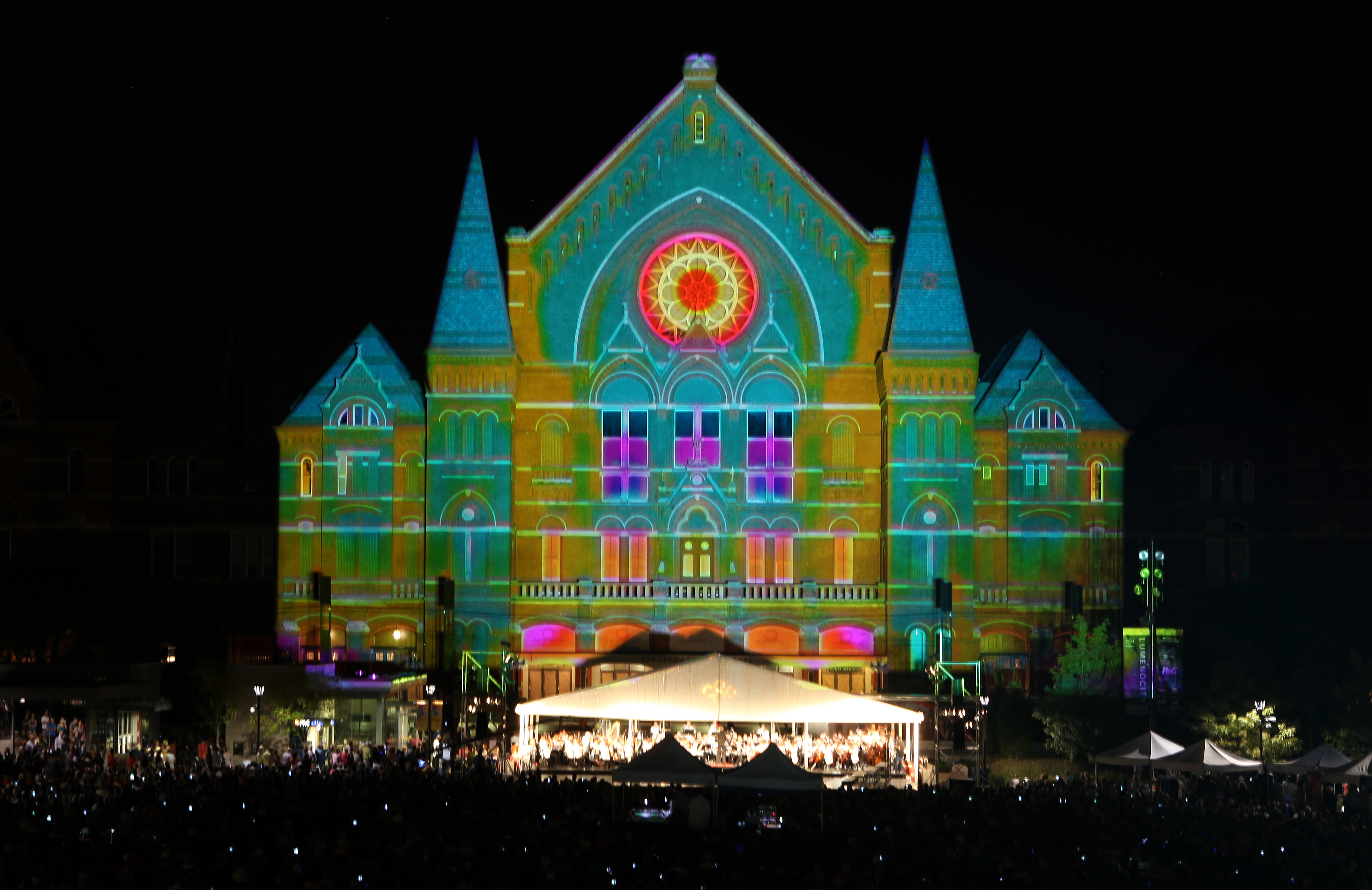
To me, it was Lumenocity — even the name has instant recognition, at least locally. Who knew, in its second year, that free tickets would all be gone within 12 seconds?
At least 42,500 people flocked to three performances and a dress rehearsal of the orchestral light show. About 50,000 TV households tuned in to the live simulcast on TV. Hundreds more watched from rooftops and streets surrounding Washington Park. Another 1,300 saw live feeds to Fountain Square and Riverbend. Online, more than 6,000 logged on to watch a live video stream from as far away as Russia and Sweden.
Over the years, I’ve met and admired many movers and shakers in the arts. For some, I have been privileged to sum up their contributions in “Lives Remembered” stories.
Erich Kunzel, founder of the Cincinnati Pops
Erich Kunzel redefined pops music in America and put Cincinnati on the international map. This story that ran online shortly after he died and on Page 1 the next day was discussed on the air during the Reds game.
Louise Dieterle Nippert singlehandedly saved the symphony with her unprecedented generosity. Read about her here.
I’ve always loved art museums, starting with going to the DeYoung Museum in San Francisco growing up, and continuing with more in-depth appreciation while I studied in Vienna, Austria during college. Here are some favorite stories that I’ve covered for The Enquirer.
Cincinnati Art Museum buys first O’Keeffe: Suspense, tension, heart-stopping timing and finally jubilation – not emotions usually associated with putting art on the walls of Cincinnati Art Museum.
But for curator Julie Aronson, who in May won a bid for a stunning landscape painting by American artist Georgia O’Keeffe, the auction with Christie’s in New York was exciting but harrowing. Read the full story and watch a video interview with the curator here. (photo: O’Keeffe’s My Back Yard, 1943)
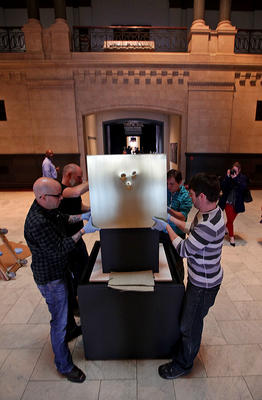
The artist installing his work, “Crown,” at Cincinnati Art Museum. Photo by The Enquirer/Glenn Hartong
“Cincinnati Art Museum’s ‘Crown’ exhibit under fire” offered a chance for readers to weigh in with two ProConIts at the story’s end. It reignited debate on guns, art and whether “Crown” was too edgy for Cincinnati’s venerable museum. Some people believed it should not be opening at all.
On an October day in 2012 when the museum was closed, an unprecedented art event by conceptual artist Todd Pavlisko took place. As a Navy SEAL sniper took aim from his perch near the front lobby, a forest of video and still cameras documented bullets whizzing through the center gallery and into a cube mounted in Great Hall.
Result: The show opened, but the videos were turned off during visits by school children.
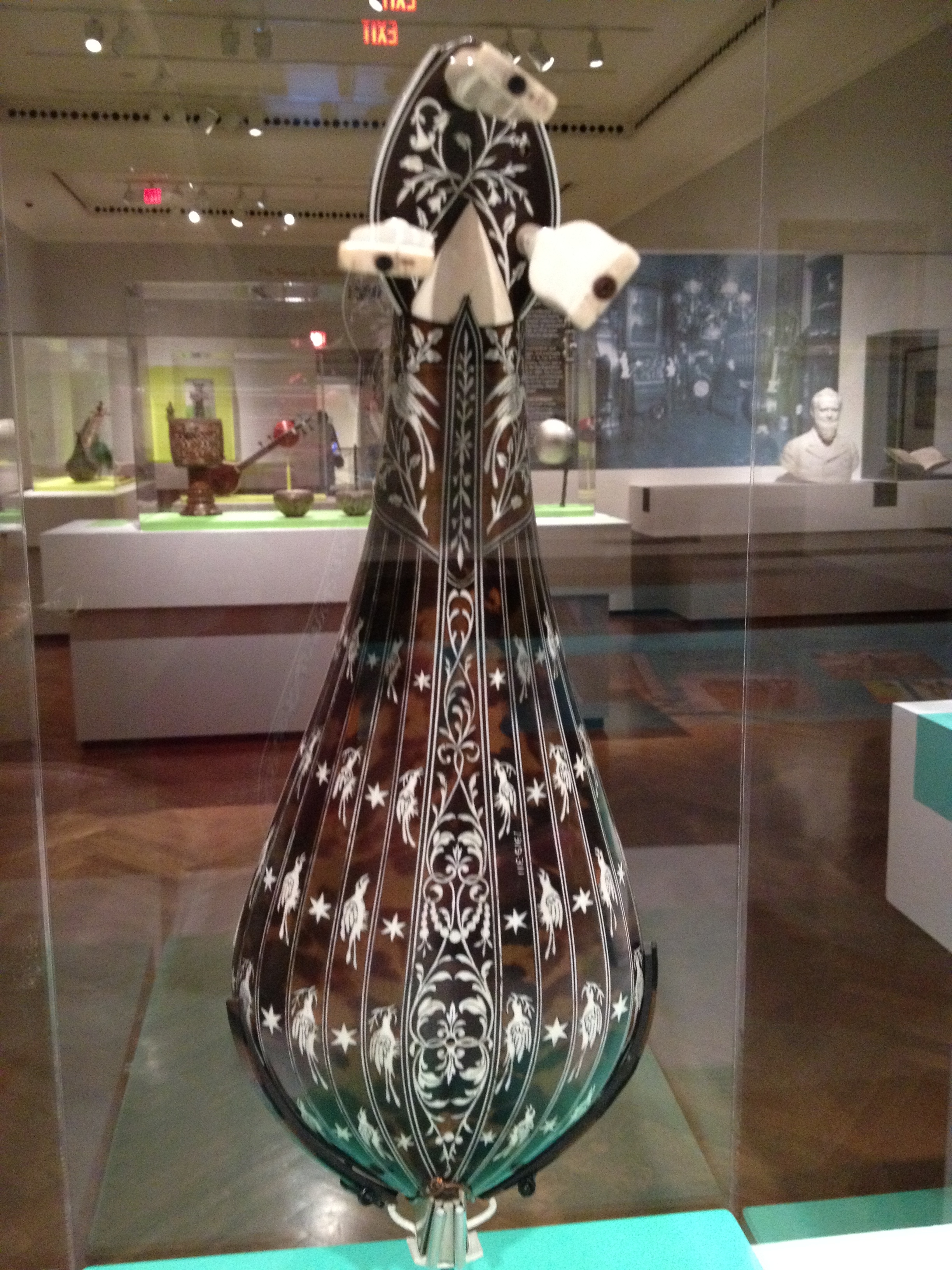
Iranian lute
Cincinnati’s magnum opus: It was a secret known to few Cincinnatians and to virtually no one outside of the Cincinnati Art Museum. For decades, a spectacular trove of more than 800 antique musical instruments languished – untouched, neglected and forgotten – in storage throughout the museum’s meandering undercroft.
The discovery means that Cincinnati could possess one of the most important collections of non-Western musical instruments in the United States. The collection spans four centuries and represents the cultures of more than 20 countries on four continents. It has drawn the attention of musical instrument specialists and curators in top museums across the nation.
“I was shocked,” said Charles Rudig, a Cincinnati native, antique instrument expert and former head of musical instruments for Sotheby’s Auction House. He has been hired by the museum as a consultant to help evaluate and catalog the instruments.
“They’ve got a fabulous world music collection. It’s wonderful. It’s big. And it’s very similar to the Metropolitan Museum (New York) collection.”
About 650 of the instruments were donated to the museum around the turn of the century by a single collector, a wealthy Cincinnati industrialist named William Howard Doane. Many of them are so-called “world music” instruments. Doane traveled the world and snapped up African drums, exotic stringed instruments, keyboards and mallet instruments.
With the public’s insatiable interest in world music and global cultures today, the rare find is perfect timing.
Note: This important story turned into an exhibition of these amazing world music instruments during the 2012 World Choir Games
Looking back, it’s hard to believe that the World Choir Games was just two years ago in Cincinnati. Here’s my final column summing up two astounding weeks of song.
“For nearly two weeks, Cincinnati was a world stage. Just the sheer quantity of 15,000 participants in 364 international choirs performing in our Downtown venues, walking the streets together, chatting in a melting pot of languages – and sometimes breaking into song – was unexpected and fun.”