
Last weekend, the Music Critics Association of North America held its annual meeting in Atlanta, GA, with host partners the Atlanta Symphony Orchestra, Atlanta Opera and the Alliance Theatre. The stars aligned so that we were able to see performances by each organization. (Stay tuned for further impressions about each.) In addition, there were some wonderful exhibitions at the High Museum of Art. You may not think of Atlanta as being especially arts-centric. But I was impressed by the high-caliber performances, the strong donor support and the diverse audiences, all illustrating how important the arts have become in this Southern city.
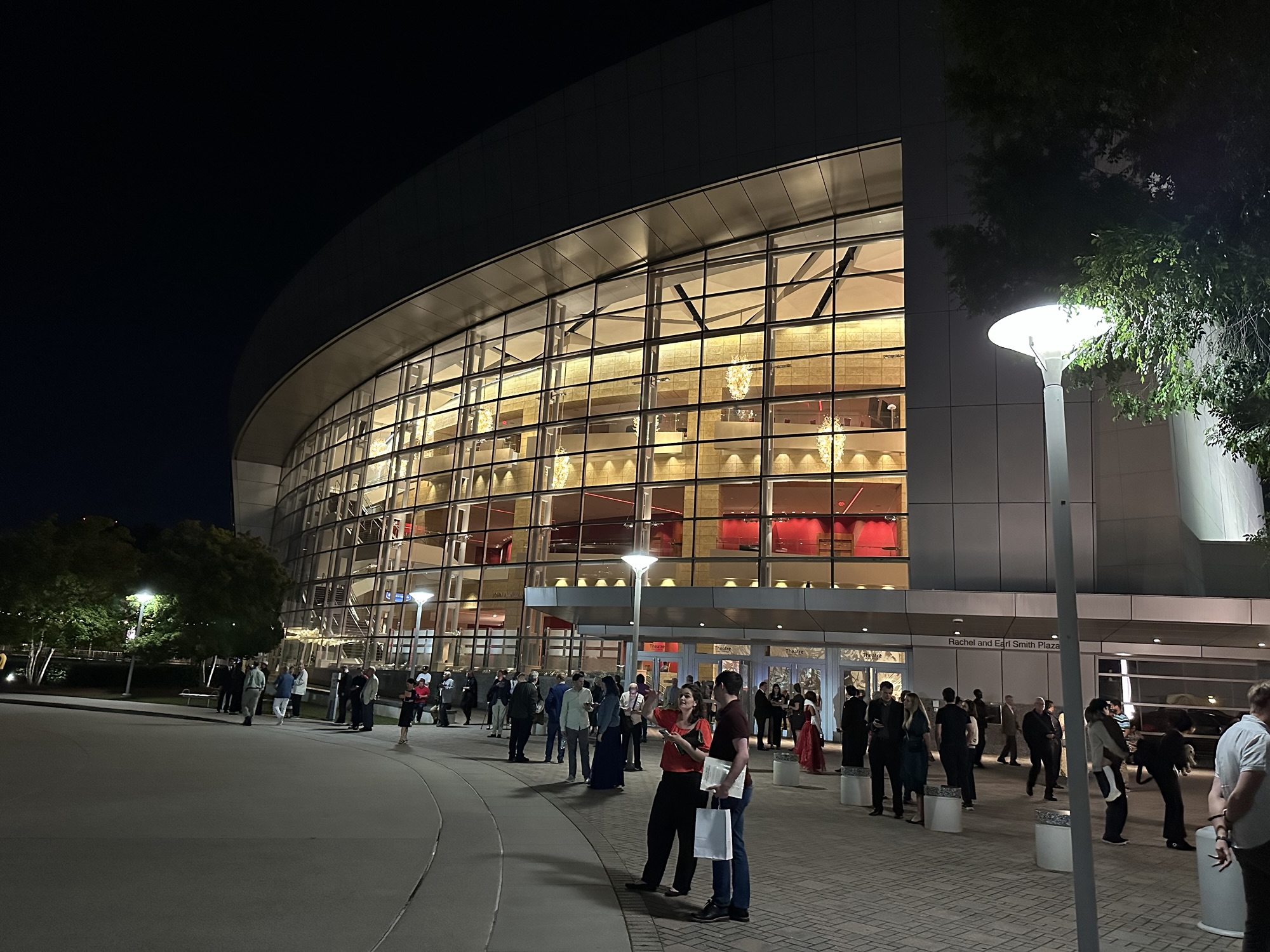
One of the most striking examples of this is the Atlanta Opera, under the leadership of Israeli-born General and Artistic Director Tomer Zvulun for the past 13 years. (Cincinnati Opera audiences have seen two operas with Zvulun’s staging in recent years: last year’s “Rigoletto” and Wagner’s “The Flying Dutchman” in 2018.) He spoke to our group before we trekked to the Cobb Energy Performing Arts Centre, the company’s home about 10 miles from Midtown Atlanta.
The current “Ring” Cycle — Wagner’s epic masterpiece of four operas, “Das Rheingold,” “Die Walküre,” “Siegfried” and “Götterdämmerung” — was staged, one by one, starting in 2023. The completion of “Götterdämmerung” — “Twilight of the Gods” — marked the American Southeast’s first fully staged production of the “Ring.”
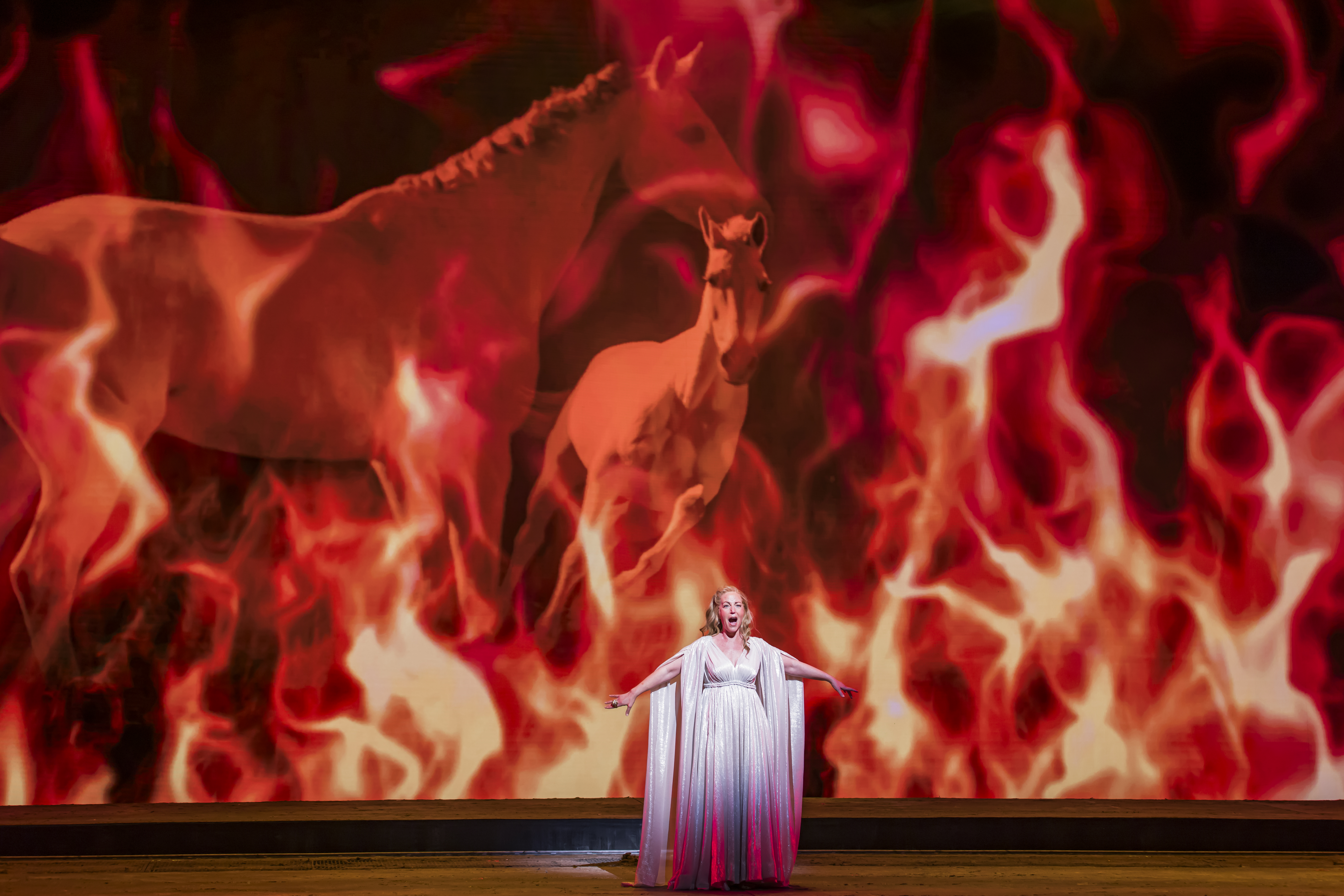
Zvulun dedicated the work to his mentor, the late Speight Jenkins, who, as general director of Seattle Opera, mounted three “Ring” cycles. Zvulun has used technology to keep down costs. His productions have benefited from an 80 foot by 40 foot LED wall. The overall concept as well as the projections for “Götterdämmerung” were simply breathtaking.
The scenic and projection design by Erhard Rom featured Brutalist architecture for the court of the Gibichungs, befitting a Fascist-like regime. Its walls stretched into infinity so seamlessly, that it was impossible to tell where the projections began beyond the pillars of the set.
Indeed, the visual elements left the viewer with indelible impressions. Act III opened on a magical setting in an emerald green forest by the Rhine as the Rhinemaidens cavorted (Gretchen Krupp, Flosshilde; Cadie J. Bryan, Woglinde; and Alexandra Razskazoff, Wellgunde). The ship sailed up the Rhine, images of Wotan gazed from the clouds and Siegfried’s funeral pyre grew to a full-blown catastrophe. Brünnhilde’s horse, Grane, could be seen in the flames before the ex-Valkyrie joined, along with the Ring on her finger, and Valhalla came crashing down.
Zvulun’s staging was natural, effective and allowed the drama to unfold clearly. I was struck by how he’d leave a character – Brünnhilde, Gutrune and especially Hagen – onstage with backs turned, frozen, staring out into the Rhine, waiting, watching, or in Hagen’s case perhaps, conniving, as a scene progressed. In this way, it became very much a psychological drama, even a thriller. The forces were always there.Read More »
