
Acoustic: əˈko͞ostik/ (plural acoustics): “The properties or qualities of a room … that determine how sound is transmitted.” (Dictionary.com)
In the words of the dean of acoustics, Leo Beranek, acoustics is “the science of sound.” Things such as resonance, frequency (pitch), amplitude, wave reflections and delay times affect how we hear music, he writes in “How they Sound: Concert and Opera Halls.”
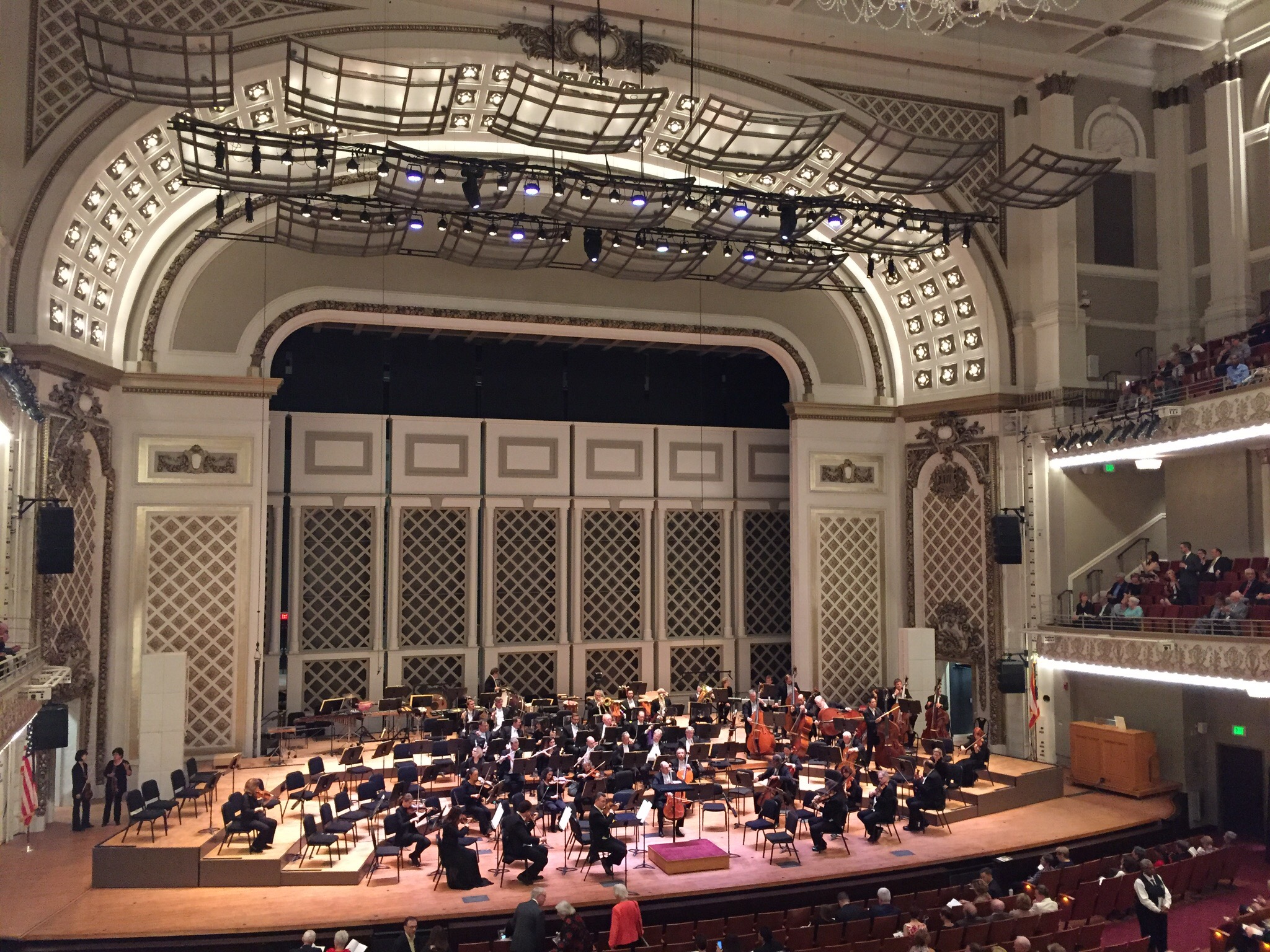
Music Hall, formerly made of wood and plaster-over-brick, now has concrete floors, walls moved inward and a stage that is now 12 feet closer to the audience. A few days before it reopened after its $143 million renovation, I met with acoustical consultant Paul Scarbrough of Akustiks in Springer Auditorium to find out how he and colleague Chris Blair have been making acoustical adjustments to what is now a new concert “hall within a hall.”
Question: Music Hall has very good acoustics, and you’ve said that your goal is to build on that. Now, how has the sound of the hall changed?
Answer: I definitely feel a much stronger connection to the orchestra onstage. Before, I always felt a little bit of a disconnect. And that’s really exciting. That’s the word I can best use to describe the change of the sound – exciting. It makes you feel much more a part of it. You can hear the inner lines, you can identify the different sections of the orchestra, but at the same time, they feel like an ensemble, not just a bunch of soloists on the stage.
Q: You have talked about “musical memory,” trying to recreate the sound that people remember. Explain that.
A: I like to ask people, what do you remember about Music Hall when you came to concerts with the Cincinnati Symphony or May Festival? Then I talk about what we’ve done to retain the resonance, the warm embrace that the sound has. Then I ask them, would you be interested if we were able to create a greater sense of immediacy that would allow the orchestra to have a greater impact in the room in those big moments? What would you think if the orchestra was able to play with more nuance in the space?
One of the other things we’ve done, we’ve replaced all the air conditioning systems in the hall. So the hall is much quieter than in the past. .. So if you want the orchestra to have a broader dynamic power from softest to loudest, what you do is take (out) the background noise from the ventilation system. So now when the composer calls for a PPP, they can really do that and be confident that the audience will come with them.
Q: What changes were made to the hall that affect the acoustics?
A: The biggest one was reconfiguring the existing two orchestra lifts and adding the third lift (stage extensions) so we could move the orchestra from one-third behind the proscenium arch and two-thirds in front, to fully at the proscenium line and in front. The lift is about 12 feet out from the original configuration. Now the entire back wall (the old, re-purposed orchestra shell) is only set about 5 feet behind the proscenium line to act as a backdrop for the orchestra.
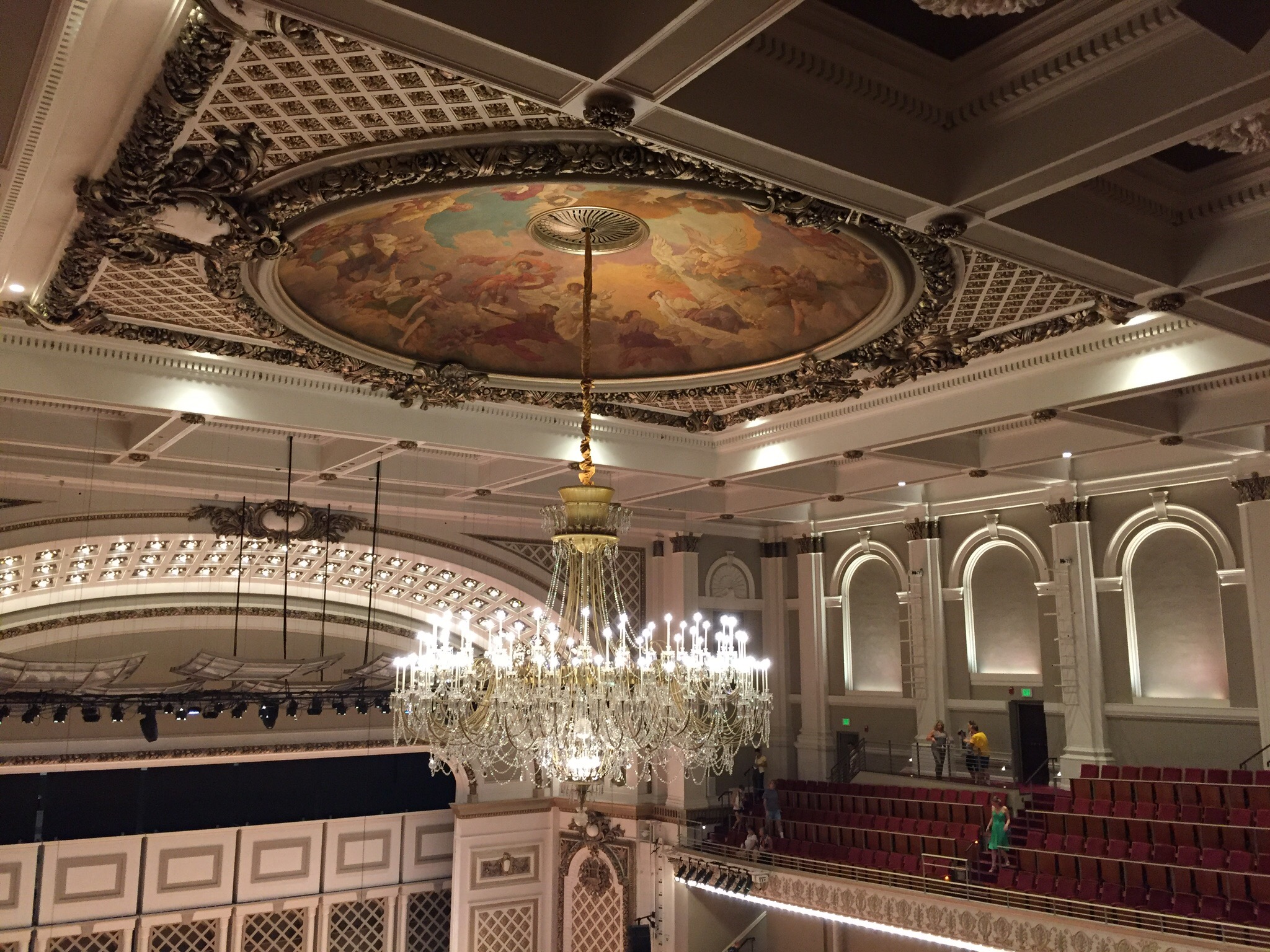
The acoustical clouds pick up some of the same rhythms of the coffered (ceiling) in the design. The second major intervention was replacing that old two-piece cloud so it would be more distributed, and a more elegant glass and steel.
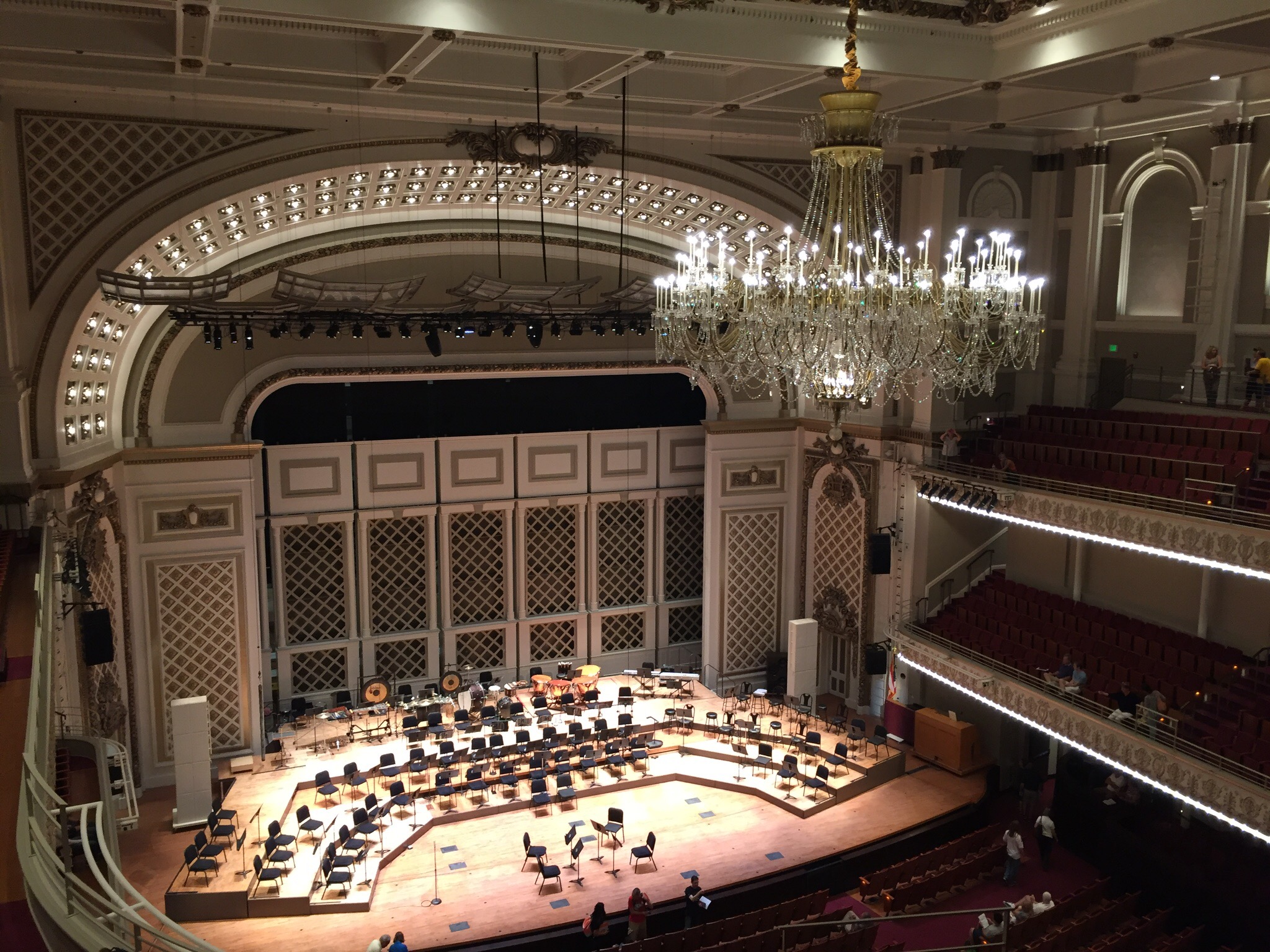
Q: Besides being closer to the audience, the musicians are now on risers. What does that accomplish?
A: The new riser system was consciously designed in terms of the height, the elevations and the angles to create lines of sight to help the various musicians. For the audience, one of the things you’ll find really exciting about sitting on the orchestra floor is that you can really see the whole ensemble now.
Q: The CSO and Pops have a worldwide reputation for recording in Music Hall, and there are also regular WGUC and CET broadcasts. Do you expect recording engineers will use the same system of clouds and so on?
A: Yes, and recording engineers will bring in their own microphones and suspend them. What they’ll be doing over the first few weeks of the season is figuring out their microphone positions. Now that the acoustic has evolved and changed, they’ll need to adapt their mic techniques to restore their memory of what Louis (Langrée) and their artistic people want the orchestra to sound like in recordings.
Q: For you, what were the challenges with walls that have been moved in on two floors, and the addition of new materials such as concrete in the floors and rubber pads underneath the stage floor?
A: It’s not a continuous pad, but small pads to give the (stage) floor some resilience and act as a sounding board for the orchestra. But the actual construction, in terms of sleepers and a plywood subfloor and a thick tongue-in-groove hardwood floor on top is very similar to the construction of the old floor.
In terms of materials in the room, the new side walls are constructed of multiple layers of cement board. It’s like the special drywall you use in bathrooms to go behind tile, so it’s much heavier and denser, and we use multiple layers of it with a final coat of plaster on top, so it’s very similar in mass to the brick and plaster construction of the original walls of Music Hall.
Q: So cement board should have similar properties of reflection?
A: Exactly. That heaviness is designed to reinforce and support the bass in the room. By making it heavy density, those long wavelengths reflect back into the room.
Once you get to the gallery level, everything is what you saw in June of 2016. We’ve simply restored the existing finishes of plaster directly on brick.
Q: Do the seats also have acoustical properties?
A: Yes, we generated the basic criteria, things such as the back and its thickness, and the thickness of the inner back. … We also designed the thickness of the underside of the seat, and that is solid wood, not upholstery. There is sound coming to the floor and reflecting up from the floor. So if that seat was upholstered, that reflection would get absorbed and it wouldn’t contribute to the acoustics of the space.
Q: Now that Music Hall has opened, how much longer will you keep “tweaking” the acoustics?
A: It really depends on how things settle in. But we’re scheduled to be coming out every week in the first five weeks of the season — the gala, the first Pops performances, Pelléas et Mélisande, Cincinnati Ballet – which will be the first opportunity to hear the orchestra in the pit – and then the May Festival chorus concert. There are no definite dates, but we will come back after the orchestra has a good chance to settle in and learn to play in this space.
Check out Music Hall’s new acoustics this week, when the Cincinnati Symphony performs Debussy’s opera “Pelléas et Mélisande,” 8 p.m. Friday and Saturday in Music Hall.
Discover more from janellesnotes
Subscribe to get the latest posts sent to your email.
