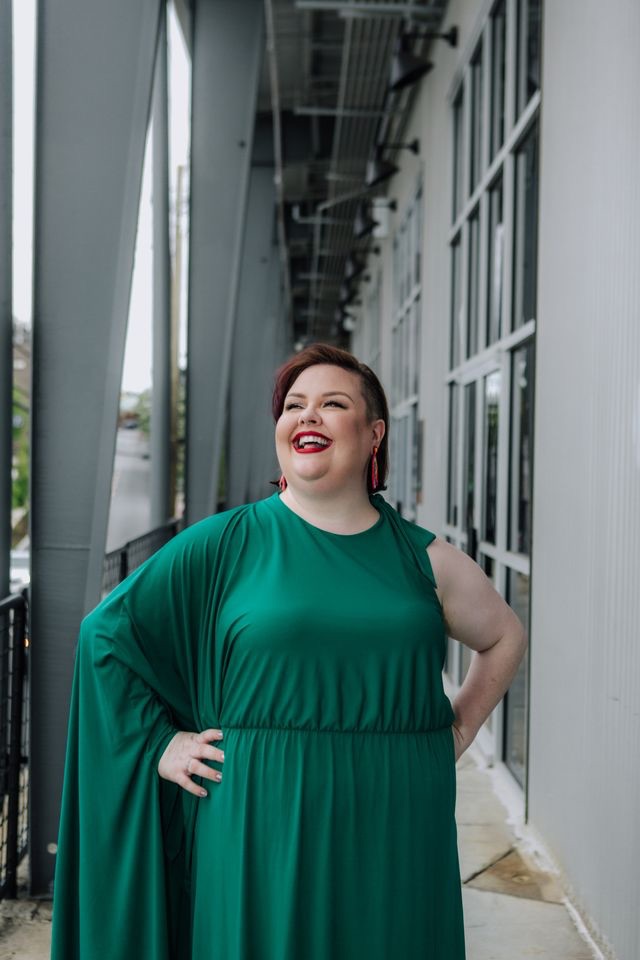
She’s been called “A once-in-a-generation voice.” Once you hear her sing, you will never forget the extraordinary Jamie Barton.
The renowned, Grammy Award-winning mezzo-soprano is returning to Cincinnati, 3 p.m. Oct. 25 in Memorial Hall with a concert for Matinee Musicale.
When Barton made her Cincinnati recital debut in 2018 with pianist Kathleen Kelly, her program illuminated the voices of women composers. Barton and Kelly will continue that thread in her return, including Six Lieder by Clara Schumann, “Love after 1950” by Libby Larsen, French art song, opera favorites and contemporary works. This could be my favorite: “In the Beginning” from “Cat Songs” by Jake Heggie.
A lot has happened for Barton since that 2018 visit. She’s now a Grammy winner, with the 2026 Grammy for Best Opera Recording for Intelligence, and her career has taken her to the Met, Carnegie Hall, the BBC Proms and major stages around the world.
Indeed, Barton is now a superstar. Here’s what I wrote for the Cincinnati Enquirer when she made her role debut as Azucena in Verdi’s “Il Trovatore” for Cincinnati Opera. It gives you some idea of the extraordinary power of her voice:
“At the opera’s center is the Gypsy, Azucena, who has seen her own mother burned at the stake. Thursday was Barton’s first outing in this role, and it seems ideal for her out-sized, rich mezzo-soprano, with its arresting color in the lower range. She cast a spell as she wove her tale in “Stride la vampa,” describing her mother’s demise at the stake. Her Third Act scene with the Count was chilling, as she communicated heart-rending emotion as well as palpable terror for the fate she was facing.”
Off the stage, she’s outspoken about body positivity, women’s issues and LGBTQ+ rights. Her own Instagram bio pretty much says it all: “Proudly queer opera singer into drag queens, bluegrass, social justice, equality, and cats.” Take a look at my last interview with her, on this blog!
For more information and Barton’s complete program, click here.
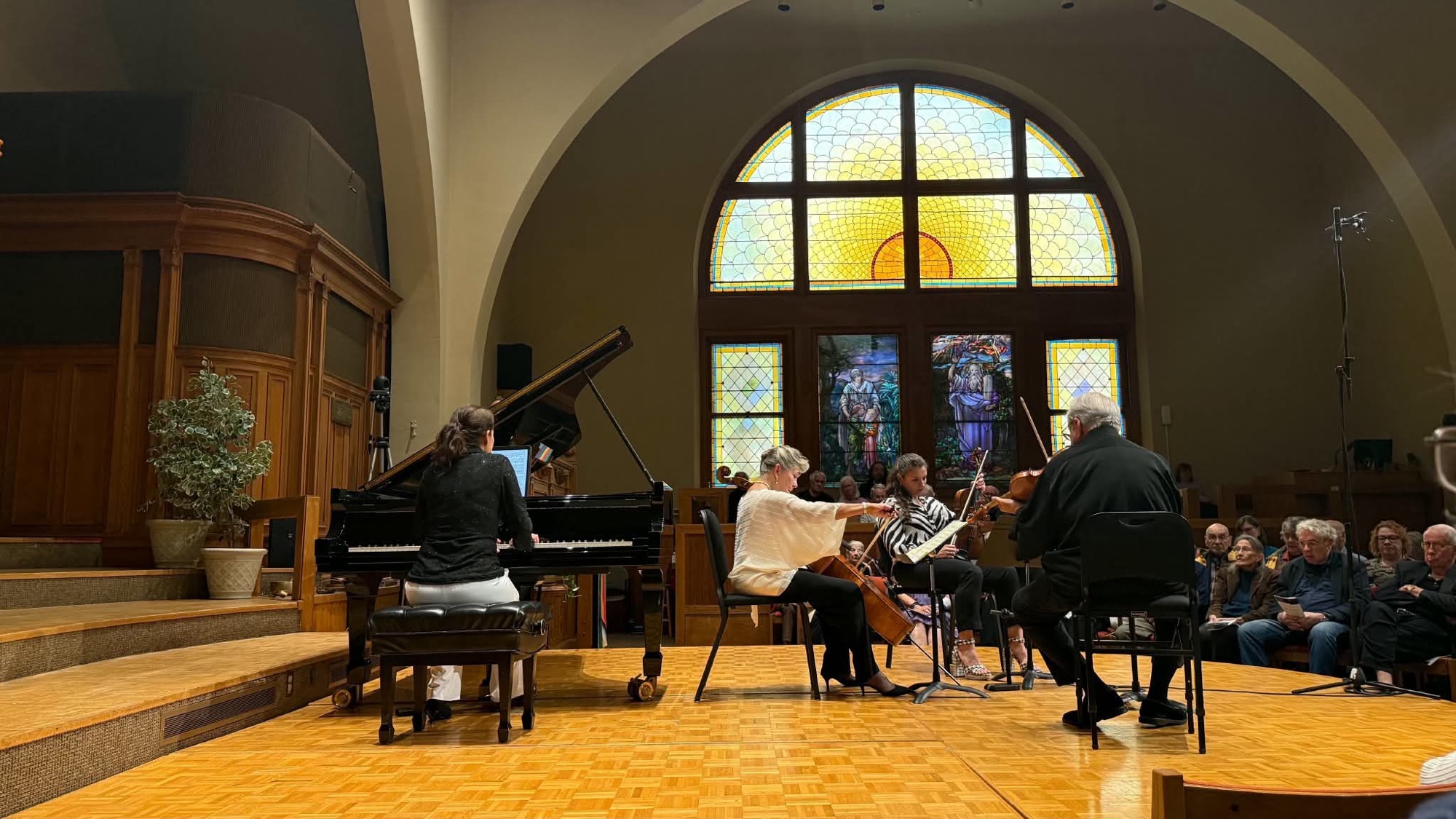
The Linton Chamber Music Series opened its season in the First Unitarian Church/ photo by Michael T. Moore
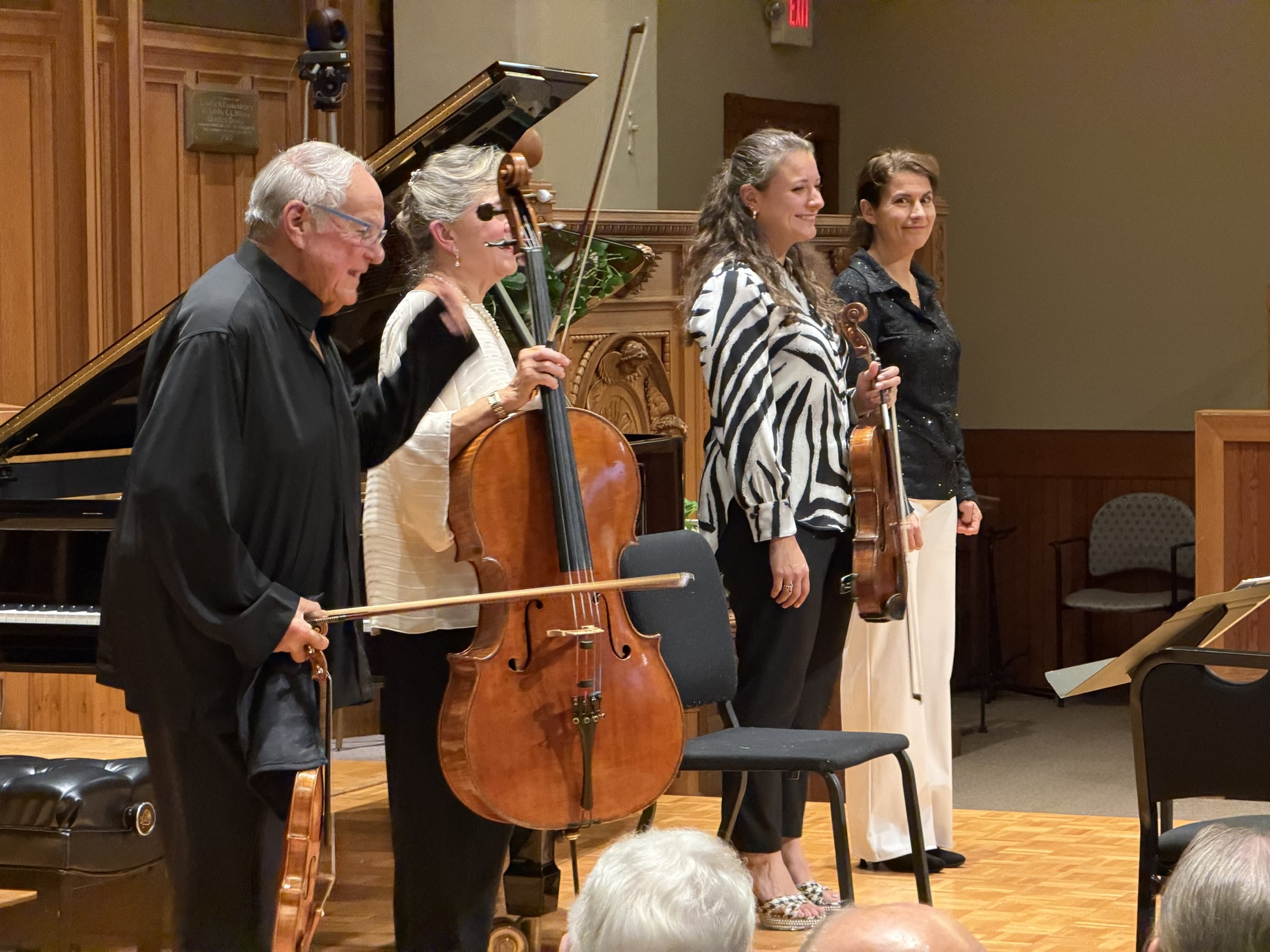
It’s always a special occasion when co-artistic directors Sharon Robinson, cellist, and Jaime Laredo, violinist, are in town to perform on the Linton Chamber Music Series. Last Sunday and Monday (Oct. 11-12) the couple’s Espressivo! Piano Quartet, with Anna Polonsky and violist Milena Pajaro-van de Stadt, opened the Linton Chamber Music season.
I was at the the Sunday matinee in the First Unitarian Church, to hear the world premiere of Richard Danielpour’s “Epiphanies for String Trio,” as well as piano quartets by Dvořák and Schumann.
Danielpour composed a number of works for Robinson and Laredo (who are married), and also wrote a piano trio for the Kalichstein-Laredo-Robinson Trio, which reigned for 45 years as one of the world’s finest piano trios until the untimely death of its superb pianist, Joseph “Yossi” Kalichstein in 2022. (Opera goers may recall that Danielpour also was the composer for the opera “Margaret Garner,” to Toni Morrison’s libretto in 2005, a Cincinnati Opera co-commission.)
On this occasion, Danielpour, 70, wrote a string trio, dedicating its final movement to Kalichstein’s memory. Scored for violin, viola and cello, it is a co-commission by a consortium of organizations, and was supported locally by Ann and Harry Santen.
Pajaro-van de Stadt (viola) joined Robinson and Laredo for the first performance of “Epiphanies.” Danielpour wrote in his program notes that its title “implies a sense of discovery and revelation.” He wrote it at a time when he was turning 70, adding, “In reviewing the joys and sorrows that life inevitably brings, I realized that all of this life brings the potential for new discoveries and understandings.”
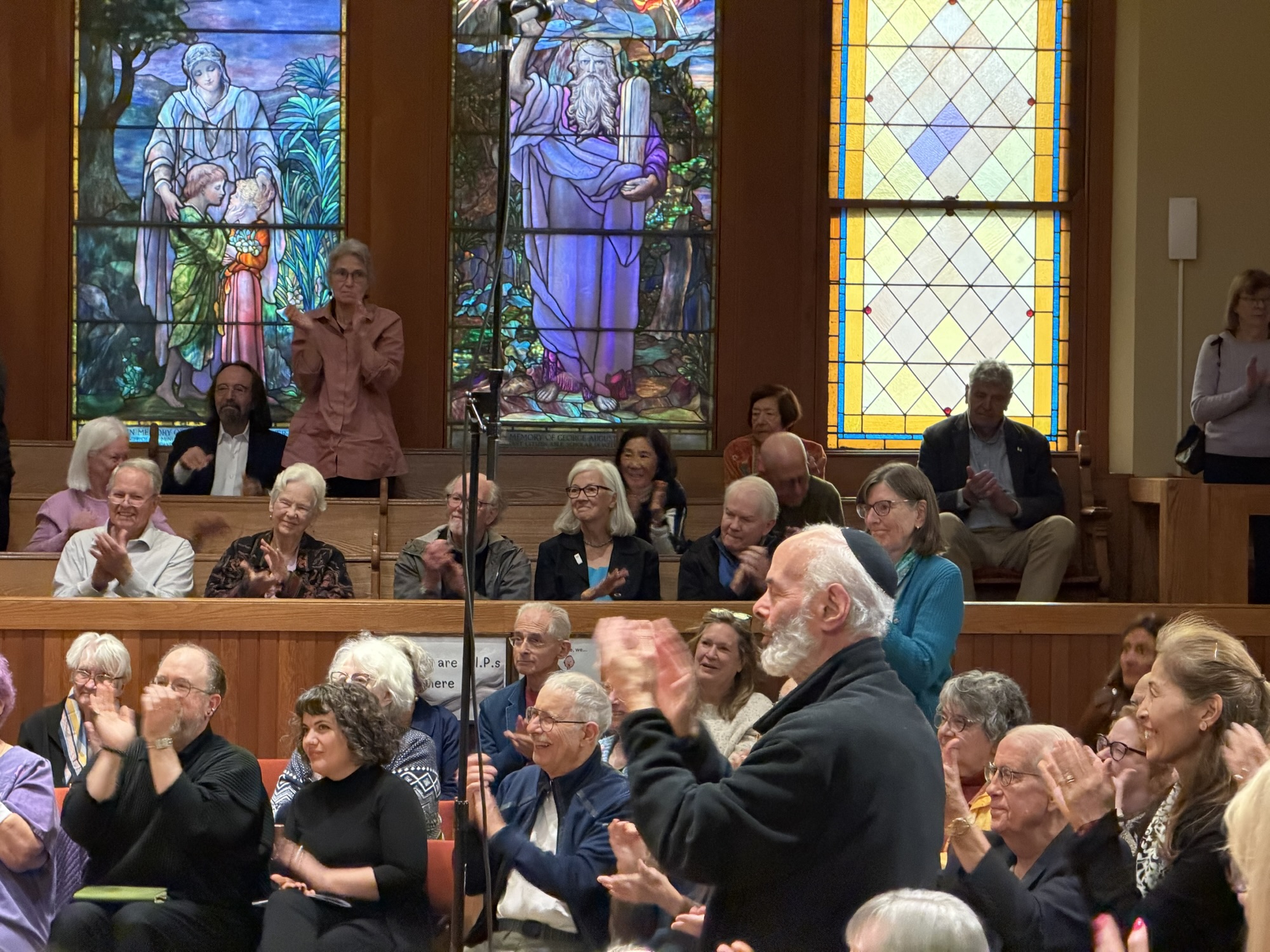
Like many of his chamber music works, the outer movements were slow. The first, “Adagio cantabile,” opened with a well-crafted fugue. As I have come to appreciate in his music, his gift for lyricism was always at the fore. The string trio warmly intoned these lines, which were broken only by a brief moment of intensity before subsiding. In the radiant setting colored by the church’s Tiffany stained glass windows, it was a meditative experience.
My favorite movement, though, was the “Vivace leggiero.” The musicians played with an attractive lightness in this dance-like movement, which was highlighted by a counterpoint of pizzicatos. To me, its somewhat muted atmosphere reminded me of the Impressionists. The finale, “Adagietto,” featured a reflective melody for Laredo’s violin, and unfolded like an elegy. It was quite moving.
The first half also included a rarity: Dvořák’s Quartet No. 1 in D Major, Op. 23. Indeed, the quartet was playing it for the first time. The composer was 34 and at the start of his career. He was just beginning to merge Czech folk tunes and rustic dances and rhythms into his music, and this piece offered a window into his process that would be refined in his great works-to-come, such as the American Quartet and the Dumky Trio.
It was just three movements. I found great joy listening to Polonsky’s marvelous touch in this work, and also in the Schumann. The pianist’s runs sparkled, and she played with weight, yet never overpowered her colleagues. The second movement was an Andantino with variations, and the players carried on a charming dialogue — sometimes between strings, sometimes between piano and strings. Its final variation had the kind of nostalgic quality that only Dvořák can evoke. The finale, “Allegretto scherzando,” was fleet with moments of virtuosity for the pianist.
After intermission, we were treated to the afternoon’s most glowing and most polished performance in Schumann’s Piano Quartet in E-flat Major, Op. 47. Of course, Schumann wrote it for his beloved Clara, and it has a wonderful piano part. Robinson also explained to the audience that the score requires the cellist to re-tune her C string down a step to B-flat, before the third movement, and then back again for the fourth. That bit of inside information clearly caught the viewers’ attention in those moments. In the heart of this quartet, “Andante cantabile,” Robinson’s phrasing of the theme truly sang, and her tone was glorious. Her expressive beauty was matched by the other members of the quartet as the theme was traded between instruments.
Coming up: I know you’ll want to hear the Balourdet String Quartet perform Amy Beach’s String Quartet, as well as her Theme and Variations with flutist Demarre McGill, as well as Ravel and Joan Tower, Nov. 1-2. Information: lintonmusic.org.
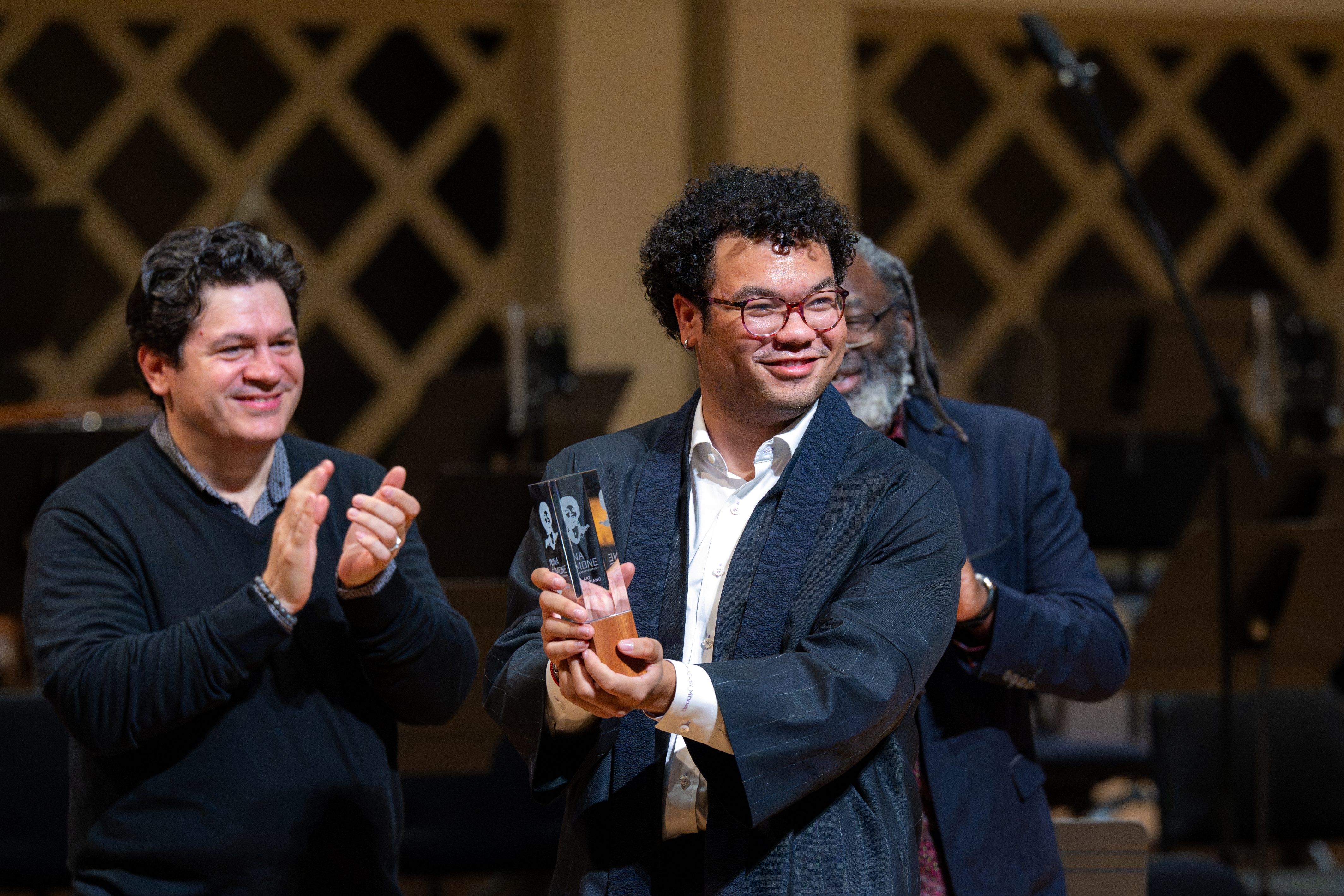
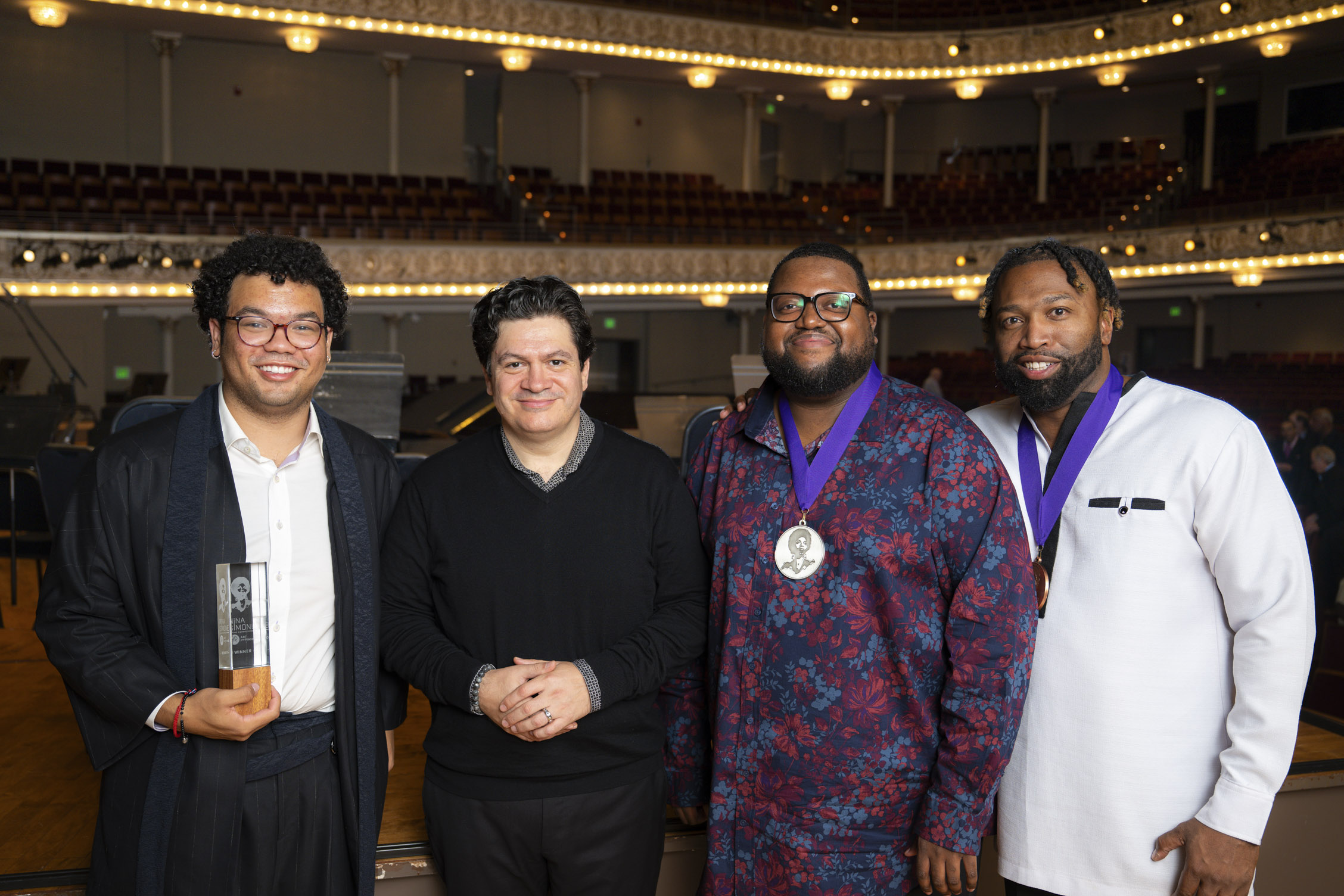
Winner Joshua Mhoon with Music Director Cristian Măcelaru, who was also an adjudicator. Photos by Phil Armstrong, with thanks to the Cincinnati Symphony Orchestra
To play Rachmaninoff’s Piano Concerto No. 3, you need to possess a spectacular technique, expressive power and, not least, endurance. Pianist Joshua Mhoon had all those and more.
Mhoon, 22, won first prize in the Nina Simone Piano Competition, held on Wed. Oct. 7 in Music Hall. Three finalists — Evan Hines, John Paul McGee and Mhoon — competed in the Solo Round followed by the Concerto Round in the competition. Music Director Cristian Măcelaru conducted the Cincinnati Symphony Orchestra for the Concerto Round, during which the young artists each performed a complete piano concerto.
Mhoon was awarded the $12,000 first prize, as well as a recital at the San Francisco Conservatory of Music presented by Opus 3. Second prize ($4,000) went to Evan Hines. John Paul McGee won third and $2,000. A small audience of symphony fans and piano aficionados was on hand, and gave warm responses to each artist.
The finalists of the Nina Simone Piano Competition: Joshua Mhoon, music director Cristian Măcelaru, Evan Hines and John Paul McGee
The previous rounds of the Artist Division were held at the San Francisco Conservatory of Music, said Awadagin Pratt, who is currently professor of piano on its faculty after serving on the piano faculty at CCM for two decades. Pratt is founder of the Art of the Piano Foundation, which hosts the biennial Nina Simone Piano Competition to spotlight talented young African American classical pianists. He is a Yamaha Artist, and the competition was using a Yamaha concert grand piano.
The judges were Pierre Van Der Westhuizen, executive and artistic director of the prestigious Gilmore Piano Festival (and a CCM alumnus); Mikael Darmanie, also a CCM grad, who is busy classical performer, composer and conductor with an eclectic career as a DJ and member of the Warp Trio. Măcelaru served as the third judge.Read More »
Ailyn Perez and Soloman Howard – Photo by Soloman Howard
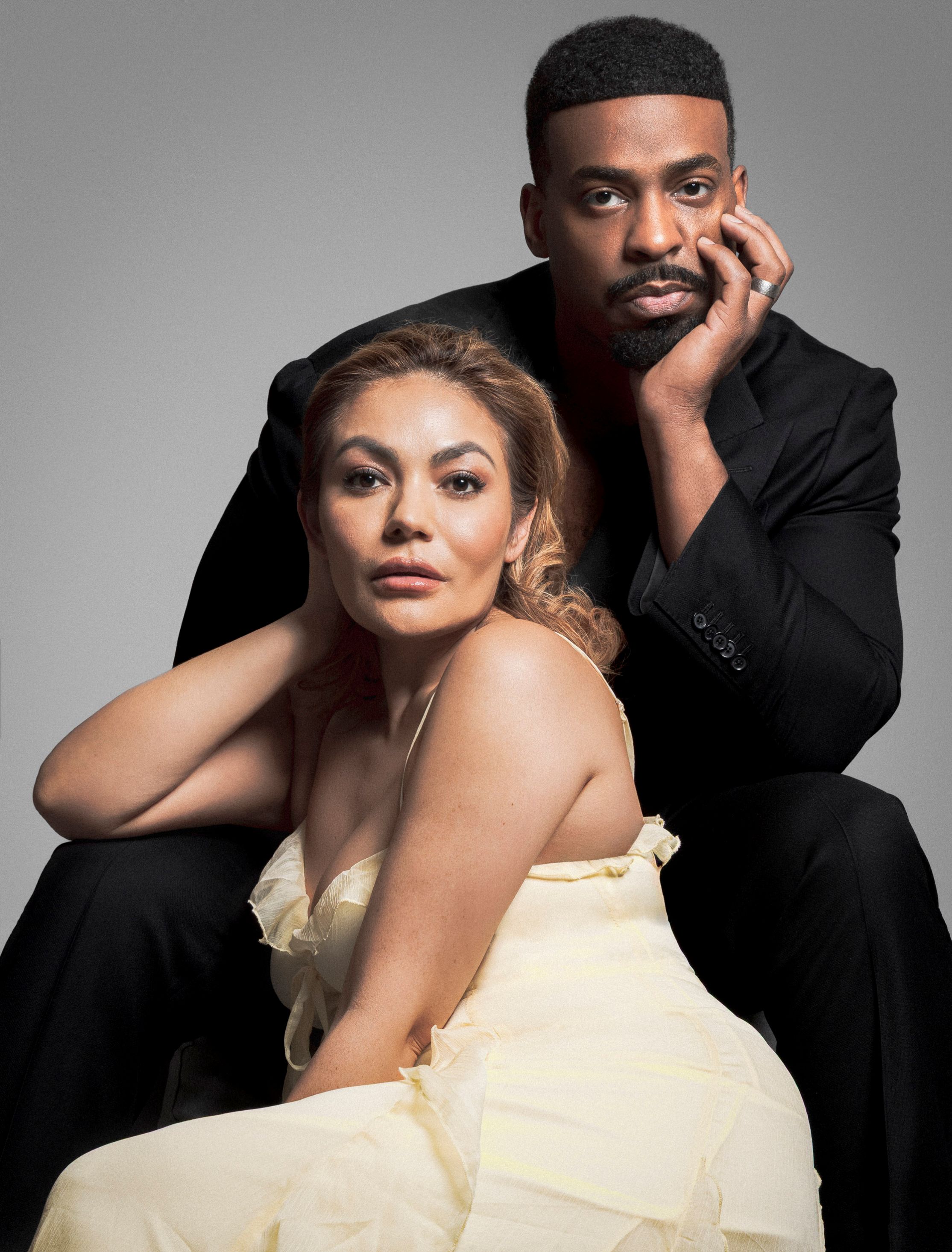
Soprano Ailyn Pérez, mezzo-soprano J’Nai Bridges, tenor Matthew White, baritone Michael Chioldi, and bass Soloman Howard are the international opera stars who will headline Cincinnati Opera’s “Viva Verdi!” special concert as part of its 2027 Summer Festival.
The concert, to be at 7:30 p.m. June 25, 2027 in Music Hall, celebrates a transformational $6 million gift from the Harry T. Wilks Family Foundation.
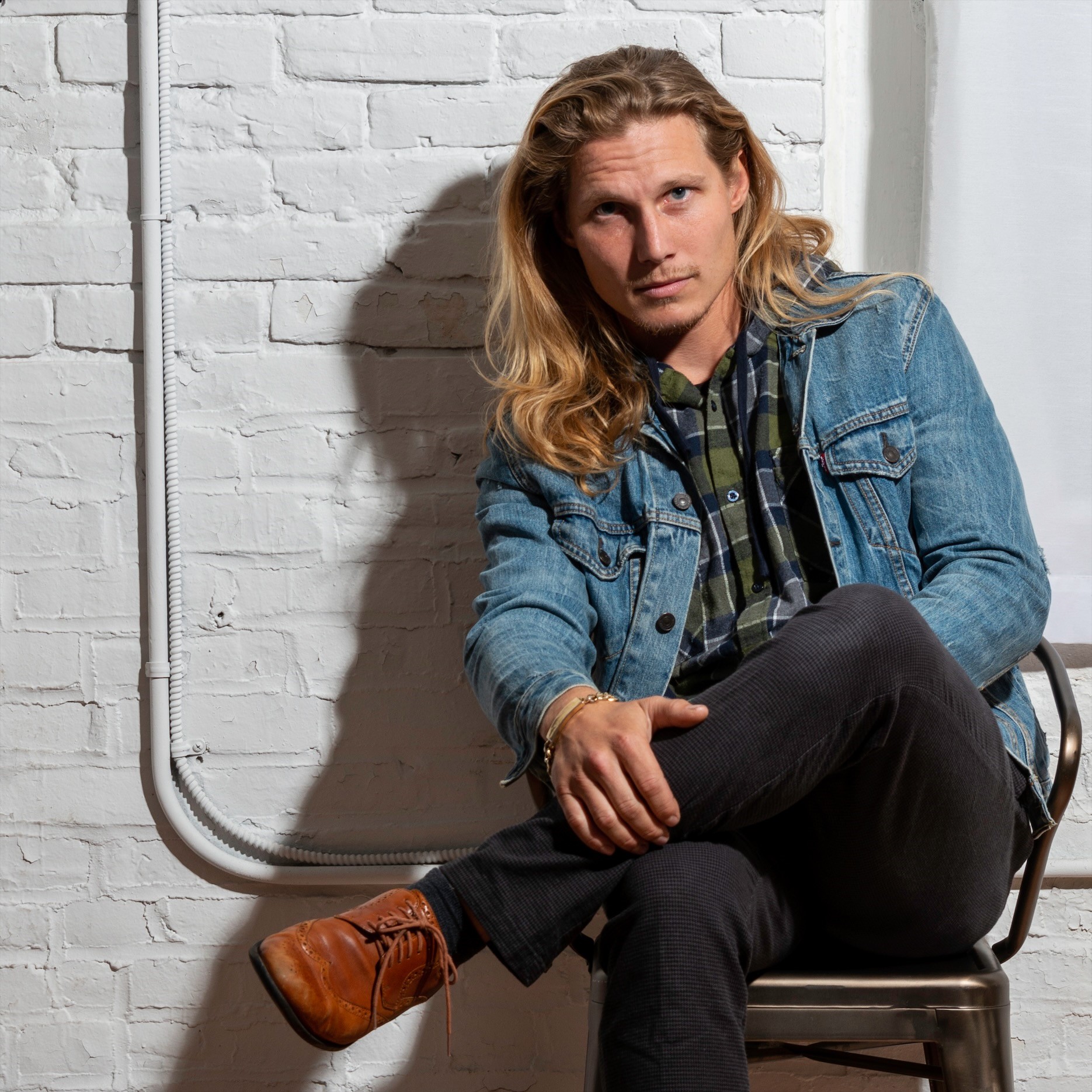
Tenor Matthew White JustJamiPhotography
Cincinnati Opera announced the cast this week. The cast includes some of the most sought-after voices in classical music who perform regularly with prestigious opera companies and orchestras throughout North America, South America, Europe, and Asia. (Opera fans will recognize a number of Cincinnati Opera appearances, as well.)
They will be joined by the Cincinnati Opera Chorus, under the leadership of Chorus Master Henri Venanzi, and the Cincinnati Symphony Orchestra conducted by Alex Amsel.
This special concert is made possible by a transformational $6 million gift from The Harry T. Wilks Family Foundation, led by trustees Nanci Wilks Lanni and Barbara Wilks.
The gift was first announced from the Music Hall stage during Cincinnati Opera’s July 2026 performances of Carmen. It will establish The Harry T. Wilks Family Foundation Fund for Leading Artists, an endowed fund that will provide Cincinnati Opera with ongoing support for the presentation of singers of the highest quality, beginning in 2027 and continuing with key principal artist engagements in seasons to come.Read More »
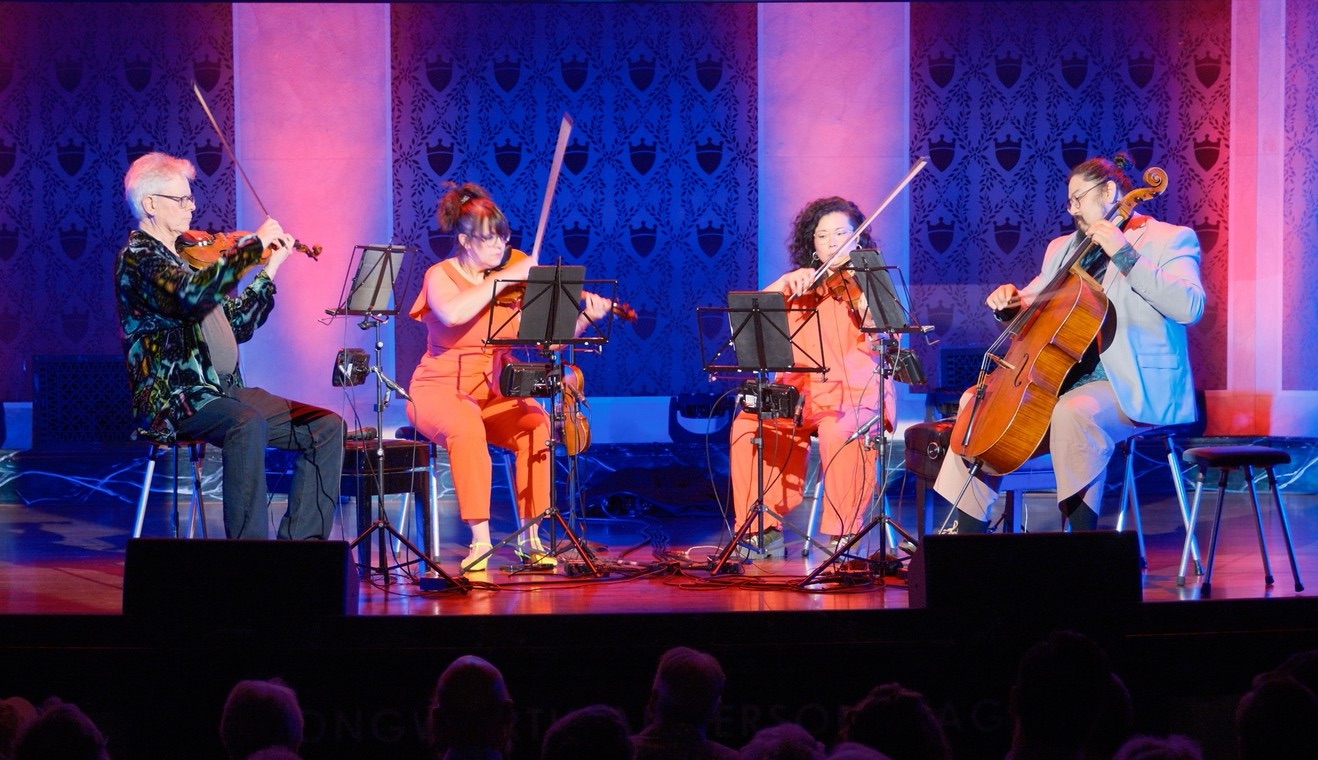
The Kronos Quartet in Memorial Hall. Photo thanks to J.P. Leong
At 53, the Kronos Quartet has a vast catalog of music of our time. On Tuesday (Sept. 29), the Kronos opened the Chamber Music Cincinnati season with a thought-provoking, compelling and sometimes humorous program in Memorial Hall. Each piece on their substantial program of 10 works (and two encores) was written or arranged for the quartet.
The summit of the evening was Philip Glass’ String Quartet No. 5, written in 1991 for the Kronos, a nod to the close relationship the quartet has had with Glass, now in his 90th birthday season.
Founding violinist David Harrington was joined by his new colleagues Gabriela Díaz (violin), Ayane Kozasa (viola) and Paul Wiancko (cello). Memorial Hall was packed with longtime fans of the quartet, as well as students, some of whom had studied with Kozasa at CCM. True to their commitment to education and mentoring, they had spent time working with young musicians at Walnut Hills High School.
As is usual in the quartet’s groundbreaking programs, selections were enhanced by video and sound, performed by Brian H. Scott (lighting designer) and Scott Fraser (sound designer). Several pieces were accompanied by historical footage or black-and-white newsreels. Their instruments were amplified, which enabled the musicians to create ethereal soundscapes.Read More »
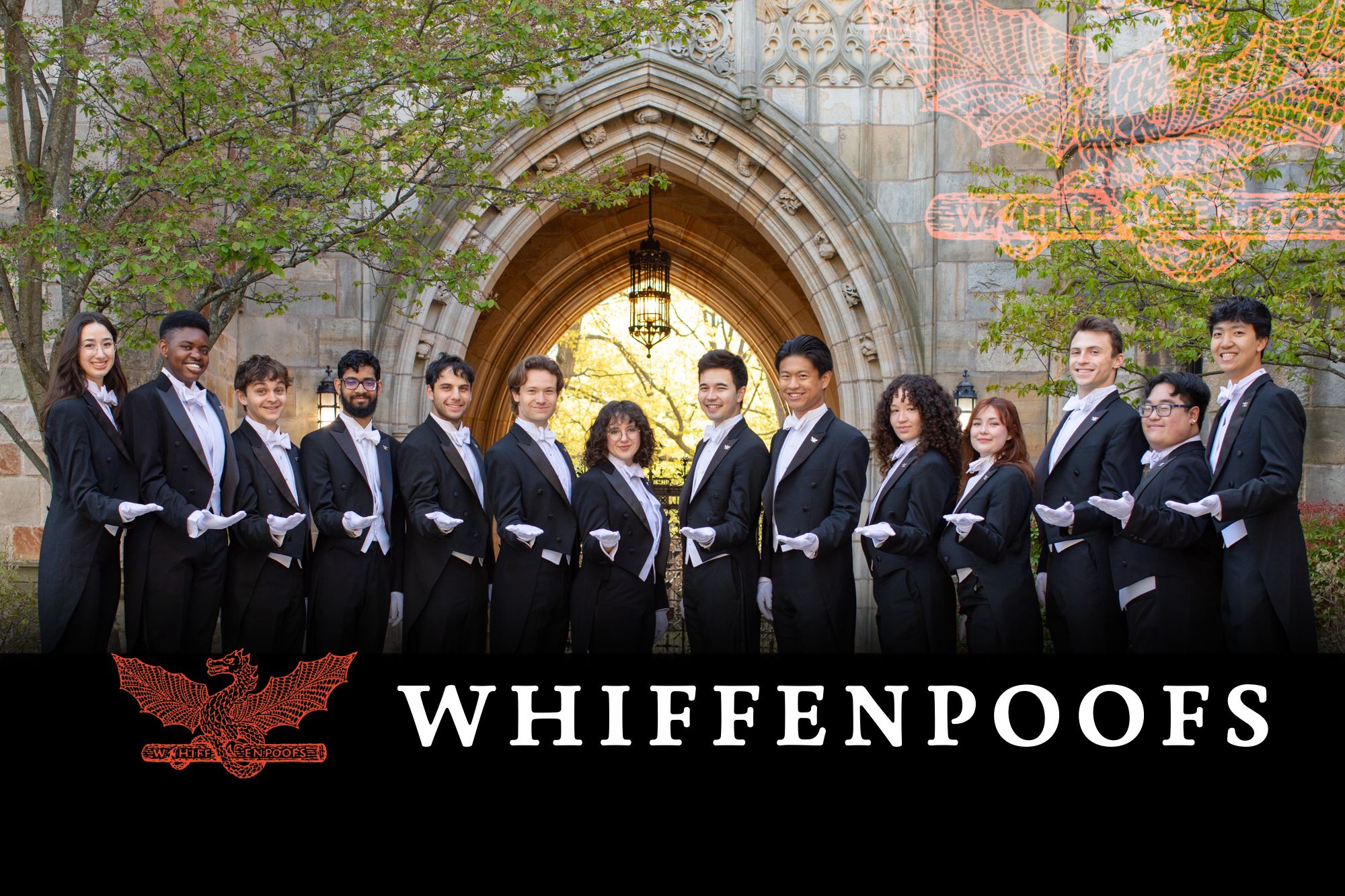
If your Fall calendar looks like mine, it’s filling up quickly. Here’s a fun idea: The a cappella group, the Yale Whiffenpoofs, will be performing at Knox Presbyterian Church on October 20th, 7:30-9 p.m.
The Whiffenpoofs, the world’s oldest and best known collegiate a cappella group, performs 200 concerts each year and tours internationally. Founded in 1909, the ”Whiffs” began as a senior quartet that met for weekly concerts at Mory’s Temple Bar, a famous Yale tavern.
They’ve appeared at Carnegie Hall, the Kennedy Center, the White House, the Rose Bowl, and Lincoln Center. Their television appearances includes NBC’s The Sing Off, The West Wing, The Today Show, 60 Minutes, Gilmore Girls, Jeopardy!, Saturday Night Live, the Season 4 finale of Glee and Hell’s Kitchen. They’ve also sung for multiple sitting presidents. They close each night with the historic Whiffenpoof Song, covered by artists such as Elvis Presley and Bing Crosby.
Tickets will be $15 for students/children and $25 for general admission. Priority seating tickets are also available, and the ticket link is here.
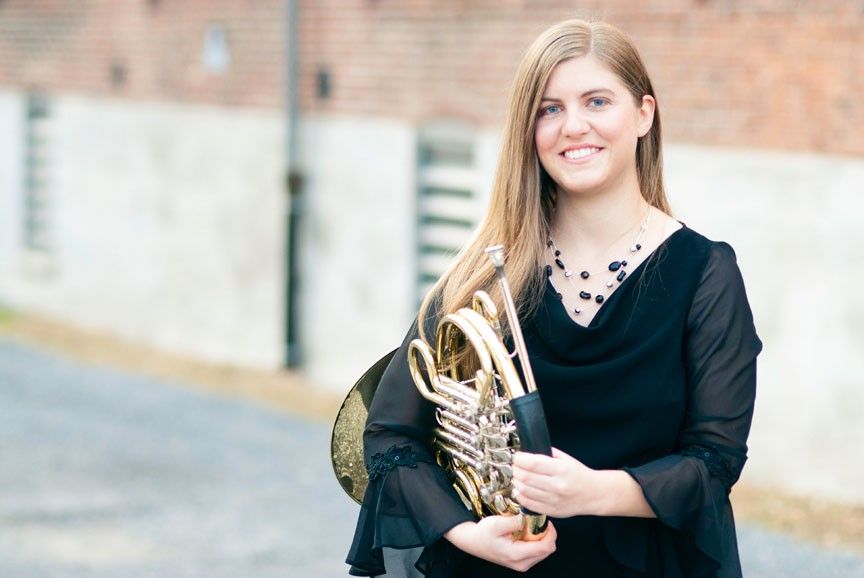
Molly Norcross is the new principal horn of the Cincinnati Symphony Orchestra
Just when you thought you knew most of the new musicians in the Cincinnati Symphony Orchestra, the orchestra under the direction of Music Director Cristian Măcelaru has announced nine more new hires. They’ve also announced the appointment of Cincinnati Symphony Youth Orchestra’s (CSYO) new Concert Orchestra Conductor, and two conducting contract extensions for the 2026–27 season.
The musicians won positions following extensive auditions from a national applicant pool.
The new players are: Molly Norcross, Principal Horn; Mark Debski, Associate Principal Oboe; Drew Morgan, Associate Principal Horn; Ania Lewis, Assistant Principal Cello; Jessica Kovach, Section Bass; and Alex Pride, Section Trumpet. One-year appointments include Celia Daggy, Acting Associate Principal Viola and Micah Reinharz, Acting Associate Principal Trumpet.
Also joining the Orchestra this year is cellist Osheen Manukyan as the CSO’s inaugural CSO Resident Fellow. Leading the Cincinnati Symphony
Youth Orchestra Concert Orchestra is Lina Jeong, who is currently orchestra director at Xavier University.
In addition, the CSO announced a one-year contract extension with CSO Assistant Conductor Duo Shen, and Assistant Conductor Alex Amsel has been promoted to Associate Conductor with a one-year contract extension.
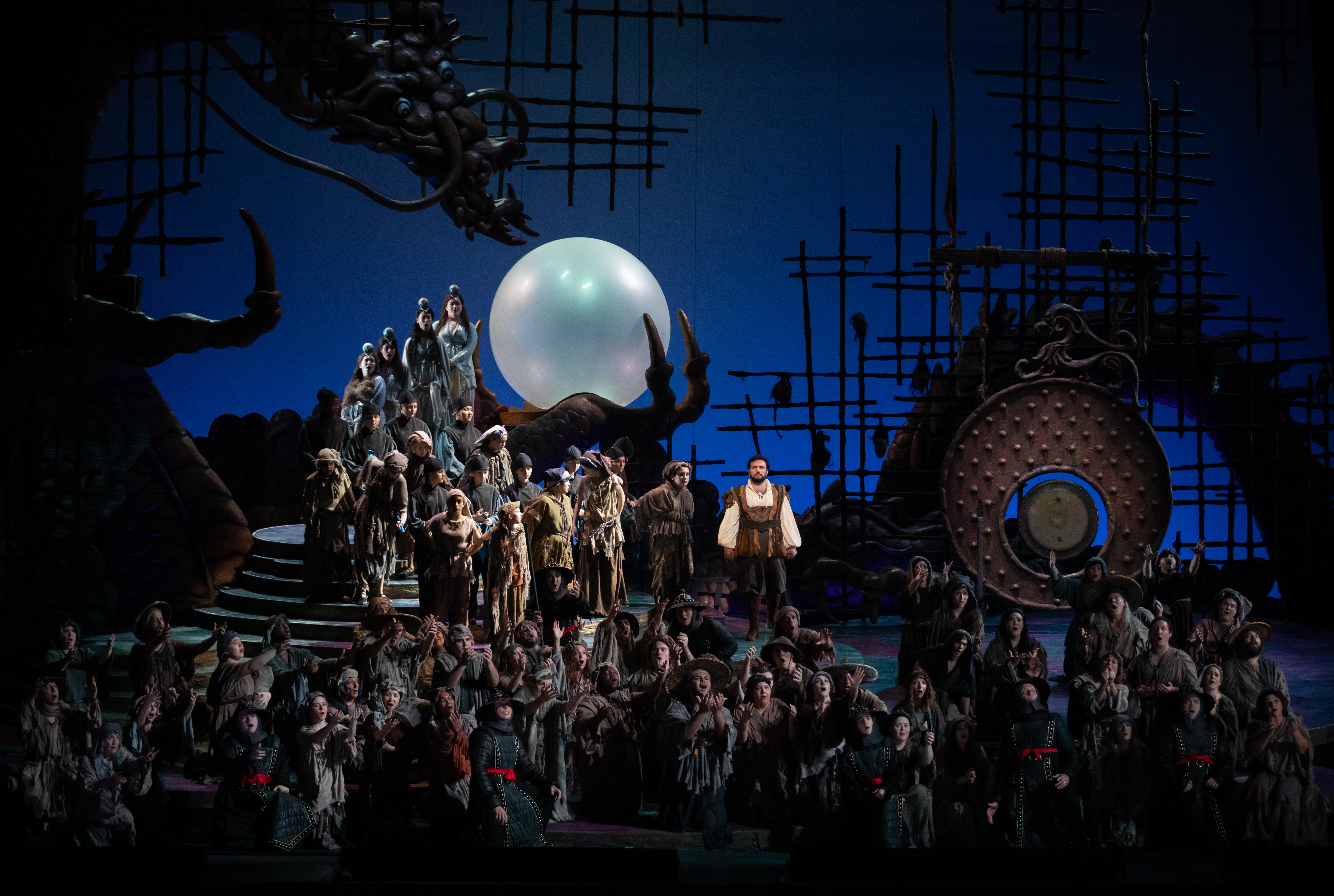
Cincinnati Opera will mount Puccini’s “Turandot” for the first time since 2015. Production photos of Palm Beach Opera Turandot, January 24, 2020. Bruce Bennett – Palm Beach Opera
Cincinnati Opera’s 2027 Summer Festival will open with the world premiere “John Lewis: Good Trouble,” chronicling the life of the U.S. Congressman and Civil Rights icon. The season will include a lavish production of Puccini’s “Turandot,” not seen in Music Hall since 2015. And Mozart’s irresistible comedy “The Marriage of Figaro” will round out the mainstage season.
As we have come to enjoy in recent years, there will be several single-night musical events. In celebration of a new, $6 million gift from the Harry T. Wilks Family Foundation,“Viva Verdi!” will feature some of Verdi’s best-loved operatic music in a Music Hall concert in Springer Auditorium (7:30 p.m. June 25, 2027). And the popular Studio Sessions of intimate musical evenings curated by the performing artists will continue in two performances in Wilks Studio, July 1 and July 14, both at 8 p.m. in Wilks Studio at Music Hall. More details on those events will be unveiled later.
Performances will run from June 18 through August 1, 2027.
Artistic director Evans Mirageas announced details of the 2027 on July 25 to the Music Hall audience assembled for opening night of Bizet’s “Carmen.”
Said Mirageas in a statement: “During our 2026 season, it was thrilling to see how enthusiastically audiences responded to The Black Opera Project’s first work, Lalovavi,’ an encouraging sign that this endeavor has arrived at just the right time. We continue that momentum next summer by shining a light on an inspiring American icon with the world premiere of ‘John Lewis: Good Trouble.’ Combined with the epic emotions of ‘Turandot,’ the witty charm of ‘The Marriage of Figaro,’ the celebratory spirit of ‘Viva Verdi!,’ and the artist-curated Studio Sessions, we look forward to creating memorable experiences that connect and uplift our community.”
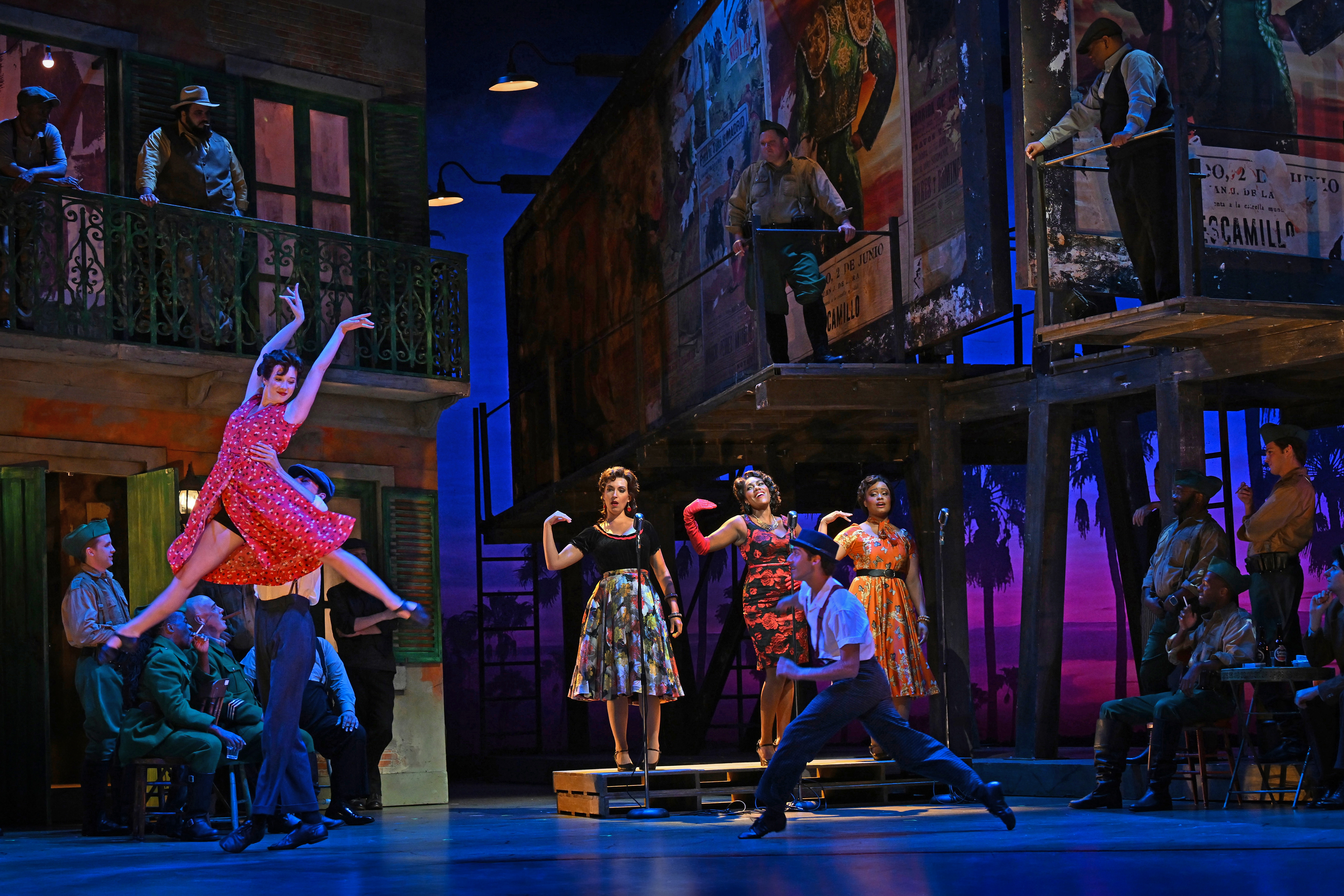
Cincinnati Opera’s production of “Carmen” continues through Aug. 2 in Music Hall. Philip Groshong, photo/Cincinnati Opera
Evans Mirageas, artistic director of Cincinnati Opera, announced at the opening night production of “Carmen” last night in Music Hall that the Harry T. Wilks Family Foundation has made a $6 million gift for a new fund in Cincinnati Opera’s endowment that will ensure artistic excellence for decades to come.
The Harry T. Wilks Family Foundation Fund for Leading Artists “will support world-class voices on this stage” in perpetuity, said Mirageas, whose position is the Harry T. Wilks Artistic Director. Mr. Wilks, who died in 2014, was a Hamilton based attorney and philanthropist.
“Harry loved opera, and served for many years on the Cincinnati Opera Board of Trustees. For decades, he made sure that this opera company could showcase the greatest voices in the world. Tonight, his family is making that vision permanent,” Mirageas said.
Mirageas also announced season repertoire for the 2027 Summer Festival, which will celebrate the gift with a special concert, “Viva Verdi!” showcasing great singers performing the music of one of Mr. Wilks’ favorite composers, Giuseppe Verdi.
Mr. Wilks was also an art collector who founded the Pyramid Hill Sculpture Park in Hamilton, preserving hundreds of acres to become one of the most remarkable outdoor art spaces in the country. He was an alumnus of Miami University and The University of Cincinnati College of Law.
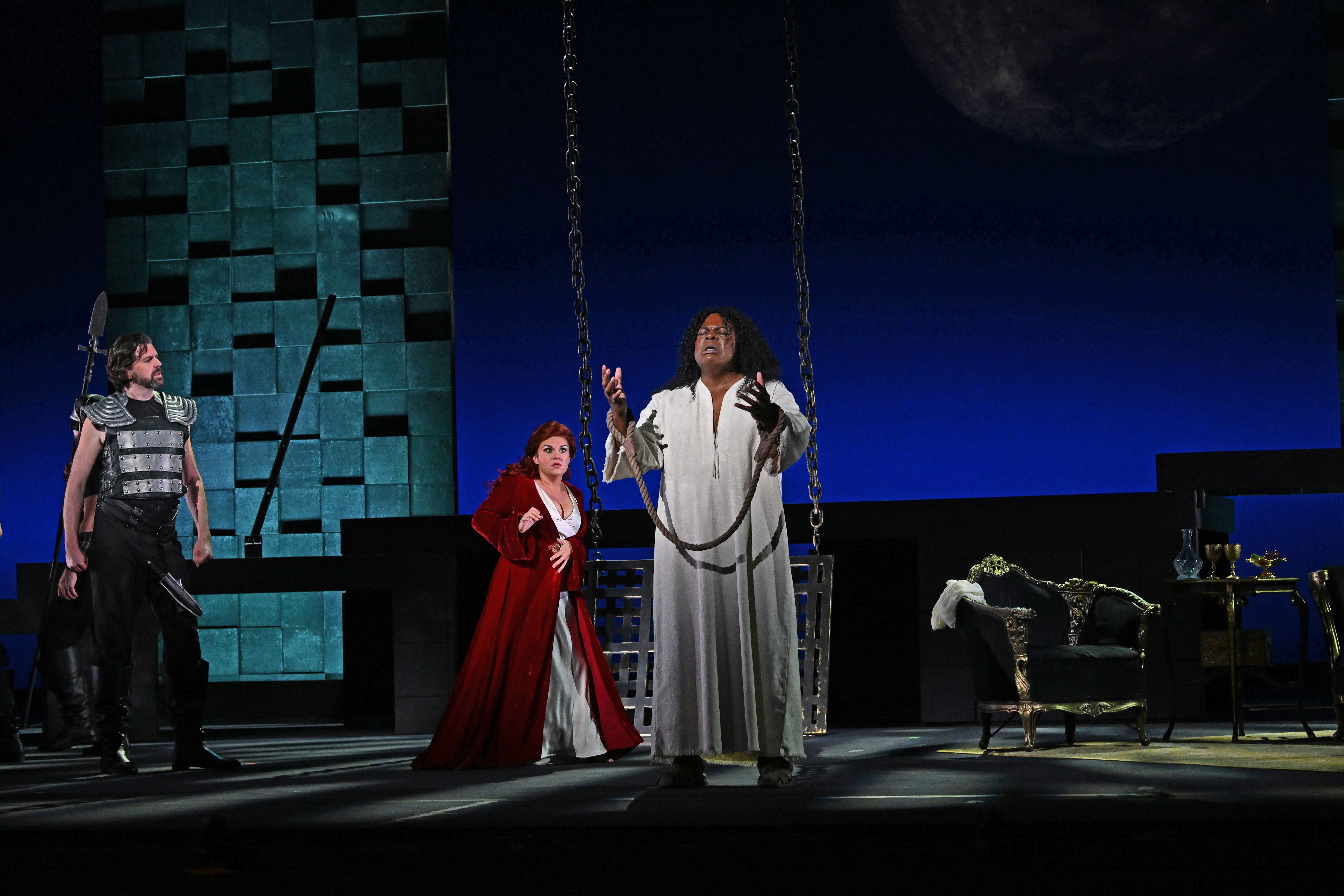
Jochanaan (Alfred Walker) is repulsed by Salome’s (Kathryn Lewek) infatuation. Tenor Zach Borichevsky, left, performed the role of Narraboth, captain of the guard. Photos by Philip Groshong are provided by Cincinnati Opera
For his opera about the depraved princess Salome who performs the “Dance of the Seven Veils” for Herod in return for the head of John the Baptist on a platter, Richard Strauss wanted “a 16-year-old princess with the voice of an Isolde.”
In her role debut as Salome at Cincinnati Opera on June 18, soprano Kathryn Lewek fit the bill spectacularly with vocal intensity and blazing high notes. She delivered a searing performance, singing with unflagging fervor all the way through her final, lurid moments of necrophilia with the severed head. The audience in Music Hall for the season opener on June 18 was riveted from beginning to end by the production staged by Jose Maria Condemi and conducted by Robert Spano.
“Salome” was last produced by the company in 2000 under then-artistic director Nic Muni. More than 120 years after its premiere, Richard Strauss’ opera “Salome” is still a shocker. The biblical story — which refers to Salome not by name but as the daughter of Herodias — may be found in the New Testament. Jochanaan, the prophet known as John the Baptist, was a prisoner of Herod, the tetrarch of Judea and Salome’s stepfather. It was Oscar Wilde who embellished the story, and Strauss based his 1905 opera on Wilde’s play. Hedwig Lachmann’s German translation of the play forms the libretto, with judicious trims made by Strauss.
The production was from San Diego Opera, which was also staged by Condemi, now a faculty member at the University of Cincinnati College-Conservatory of Music. A single, modernist scenic design (Tim Wallace) served the one-act opera. The palace terrace consisted of large stone pillars and an expansive ramp with steps going down to the floor where the cistern lay. A large, full moon loomed over the proceedings, and Thomas C. Hase’s effective lighting design followed the drama, sometimes bathing the entire stage in blood red. Lavish costumes (Anita Yavich) fit the period.
An exceptional cast told the story. It was Lewek’s second role debut with Cincinnati Opera’s summer festival after making an impressive debut singing Gilda in Verdi’s “Rigoletto” last year.
Lewek, as Salome, dashed impetuously onstage (coming from Herod’s banquet), and instantly became infatuated with the prisoner in the cistern, Jochanaan. She sang with a voice of beauty throughout her range, easily making Strauss’ difficult vocal leaps and tackling the lower register with clarity. She poured out her feelings in long, rapturous streams of love for Jochanaan’s skin, his hair, his lips, eventually crawling on her belly to grovel at his feet.Read More »

 She’s been called “A once-in-a-generation voice.” Once you hear her sing, you will never forget the extraordinary Jamie Barton.