
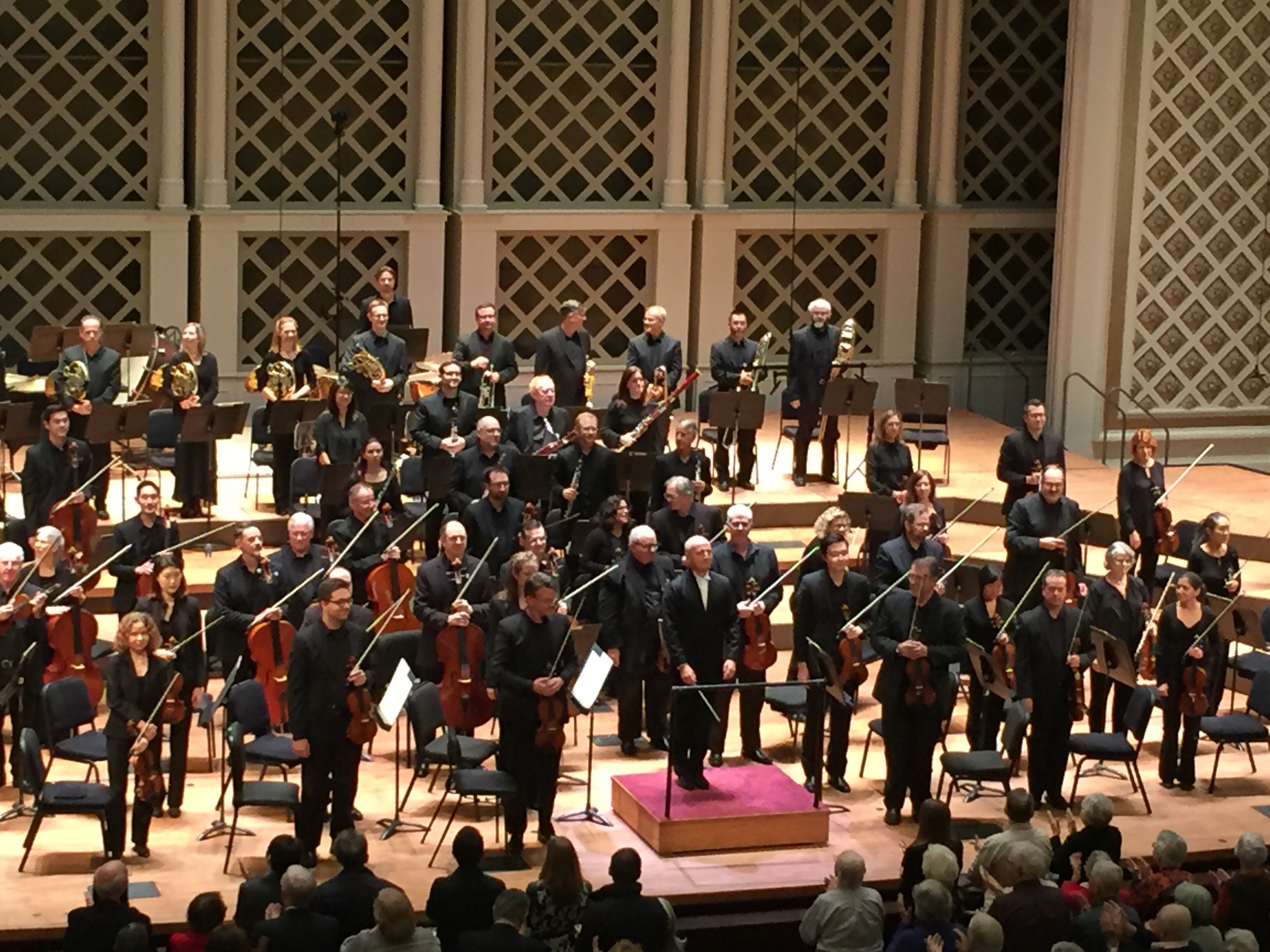
Music director laureate Paavo Järvi returned to the Cincinnati Symphony Orchestra on Friday, conducting for the first time in the all-new Music Hall. It was just like old times. Well, almost.
Järvi’s energized leadership and a top-notch piano soloist, Alice Sara Ott, added up to a gripping program for the CSO’s first morning concert of the season. But even more uplifting than the performance was the sound that Järvi achieved in the hall.
The orchestra has been “tuning the hall” acoustically since it returned on Oct. 6 following Music Hall’s massive renovation – which included the addition of a large thrust stage. For this concert, Järvi came up with yet another seating configuration for the orchestra. I’m happy to report that, from my seat in the balcony, it mostly worked.
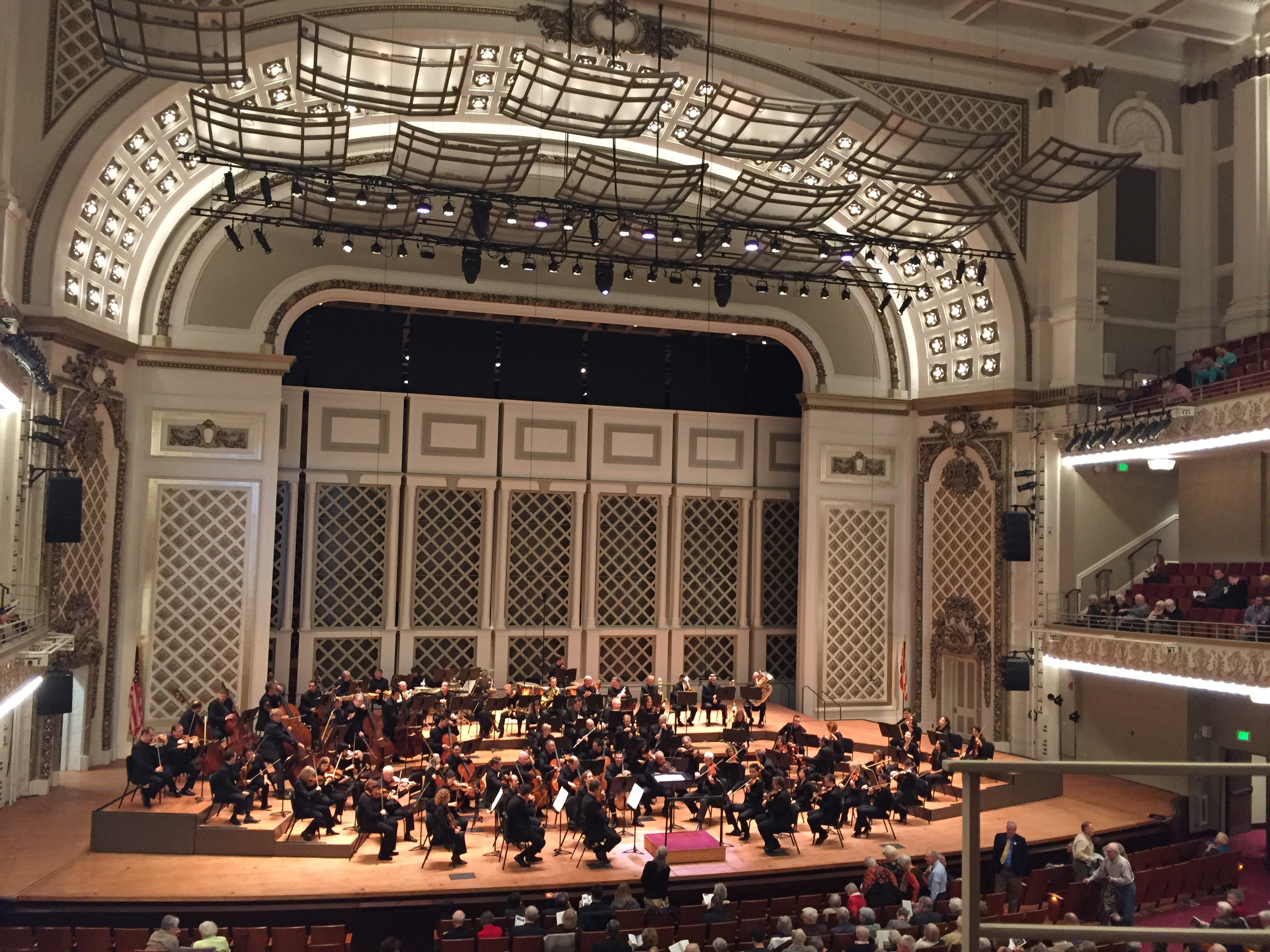
So, in Hindemith’s “Mathis der Maler,” it was striking to see that the cellos and basses had been moved to the maestro’s left, while second violins and violas were on the right on risers. For whatever reason, the result was not only a firmer bass sound, but also a better clarity of sound throughout the performance. Only the trombones, seated on the top riser, sounded slightly disembodied from the whole.
One of Hindemith’s greatest works, the three-movement symphony is extracted from his opera, Mathis der Maler, about the painter Matthias Grünewald and his struggles with society. Each movement was inspired by one of Grünewald’s paintings. Although the score was composed in the 1930s, it looks back to Baroque musical forms.
It’s too bad that this marvelous piece is so under-appreciated. (In fact, Järvi was the last to lead the work here, in 2006.) Each panel of the triptych was vividly portrayed.
In the opening “Angelic Concert,” inspired by the famous Isenheim Altar, Järvi etched the individual voices of counterpoint clearly, propelling the movement to a resplendent brass climax. The second, depicting the internment of Jesus, had a luminous, spiritual quality, set off by a duo for flute (Randolph Bowman) and oboe (Dwight Parry). One could feel the emotional turmoil of the finale, “Temptation of Saint Anthony,” with its dramatic timpani rolls and urgent unison themes. The movement was brought to a peak with a stunning chorale, beautifully played by the brass section.
The program’s centerpiece was Grieg’s Piano Concerto in A Minor. Ott, who last appeared at the CSO in 2010, is a German-Japanese pianist of considerable gifts. (She’s also the first pianist I’ve ever seen perform barefoot in her ball gown.)
She’s not a powerhouse player, and her light touch and lyrical phrasing were ideal for Music Hall’s new acoustical space. She stood in her seat to attack Grieg’s powerful, keyboard-spanning chords. The first movement’s big cadenza was broad, sonorous and romantic. In the slow movement, she found beauty in the simplicity of Grieg’s melodies, a moment enhanced by the horn solo. Her playing in the dance-like finale was electrifying. Järvi was with the artist every step of the way for an exciting reading.
The program concluded with a rewarding performance of Schumann’s Symphony No. 3, “Rhenish.” Leading from memory, Järvi led vigorously, drawing a robust sound from the strings and boldly etching accents. He was attentive to the shape of each phrase, and illuminated details in the symphonic texture that might have gone unnoticed in other hands.
The Scherzo movement had a spontaneous quality. The third movement, “Not Fast,” was serene and beautifully balanced. In the fourth movement, the conductor reveled in the majesty of the brass choir evoking the Cologne Cathedral, before urging on his players to an inspired finish. Listeners were on their feet for a second time.
The Cincinnati Symphony Orchestra repeats at 8 p.m. Saturday in Music Hall. Tickets: 513-381-3300, cincinnatisymphony.org.
Discover more from janellesnotes
Subscribe to get the latest posts sent to your email.

As a conductor, I actually prefer the left bass and cello set-up. It’s becoming more common in Europe and I personally enjoy it because it allows tuning between the basses (and often scored octave unison cellos) and the first violins to be a little tighter and keeps the middle voices next to each other for interplay. The antiphonal 2nd violin section for unique stereo effect is a nice added bonus as well. It’s probably my favorite setup from the strings perspective.
Another benefit of this setup is that it points the cellos forward, giving them a little more presence and darkening the sound of the orchestra in the hall ever-so slightly.
I strongly agree with Paavo on the setup for this piece in particular. It was almost built for it. Bravi!
LikeLike
I especially appreciated having the celli and bass sections near the woodwinds – it was very grounding, and I heard quite clearly some sections I had heard before. It was a pleasure to have him back!
LikeLike
Thanks for your impressions!
LikeLike
I’d like to invite anyone who would like to reach me via e-mail instead of in a comment thread to use janellesnotes@yahoo.com.
LikeLike
The sound of the renovated Music Hall auditorium was richer and much clearer than in the past. The warmth is still there. I would guess this must be among the very best places in the world to hear a symphony.
LikeLike
From row N center the sound with this arrangement of musicians was th best I have ever heard in music hall. Musical phrasing is Paavo,s long suit. Welcome back
LikeLike