
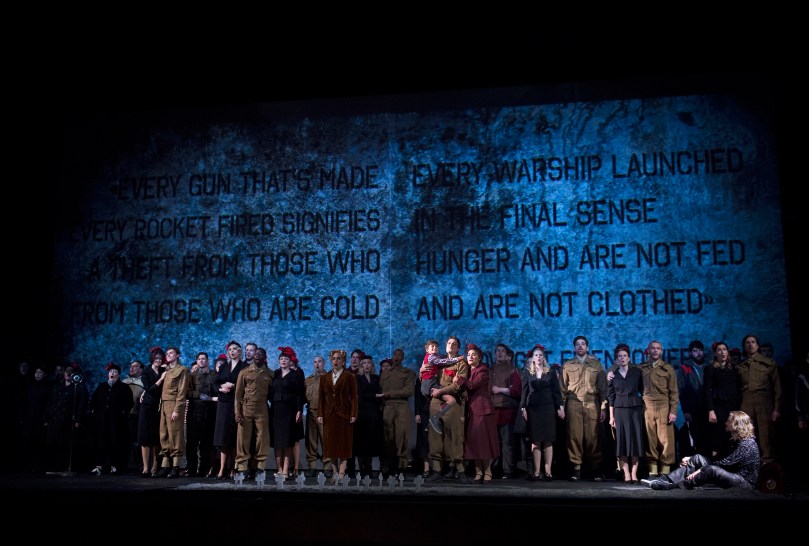
This month at Cincinnati Opera, audiences are seeing an opera based on a Pink Floyd rock album and another, “As One,” on a transgender topic. The company is commissioning “Blind Injustice,” based on the Ohio Innocence Project at the University of Cincinnati, to premiere next year in CO’s 99th season.
Last week, the chamber group concert:nova presented a “rock opera” based on sci-fi stories from “The Illustrated Man” by Ray Bradbury. (Here’s a column I wrote about it.)
It’s no secret that opera can no longer lure audiences with just the traditional canon of the ABCs – “Aida,” “La Boheme” and “Carmen.” Around the country, opera companies are embracing diversity and programming new American opera on a range of topics.
For the last couple of decades, new opera has addressed timely social issues – such as Jake Heggie’s and Terrence McNally’s “Dead Man Walking,” based on the book by Sister Helen Prejean about the death penalty. As opera embraces the vernacular – with the aim of making it accessible to all — the whole art form is blurring the lines between traditional opera, pop and musical theater.
A case in point is “Another Brick in the Wall,” based on the acid-rock Pink Floyd Album, “The Wall.” To me, the production emphasized the visuals – the projections, the scenic design, the spectacle – leaving an impression not far removed from a night at the theater seeing “Les Miserables” or “Miss Saigon.” (Read my review here.)
Cincinnati Opera and the University of Cincinnati Opera Department are at the forefront of a national trend to develop and present new opera with a groundbreaking program called Opera Fusion: New Works. It’s important. This year and next, said the program’s co-director Marcus Küchle, nearly one-fifth of operas programmed in America are new works “and our company is no exception.”
With a number of American composers and librettists in town last week, Cincinnati Opera decided to host an impromptu discussion about opera being written today.
“We need to break down snobbery,” said Mark Campbell, co-librettist for “As One,” who has written words for 15 operas (including “Silent Night”), several musicals and has more opera in the early stages. “We’ve done something relevant for people by writing stories that are relevant to our times. The opera we write today is attempting to connect directly to the audience.”
How is opera transforming? Julien Bilodeau, who wrote the new score to Roger Waters’ texts in “Another Brick,” remarked, “We would like people to define in 50 years what we are doing now.”
To some, labels such as conventional opera, musical, play with music or even song cycle aren’t as important as whether the piece successfully tells a story.
“Let’s figure out the story and why we need to tell it,” said Laura Kaminsky, composer of “As One.” “It will find its place and if it’s a good piece, it will speak to people.”
That is, after all, is why we love “Carmen” and “La Traviata.” They are stories that are in some way universal, with characters that touch us.
Discover more from janellesnotes
Subscribe to get the latest posts sent to your email.
