
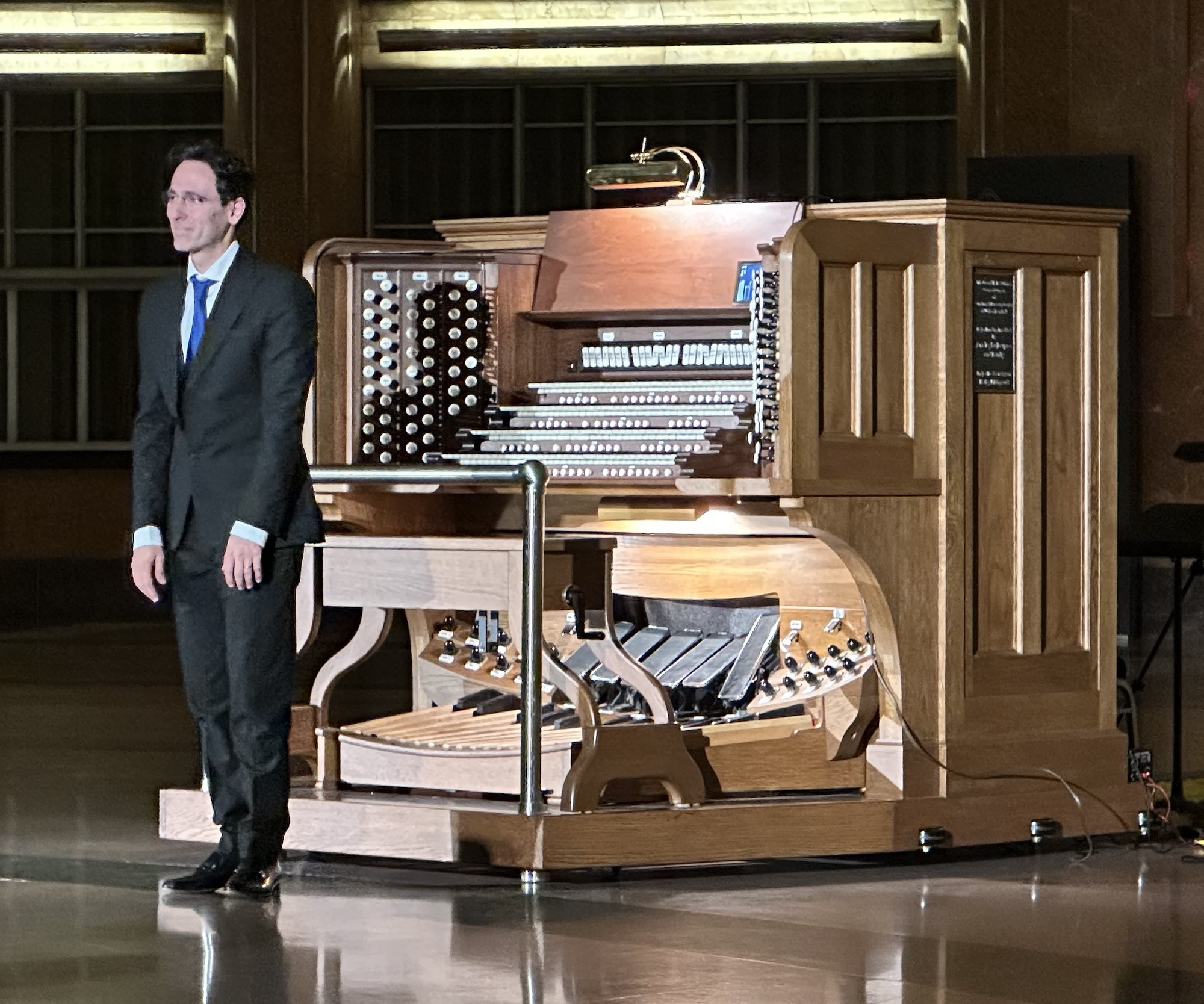
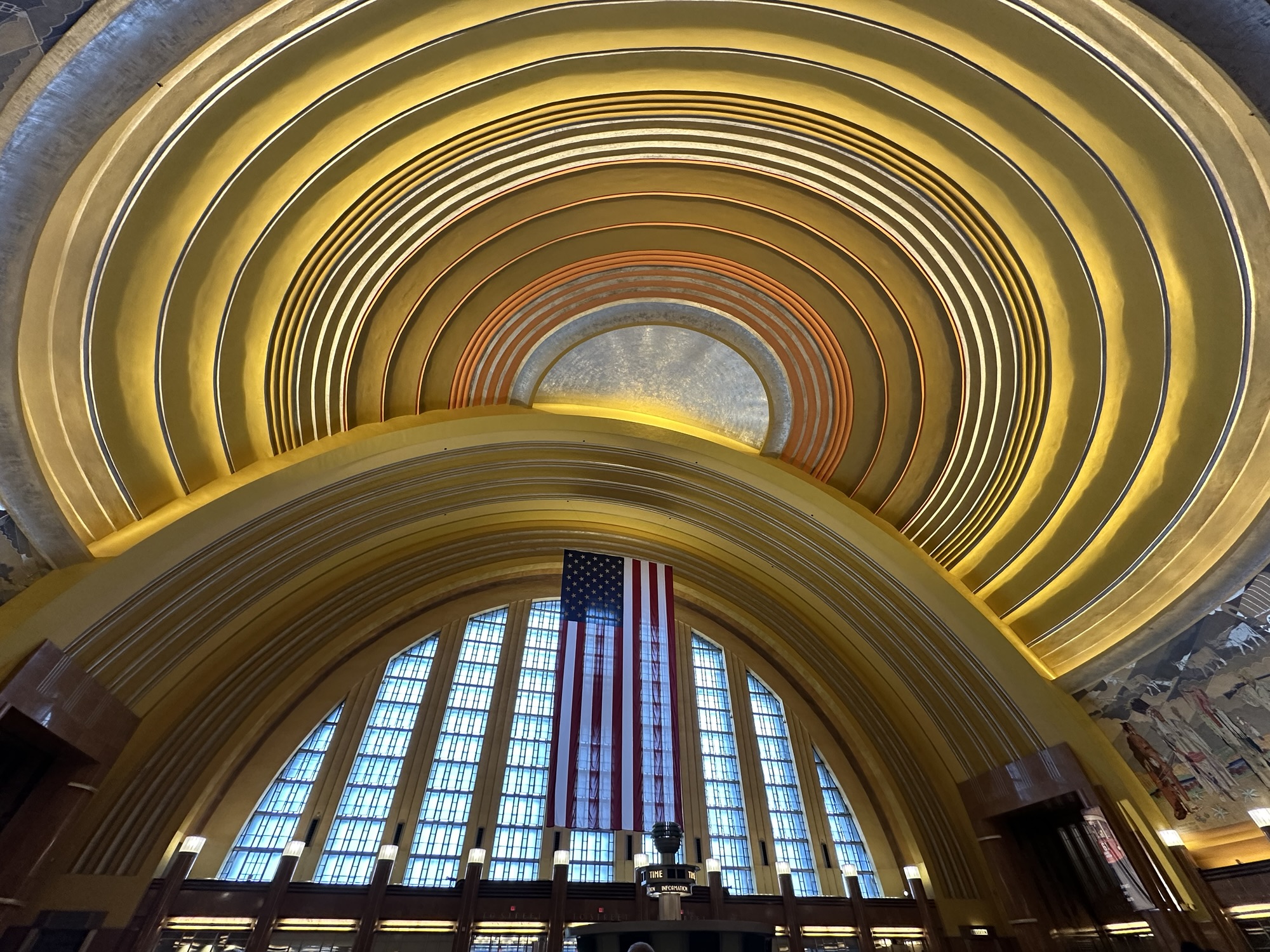
Hundreds of aficionados of organ music — as well as admirers of the stunning Art Deco Rotunda in Cincinnati Museum Center — braved a dark and stormy night on Oct. 29 to attend the opening concert of the Music in the Museum series. The excellent organist Vincent Dubois, now titular organist of the Notre-Dame Cathedral in Paris, performed a substantial program on the great E.M. Skinner concert organ built in 1929, the year Union Terminal began construction.
The organ is designed in the American Symphonic Organ tradition, able to produce every tone of a symphonic orchestra, and then some. Cincinnati’s E.M. Skinner organ is one of the treasures of the United States.
At one moment, Dubois paused to thank those who have supported the organ, saying, “It’s rare to find this quality of voicing… I enjoyed discovering so many colors and textures. It’s infinite in that instrument.”
Besides his Paris post, Dubois is newly appointed Professor of organ interpretation and improvisation at the Hochschule für Musik (University of Music) in Saarbrücken, Germany. His wide-ranging selections included many by French composers, some rarely heard, which were a treat to hear.
Dubois opened with J.S. Bach’s Passacaglia and Fugue in C Minor, BWV 582. His sound was instantly enthralling, from the deep tones of the repeating bass line (or ground bass) to the wonderful embellishments that unfolded above it. The music in the highest register had a spiritual quality, and you could see that the organist felt every note. The concluding fugue was majestic, and he held its final note at length, allowing the sound to continue ringing in the resonant acoustic of the Rotunda.
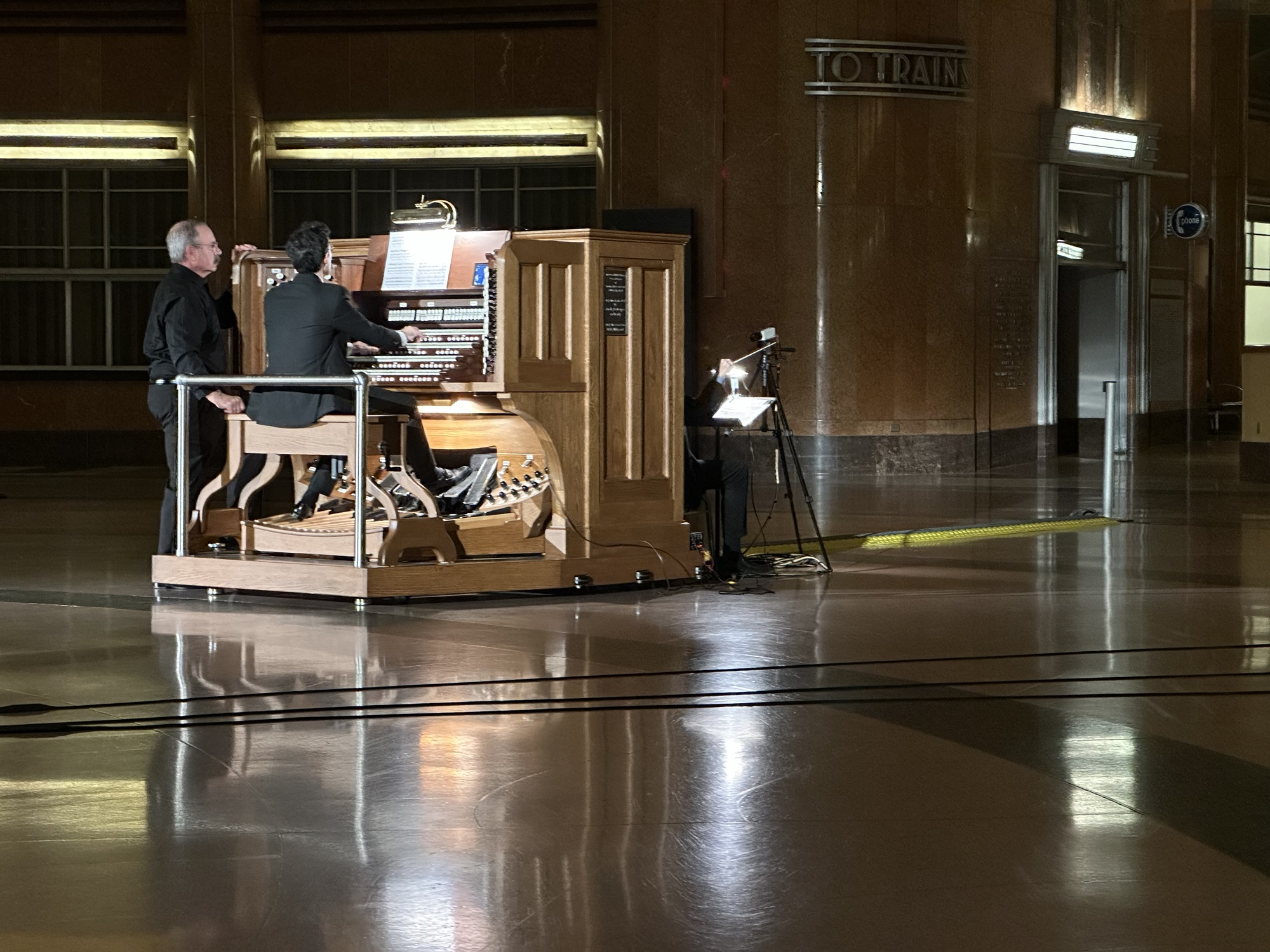
Dubois called upon two collaborators for the next three works: Russell Burge, CCM Professor of Percussion, and Kelly Hale, Professor Emeritus of Opera and Coaching, who conducted the spacially separated duo.
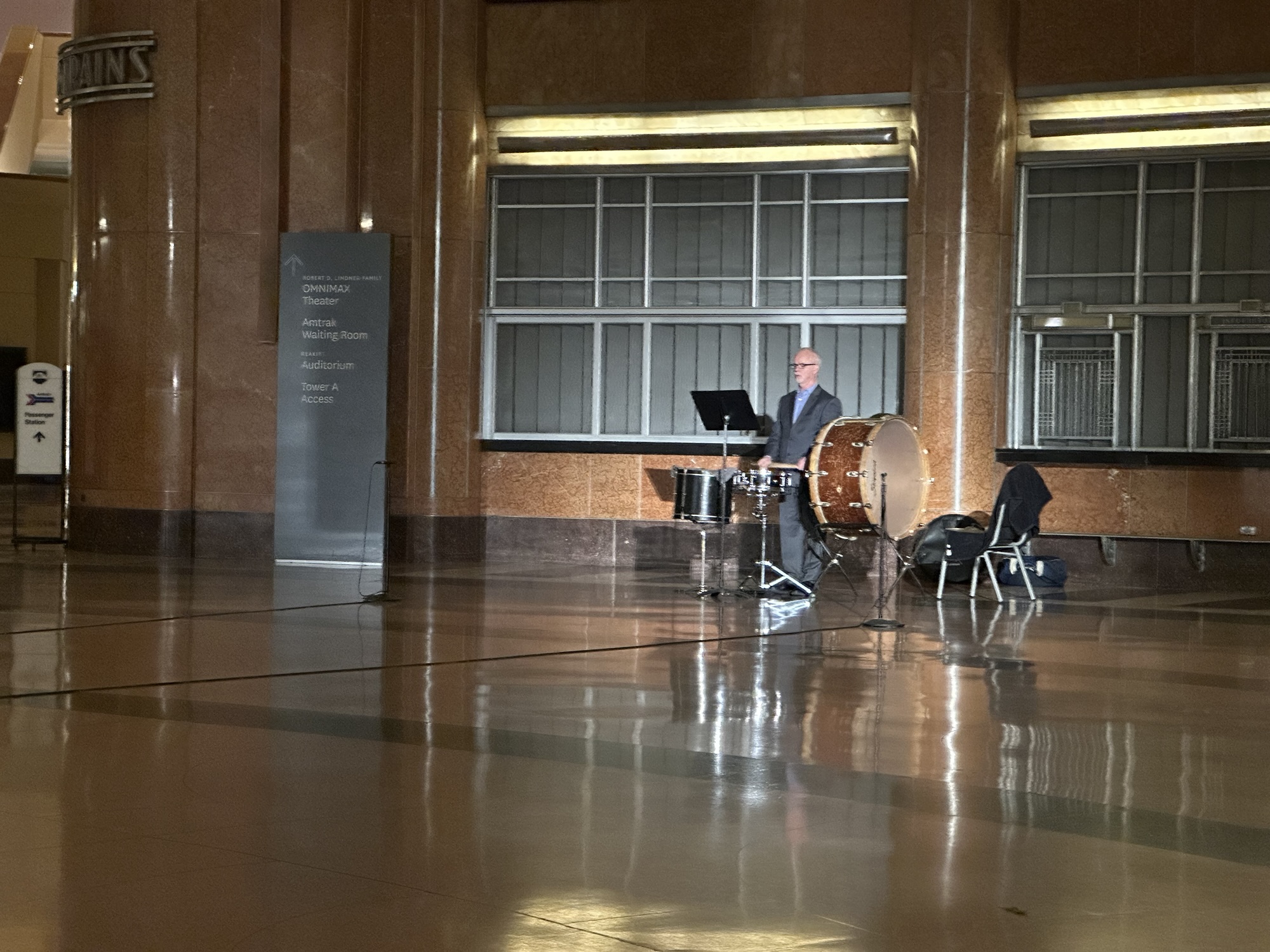
Jean-Philippe Rameau was represented by the dance, “Les sauvages” from Rameau’s 1735 opera-ballet, “Les Indes galantes,” accompanied by marvelous drumming by Burge. The work was inspired by a visit to France by Indigenous American chiefs in 1725.
Dubois then fast-forwarded to 20th-century France with three movements from Francis Poulenc‘s “Suite française,” originally an orchestral suite from his incidental music to a play, “La Reine Margot.” Typical of Poulenc, there were dissonances and witty dialogues between organ and snare drum. The colors of the organ ranged from warm to reedy.
Pierre Cochereau‘s “Bolero on a theme of Charles Racquet” has its roots in the Notre-Dame Cathedral, where the composer was titular organist from 1955-84. Cochereau improvised this work for organ and percussion in 1973 at Notre-Dame de Paris, and it was transcribed by his son. He based his theme on one by a 17th-century predecessor at the Cathedral, Charles Racquet.
With the snare drum repeating its bolero rhythm and the relentless, long crescendos, one couldn’t ignore the influence of Ravel. But this bolero was much more complex — Ravel on steroids. Huge climaxes overwhelmed the acoustics, making it hard to follow at times. The work finally subsided, as if departing into the distance. Burge performed wonderfully from his position at the edge of the Rotunda.
Dubois concluded the first half with French organist Louis Vierne‘s organ showpiece, “Carillon de Westminster.” Here, we experienced the full spectrum of Dubois’ artistry, starting with the subtle colors evoking carillon overtones over the familiar chime theme. Dubois is a technical wizard, but he also has a gift for controlling the instrument’s myriad colors. I was mesmerized by the dynamic subtleties he was able to achieve. In the final moments, the listener could visualize a glorious cacophony of bells.
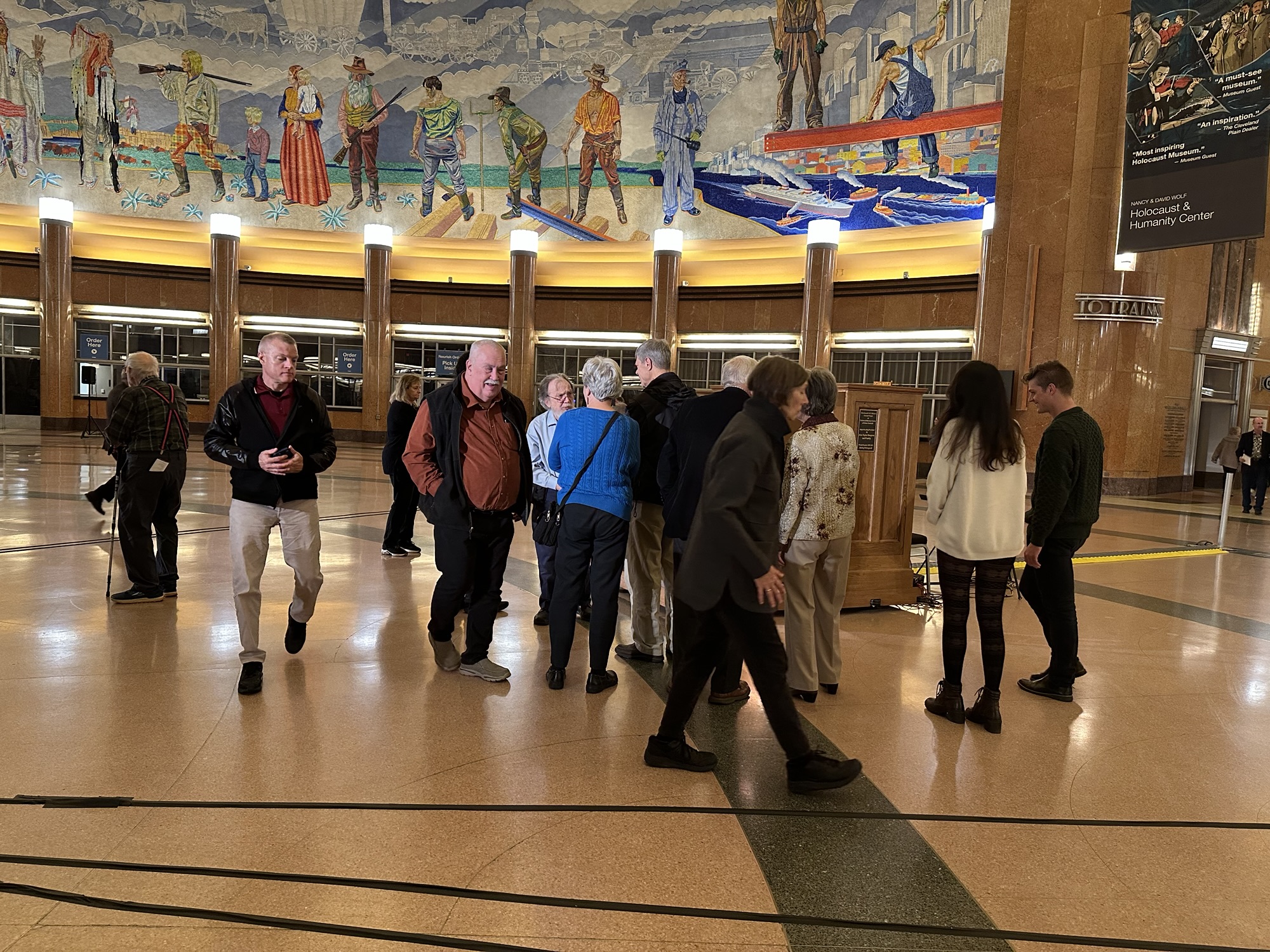
The organist opened the program’s second half with music by the French romantic composer César Franck. Choral No. 1 in E Major, from “Trois Chorals” was written in the final year of Franck’s life, 1890. The richness of harmony was stunning in this space, and Dubois’ expression was quite moving. After the opening reverie, he brought the work to a summit so powerful that the Rotunda floor vibrated.
That was followed by a titanic performance of Sergei Rachmaninoff‘s dramatic Prelude in C-sharp Minor originally for piano, a transcription by Vierne.
My personal favorite was Maurice Ravel‘s charming piano suite, “Le Tombeau de Couperin” (Menuet and Rigaudon), in a transcription by Dubois. He played with a light articulation, and I was amazed at the delicate and sometimes mysterious colors he achieved. The chimes at the end of Menuet were a lovely touch.
The program concluded with Sonata on the 94th Psalm in C Minor, by German composer Julius Reubke. Sadly Reubke died at age 24, a year after its 1857 premiere. He composed the work while he was studying with Franz Liszt, and Liszt’s influence could be heard throughout. It was dark, chromatic and dramatic. Dubois tackled massive feats, from thundering chords to lightning-quick virtuosities. To me, it was more like a fantasy than a sonata. Just as the piece subsided to the sounds of the celeste, there was a fugue and a huge “coda” that climbed mountain after mountain of difficult figures. It was a spectacular performance.
Afterwards, Dubois told me he is pleased with the restoration of the great organ at the Notre-Dame Cathedral, and he participated in its rededication with other organists, which was televised internationally. (He serves as titular organist alongside Olivier Latry and Philippe Lefebvre.) “Unfortunately, you could only see the back of my head,” he laughed.
The Cincinnati Museum Center organ was restored, installed and is currently maintained by local retired physicist Harley Piltingsrud. The main organ was rescued from a church in Philadelphia. The E.M. Skinner organ from the former Powel Crosley, Jr. residence in Cincinnati is installed as the Antiphonal division. The organ has nearly 5,000 pipes hidden in chambers behind the Rotunda walls, some weighing more than 700 pounds. Many loyal donors have supported this massive effort. You can read more about its installation in my 2023 interview here.
Coming next to the series on Feb. 25, 2026: Swedish organ virtuoso Johannes Skoog, recently appointed to be the Swedish Royal Court Organist.For tickets and info click here.
Discover more from janellesnotes
Subscribe to get the latest posts sent to your email.

[…] organist Vincent Dubois, now titular organist of the Notre-Dame Cathedral in Paris, performed a substantial program on the great E.M. Skinner concert organ built in 1929, the year Union Terminal began […]
LikeLike