
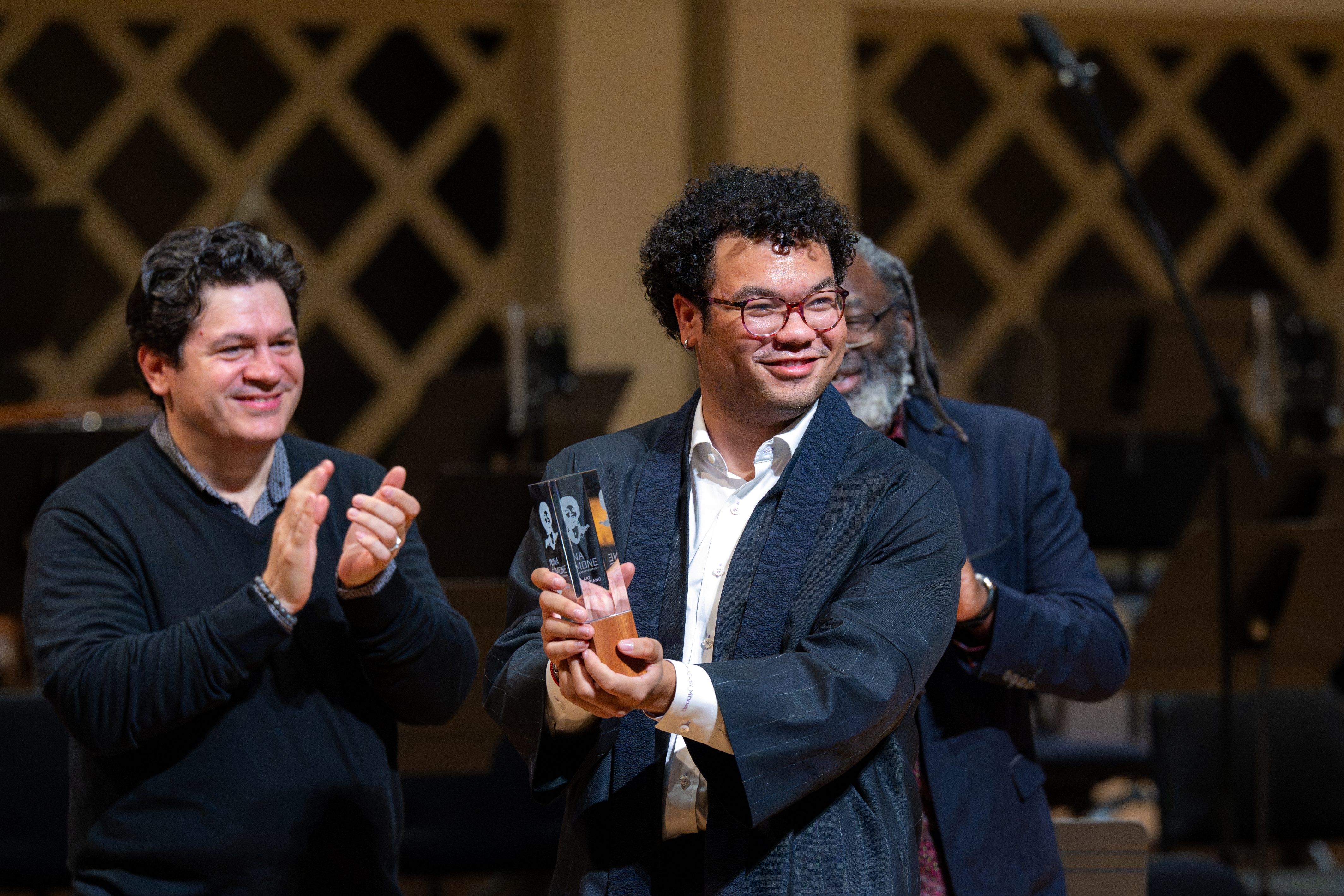
To play Rachmaninoff’s Piano Concerto No. 3, you need to possess a spectacular technique, expressive power and, not least, endurance. Pianist Joshua Mhoon had all those and more.
Mhoon, 22, won first prize in the Nina Simone Piano Competition, held on Wed. Oct. 7 in Music Hall. Three finalists — Evan Hines, John Paul McGee and Mhoon — competed in the Solo Round followed by the Concerto Round in the competition. Music Director Cristian Măcelaru conducted the Cincinnati Symphony Orchestra for the Concerto Round, during which the young artists each performed a complete piano concerto.
Mhoon was awarded the $12,000 first prize, as well as a recital at the San Francisco Conservatory of Music presented by Opus 3. Second prize ($4,000) went to Evan Hines. John Paul McGee won third and $2,000. A small audience of symphony fans and piano aficionados was on hand, and gave warm responses to each artist.
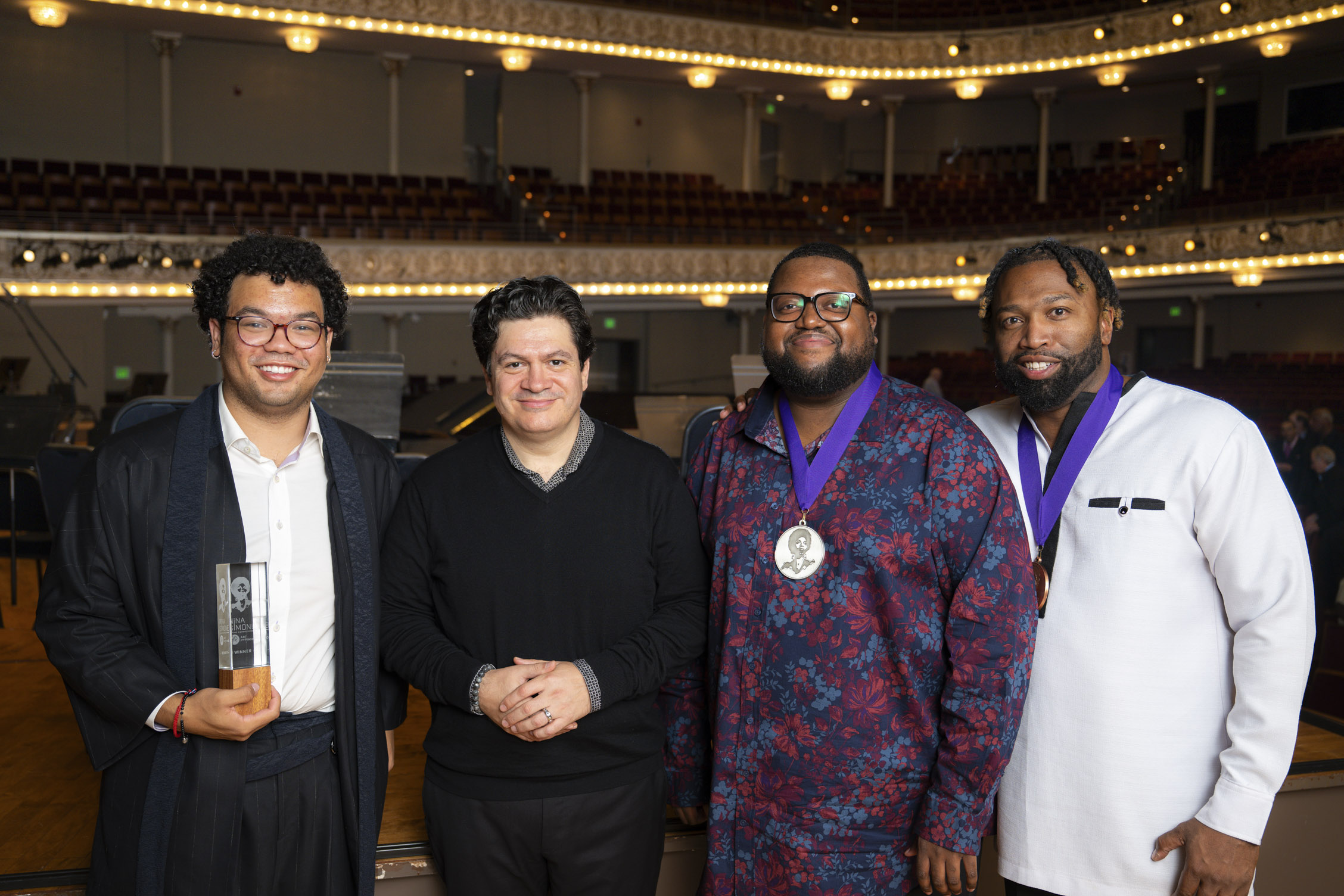
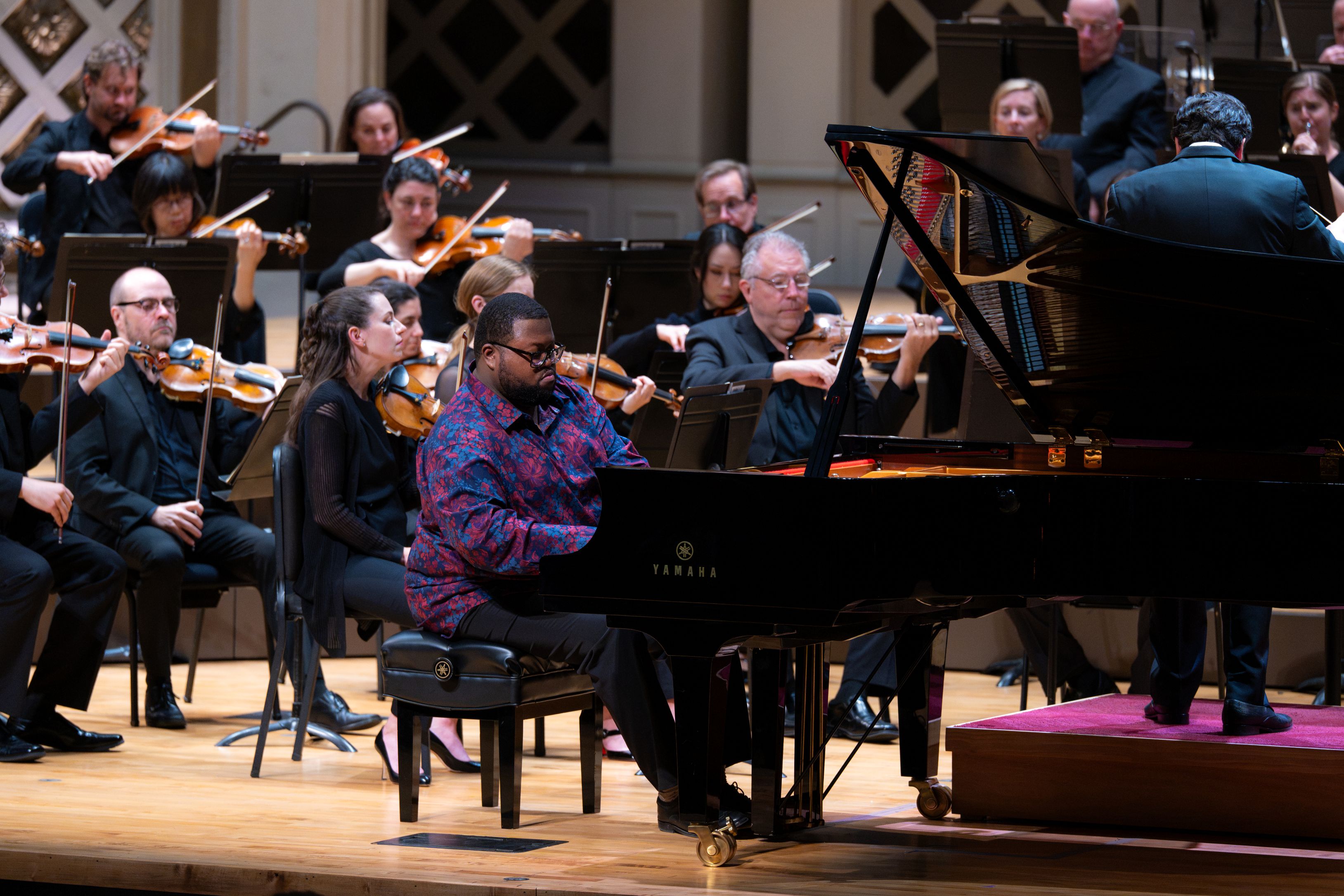
The previous rounds of the Artist Division were held at the San Francisco Conservatory of Music, said Awadagin Pratt, who is currently professor of piano on its faculty after serving on the piano faculty at CCM for two decades. Pratt is founder of the Art of the Piano Foundation, which hosts the biennial Nina Simone Piano Competition to spotlight talented young African American classical pianists. He is a Yamaha Artist, and the competition was using a Yamaha concert grand piano.
The judges were Pierre Van Der Westhuizen, executive and artistic director of the prestigious Gilmore Piano Festival (and a CCM alumnus); Mikael Darmanie, also a CCM grad, who is busy classical performer, composer and conductor with an eclectic career as a DJ and member of the Warp Trio. Măcelaru served as the third judge.
To open the Concerto Round, Hines performed Alexander Scriabin’s Piano Concerto in F-sharp Minor. Ironically, Scriabin’s early concerto received its American premiere with the CSO in Music Hall in 1907, with the composer as soloist. It’s a wonderful concerto that has it all — the lyricism of Chopin, the lushness of Rachmaninoff, solos for horn and clarinet, and a bravura finish. It made me wonder why we don’t hear this concerto more often. I enjoyed Hines’ performance. I was also impressed by his solo round selections: George Walker’s Sonata No. 2 and Etude No. 8 by Sergei Bortkiewicz. Hines is currently assistant professor of collaborative piano at Oberlin Conservatory.
McGee performed Florence Price’s Concerto in D Minor in One Movement. McGee’s bravura performance of the opening made me wish I could have heard Price play this work. The original musical score was lost until 2019, when a copy was obtained at an auction, writes Miami University’s Dr. Tammy Kernodle in the program notes. (Previously, the concerto had been reconstructed from fragments.) I found McGee’s performance of the Adagio section quite moving, enhanced by an exquisite oboe solo (Dwight Parry). McGee, assistant chair of piano at Berklee College of Music and artist-in-residence in Black church music at Yale, has a fascinating career that blends genres of classical, gospel and jazz, and he’s also an ordained minister.
After intermission, Mhoon was soloist in Rachmaninoff’s Piano Concerto No. 3 in D Minor, one of the most formidable works in the piano solo repertoire. Mhoon delivered a thrilling, note-perfect performance. His adrenaline surged a bit at times, but Măcelaru supported the soloist expertly, as he did in the other two concerti. I especially enjoyed the orchestra’s sweeping melodies and colors in this performance. Perhaps you can’t hear a piece like Rach 3 too often.
Discover more from janellesnotes
Subscribe to get the latest posts sent to your email.
