
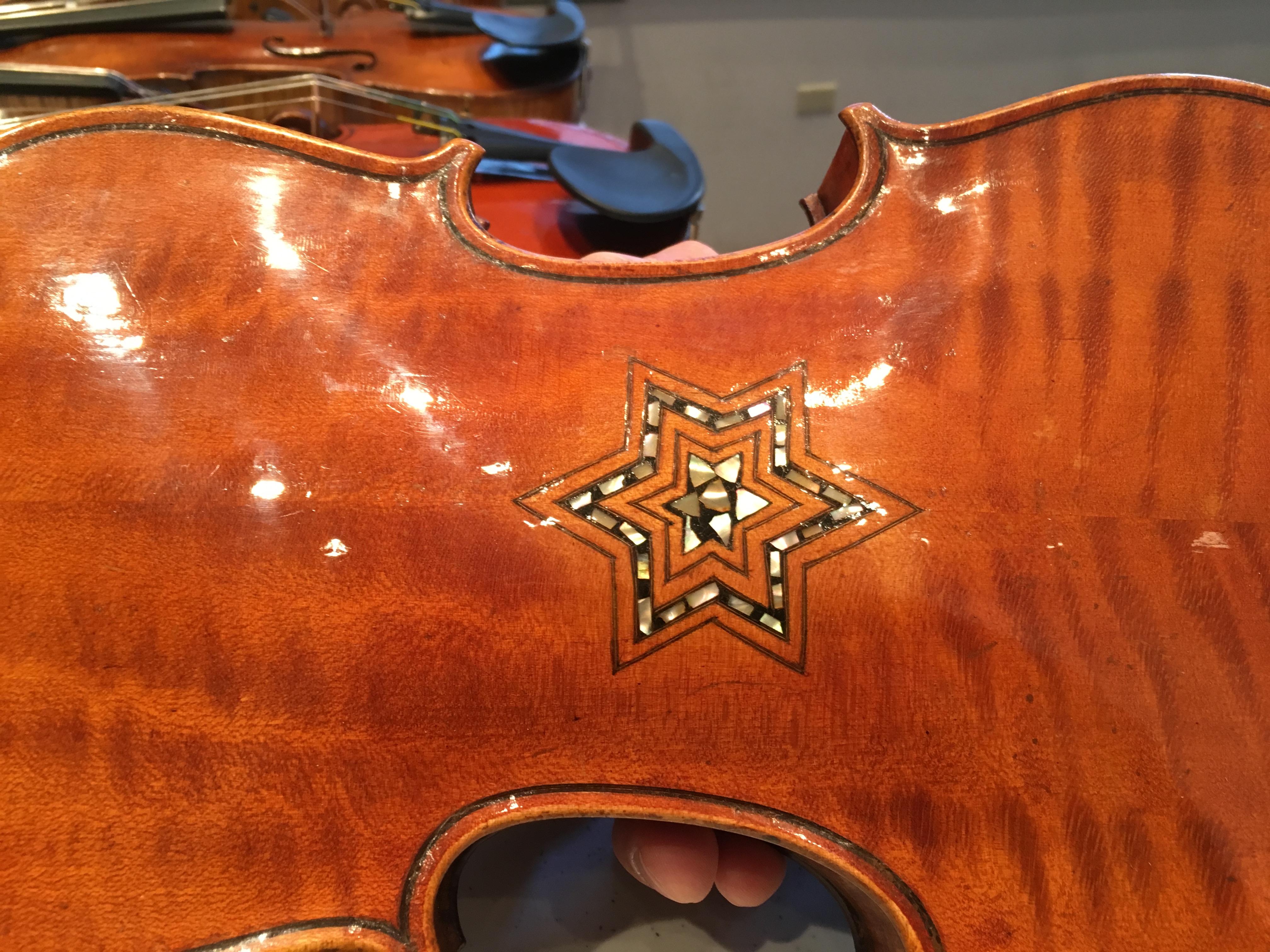
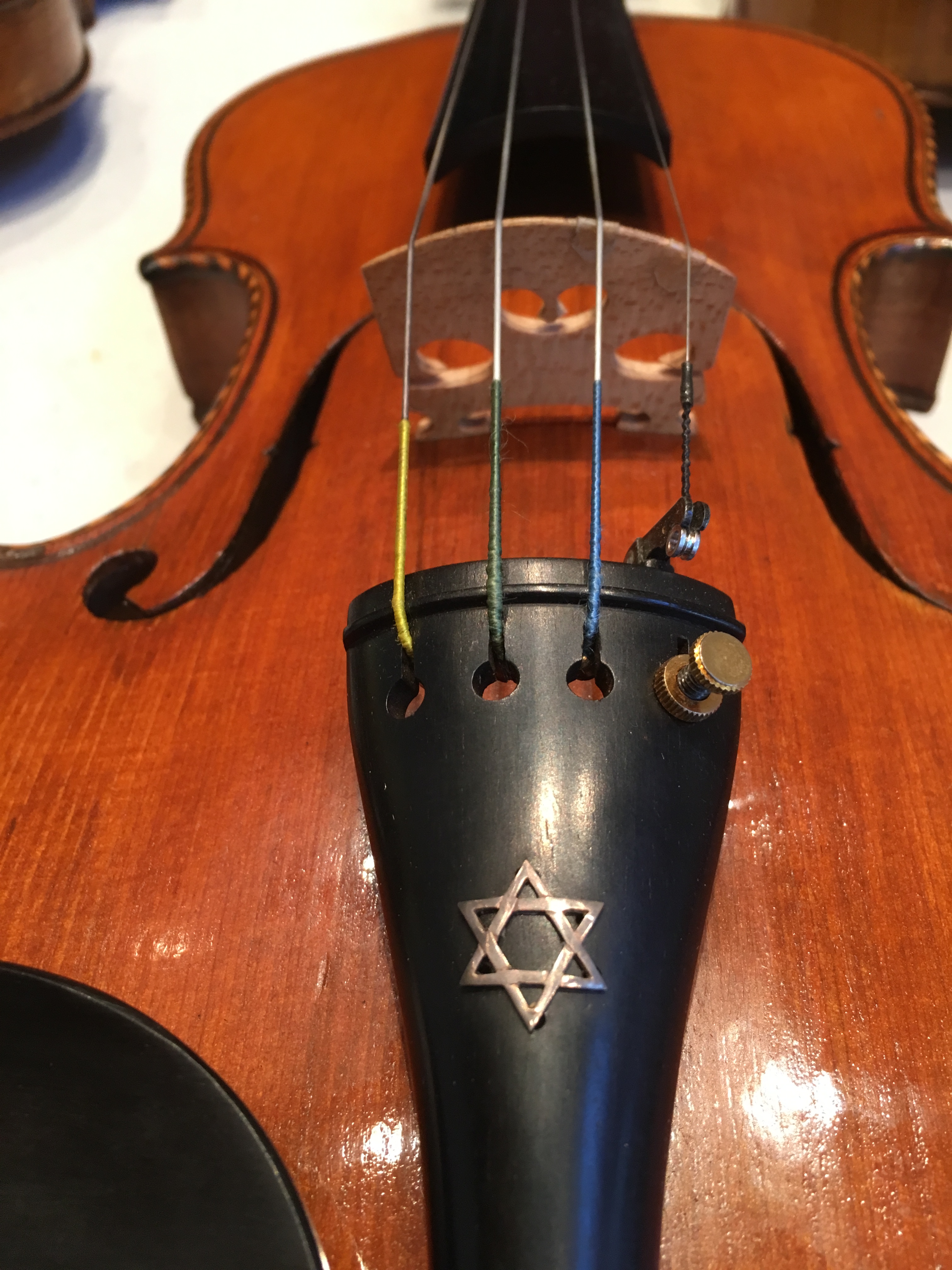
Avshalom “Avshi” Weinstein carefully lifted one of the violins that his family of master violin makers in Tel Aviv, Israel, had lovingly restored. Its varnish was beautiful. Turning it over, he pointed out the ornate, inlaid Star of David on its back.
“Most of these instruments were simple, because those people didn’t have much money,” Weinstein said, noting that this was not a high-quality violin. “Many played Klezmer (music) in their ghettos. This type of instrument with the Star of David would be played by Klezmers (Jewish folk musicians). They had no money, almost nothing.”
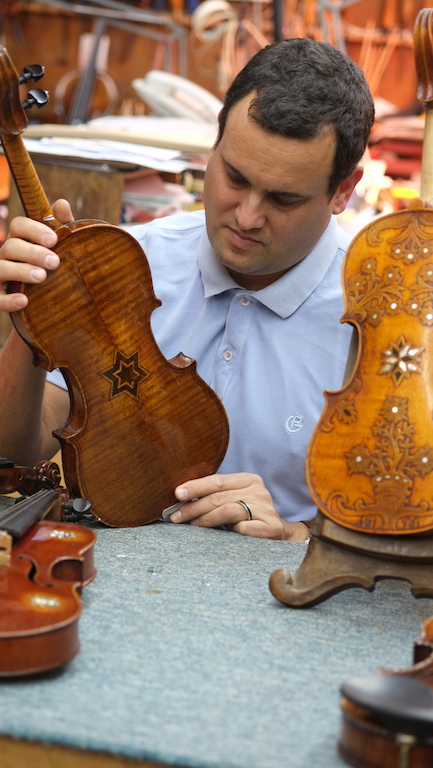
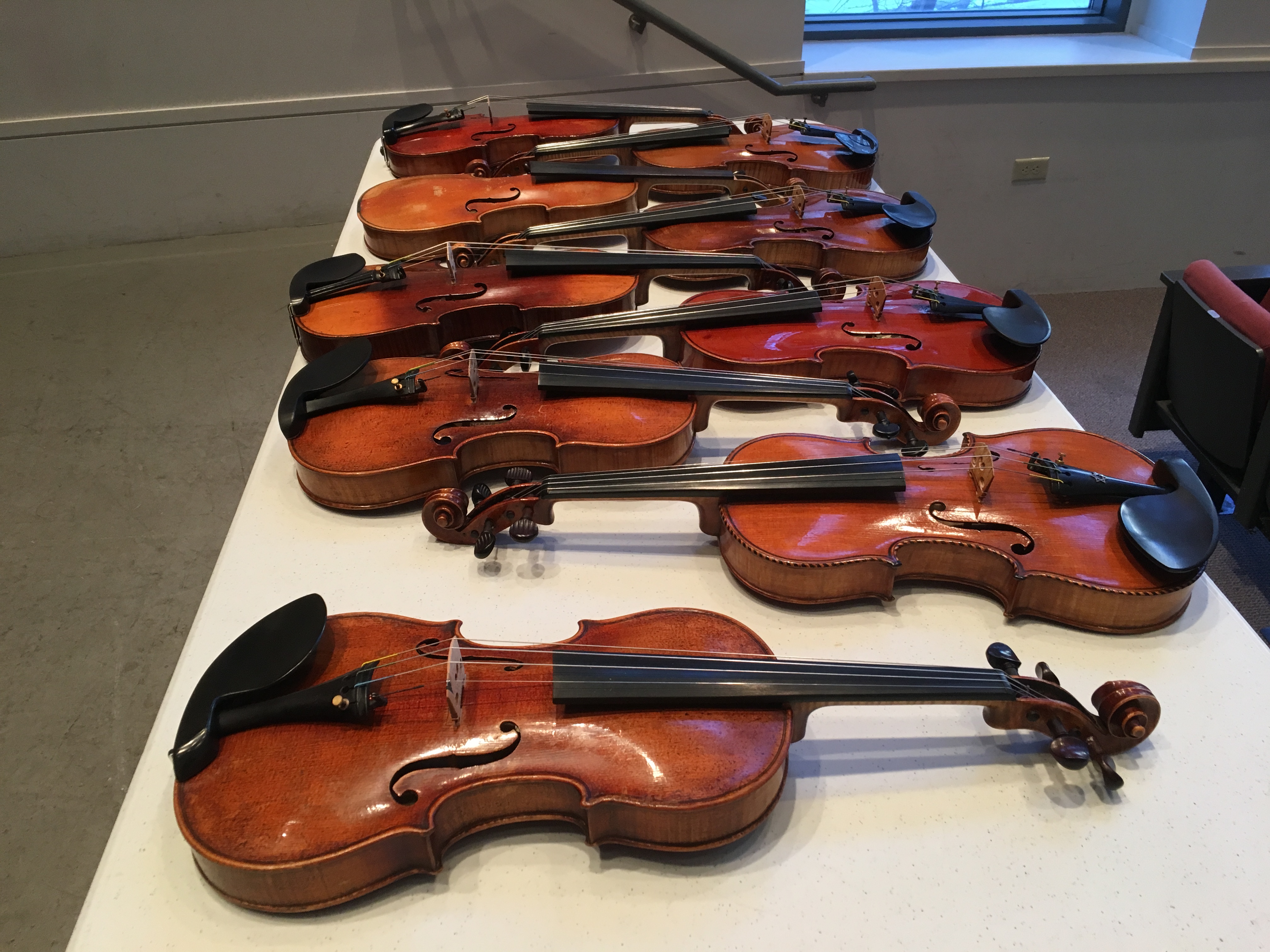
That violin with the Star of David is one of nine Holocaust-era violins that Weinstein hand-carried to Cincinnati this week. They will be played on Tuesday by some of Cincinnati’s finest musicians in a special concert at Music Hall.
The instruments are part of a collection of 65 violins, a cello and a viola that once were played under unspeakable conditions in concentration camps and ghettos during the Holocaust. Destined for ashes like many of their former owners, the violins have been brought back to life by three generations of the Weinstein family, all master luthiers (violin makers) with workshops in Israel and Istanbul.
Each violin has its own story. The violins and their owners were witness to unspeakable horrors during the Holocaust. The musicians who played them were forced to perform in freezing weather at concentration camps as inmates left each morning for forced labor and as they returned in the evenings.
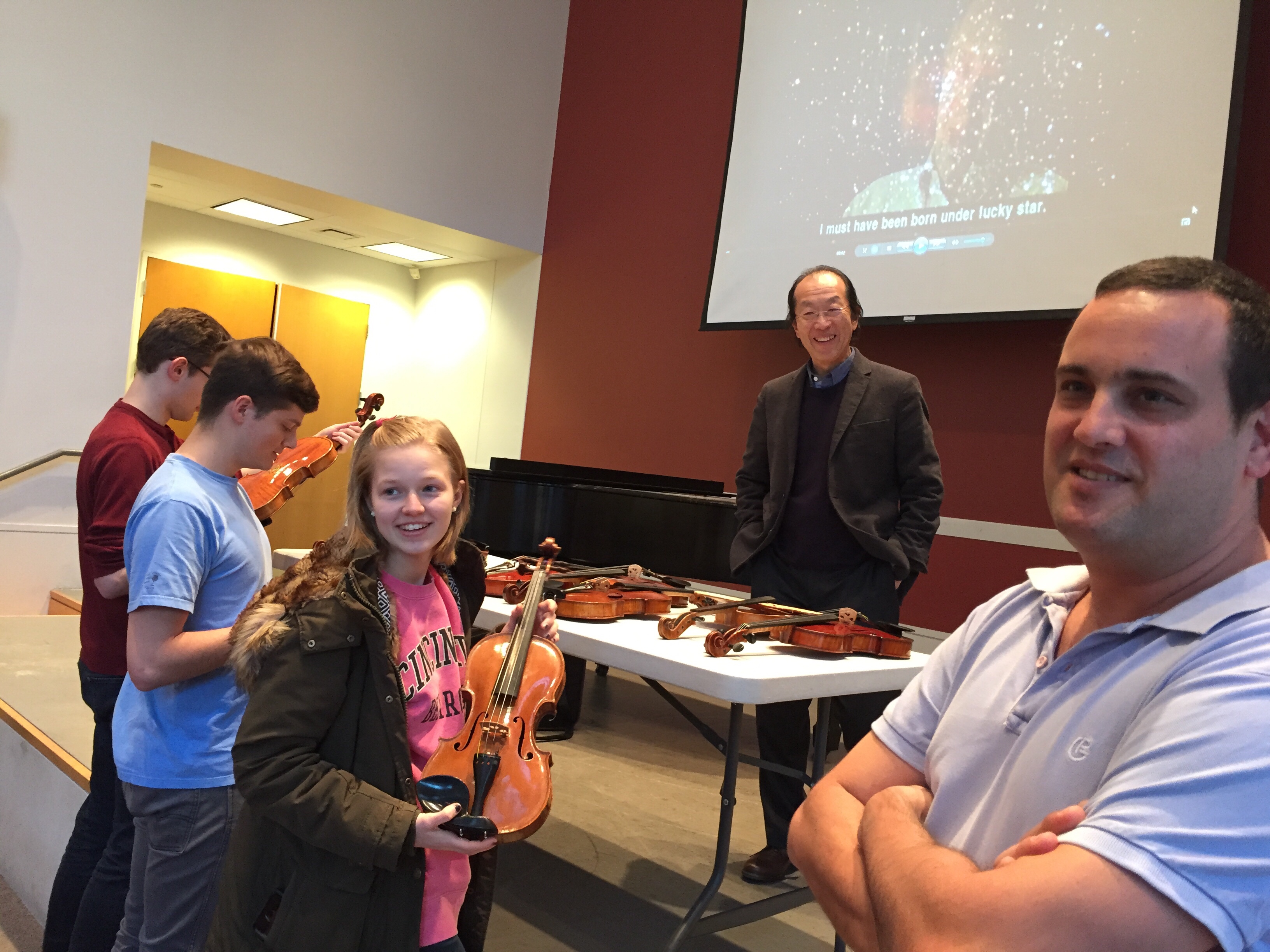
Several of the violins have Cincinnati ties that will be traced in the Music Hall performance, said Weinstein on Thursday, as he showed the instruments to violin students at the University of Cincinnati College-Conservatory of Music.
Some will tell the life story of the late violinist Henry Meyer, who was imprisoned during the war in some of the most notorious concentration camps, including Auschwitz. He played in the Birkenau Men’s Camp Orchestra, and ironically, the former child prodigy violinist was given the cymbals to play. Meyer later became a founding member of the celebrated LaSalle Quartet, which was in residence at the University of Cincinnati College-Conservatory of Music for four decades.
One violin, the Erich Weininger Violin, came from the Buchenwald concentration camp, where Meyer had also been imprisoned.
It was made in 1870 in the workshop of Schweitzer, a respected luthier. Weininger was a butcher and amateur violinist in Vienna. When the Nazis invaded Austria in 1938, he was sent to Dachau and later Buchenwald, where he managed to keep his violin. His violin tells the tale of the incredible odyssey of Weininger, who, like Henry Meyer, managed to survive.
Another Cincinnati-connected story will be told with the Schatzberg-Sawicki Violin. The Polish-born Dr. Leon Sawicki managed to survive by obtaining a fake ID and playing his violin on street corners. He came to the United States at the personal invitation of Dr. Albert Sabin, developer of the polio vaccine, who worked at the Children’s Hospital Research Foundation in Cincinnati.
A Shocking Discovery
The Violins of Hope project started in earnest about 20 years ago. Avshalom Weinstein’s father, Amnon – who lost an estimated 380 relatives in the Holocaust — began asking the public to share their Holocaust-era violins and their stories. Violins came from far and wide for him to restore. One arrived from a violin maker in Washington DC with a shocking discovery. Upon opening it up to make a small repair, the American luthier discovered a swastika with the words “Heil Hitler 1936” written next to it.
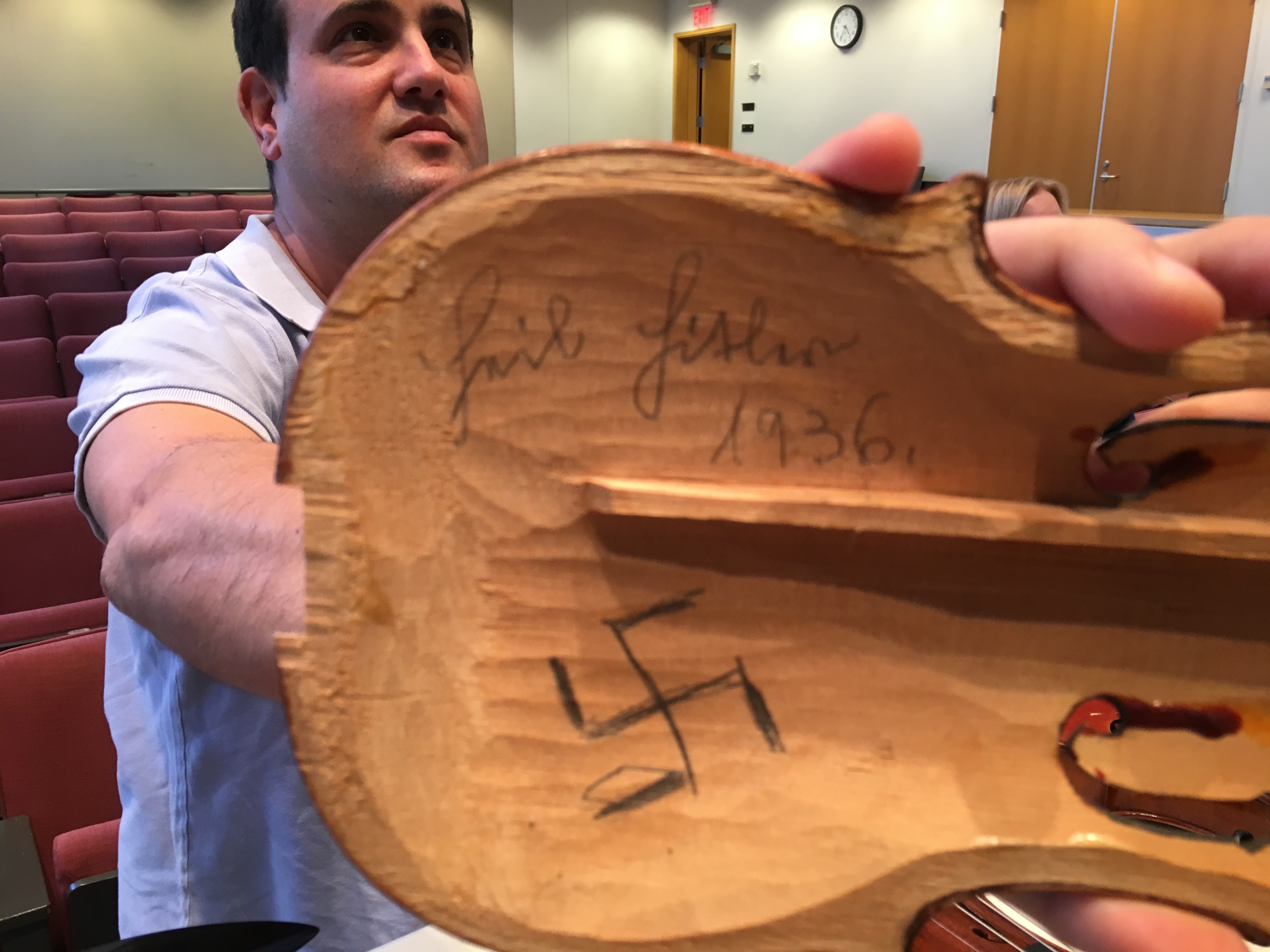
“His first intention was to destroy the violin,” Weinstein said. “Then he went online and somehow managed to find us and asked my father if he would like to have the violin for his collection. He said immediately yes. This is one of the few instruments that we will never restore, because of the significance.”
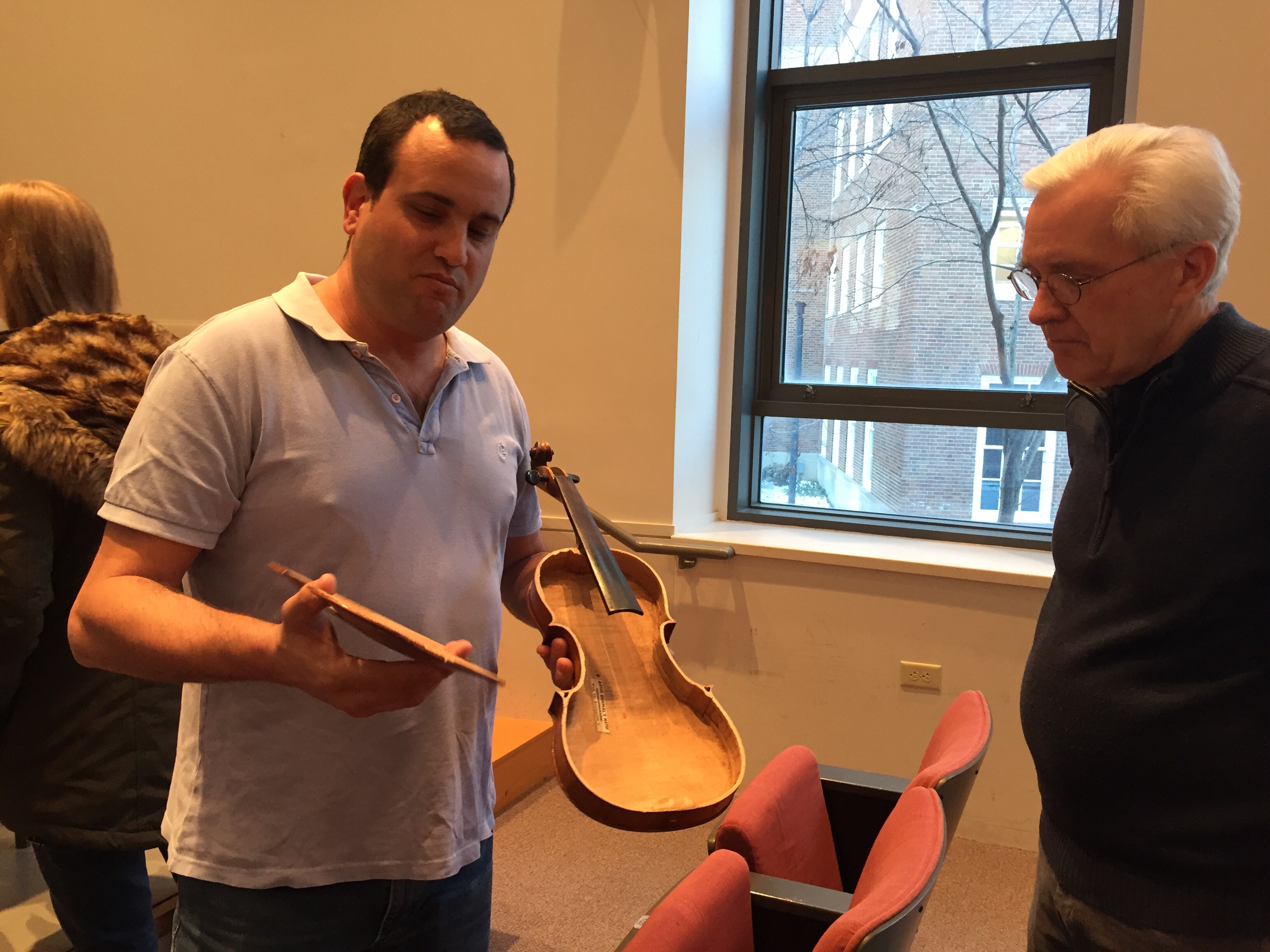
In reality, the collection started in the 1940s, when Israel was still under British control. The family patriarch, Moshe Weinstein, an immigrant from Lithuania, had set up a violin shop in Tel Aviv.
Soon, violins began arriving in the hands of the Jewish refugee musicians who had made it to Palestine, and were the earliest members of the Palestine Symphony Orchestra that later became the Israel Philharmonic. The problem was that they didn’t want to play on their German-made violins.
“After the war, people didn’t want to touch anything German. They came to my grandfather and said ‘Either you are going to buy it from us, or we are going to burn them,’” Avshalom Weinstein said.
For those in the camps, the violins offered hope. They were a way to help their owners get extra food and water for their families. But they also offer a reminder of a war in which tens of millions of people lost their lives.
Which violin struck him as having had the most touching story?
“It’s like asking someone, ‘Who is your favorite child?’” he replied. “Who am I to say whose story is more important than another story? They all have their impact and their point in history that we have to think (about) and cherish. Each one of them has a very important story behind it.”
For tickets call 513-621-2787 or visit holocaustandhumanity.org/violins-of-hope
Discover more from janellesnotes
Subscribe to get the latest posts sent to your email.

[…] case you’re wondering what the music might be in tomorrow night’s concert of the Violins of Hope at Music Hall, I’ve asked Evans Mirageas, who is curating the event, to give us a few hints. […]
LikeLike
[…] case you’re wondering what the music might be in tomorrow night’s concert of the Violins of Hope at Music Hall, I’ve asked Evans Mirageas, who is curating the event, to give us a few hints. […]
LikeLike
Destroy the violin?? Moron. It’s an inanimate object. What can it do??
LikeLike