
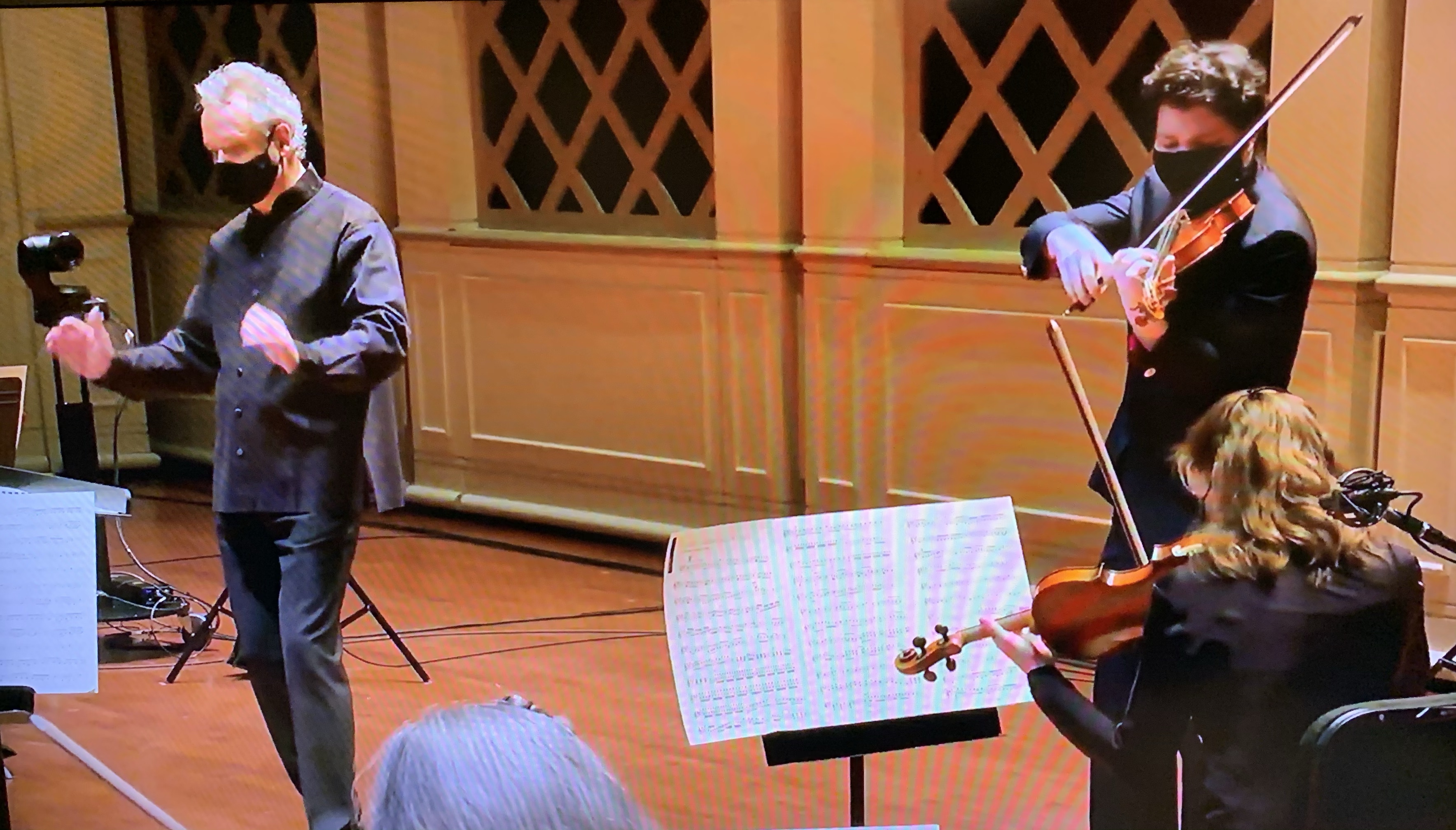
Question: How is recording a concert for livestream different from a regular recording session or an orchestra rehearsal?
“It’s a very strange, weird experience,” said CSO maestro Louis Langrée, during a recording session at Music Hall last week. “Because, when it’s a recording, you record bits, and you might do a run-through and make patches on what didn’t work. There is all this editing. We can’t do that. So we run it twice, and if there are places, or some movement where either I need to do it again, or the film director needs to do it again, we run it a third time.”
You may have noticed that the orchestra is facing the acoustical shell, with backs to the hall — not only to hear each other better but because the visuals looking out into the hall are pretty on film. The musicians are widely spaced, with Plexiglas between the winds. Playing without an audience is odd for the musicians and maestro.
“It’s the condition of concert, but there is no audience, so it’s not a concert. And that’s very strange. Also having the musicians so distanced from one another, it’s so difficult. It’s like conducting Gruyère fromage — the more holes you have, the less cheese you have. It’s harder to have connection of the sound,” Langrée 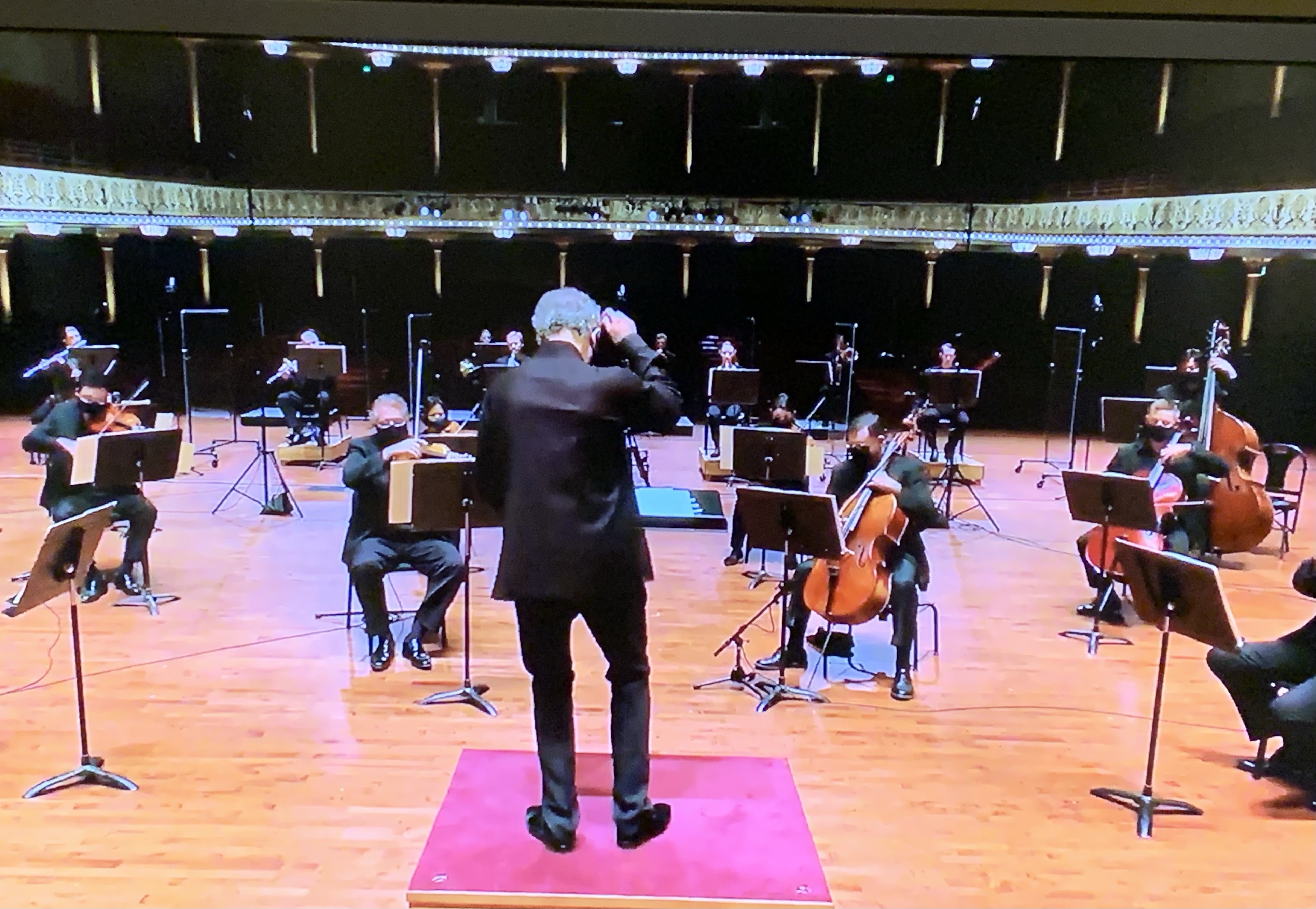 said. “But look at the situation with other orchestras. We are playing, and I’m so proud that we can do that, and that we are bringing these pieces, also.”
On Saturday, Oct. 24, Langrée led small ensembles of players (small for social distancing reasons) in Charles Ives’ “The Unanswered Question,” a Violin Concerto by Joseph Bologne, Chevalier de Saint-Georges and Stravinsky’s Pulcinella Suite (1949 revision).
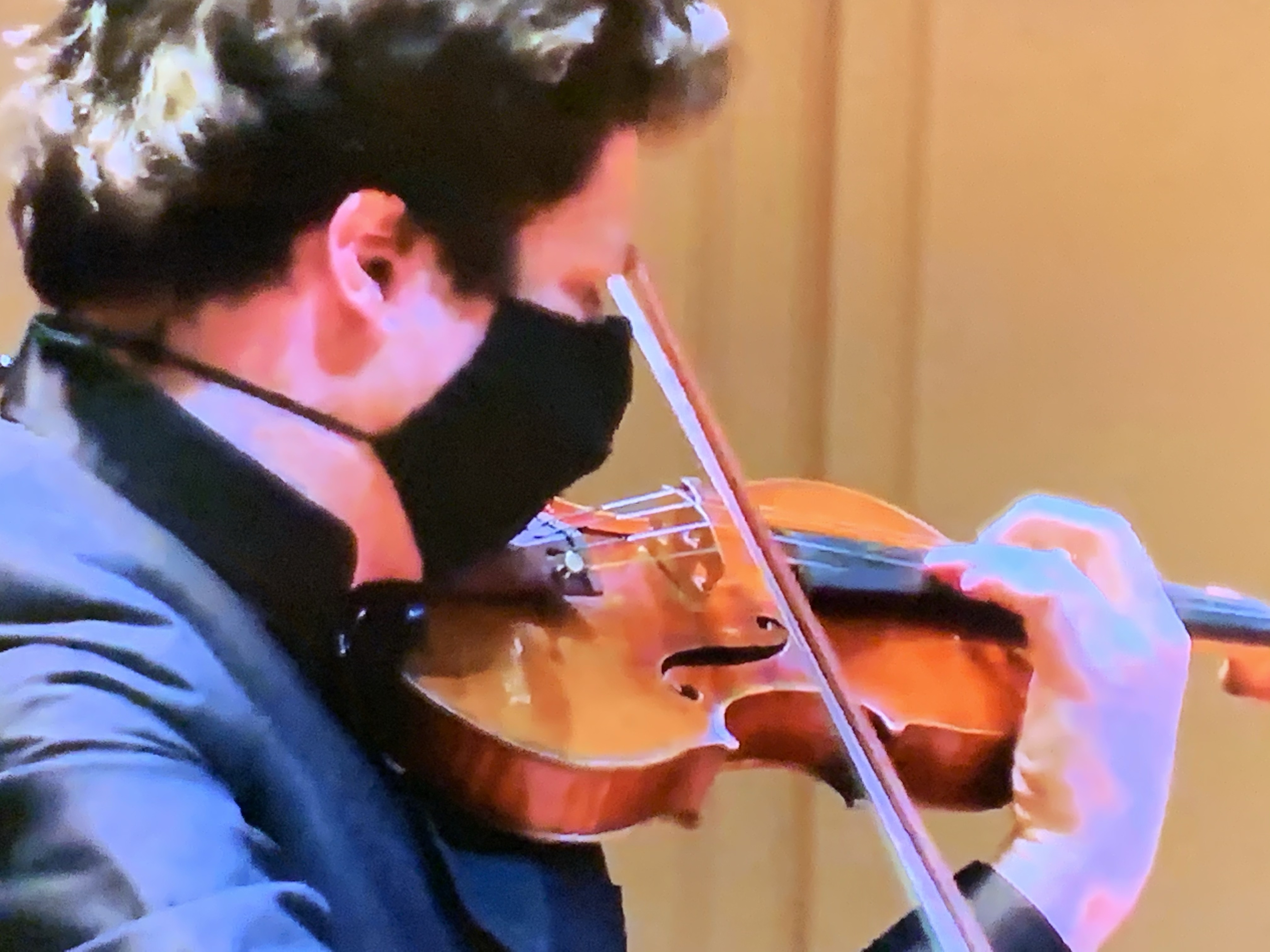
I was most captivated by the Violin Concerto in A Major, Op. 5 No. 2, performed by the star violinist Augustin Hadelich. (Hadelich was in town earlier in September for the taping, because he had to allow two weeks to quarantine before his next concert in Europe.)
What an amazing discovery! Joseph Bologne, Chevalier de Saint-Georges, is a little-known composer of African descent, who became a sensation in Europe in the 18th century. He was prolific, writing some 14 violin concertos. In the style of Haydn, Mozart, and perhaps even early Mendelssohn, this was a gorgeous, vibrant work for all strings, with plenty of virtuosity for the soloist. Hadelich, as always, turned in a masterful and exciting performance.
In the Q&A later, Hadelich, speaking from Oslo, Norway, said its virtuosity reminded him of the florid Baroque concertos that “go all over the fingerboard.” He chose the piece for its beautiful slow movement, he said, and wrote his own cadenzas.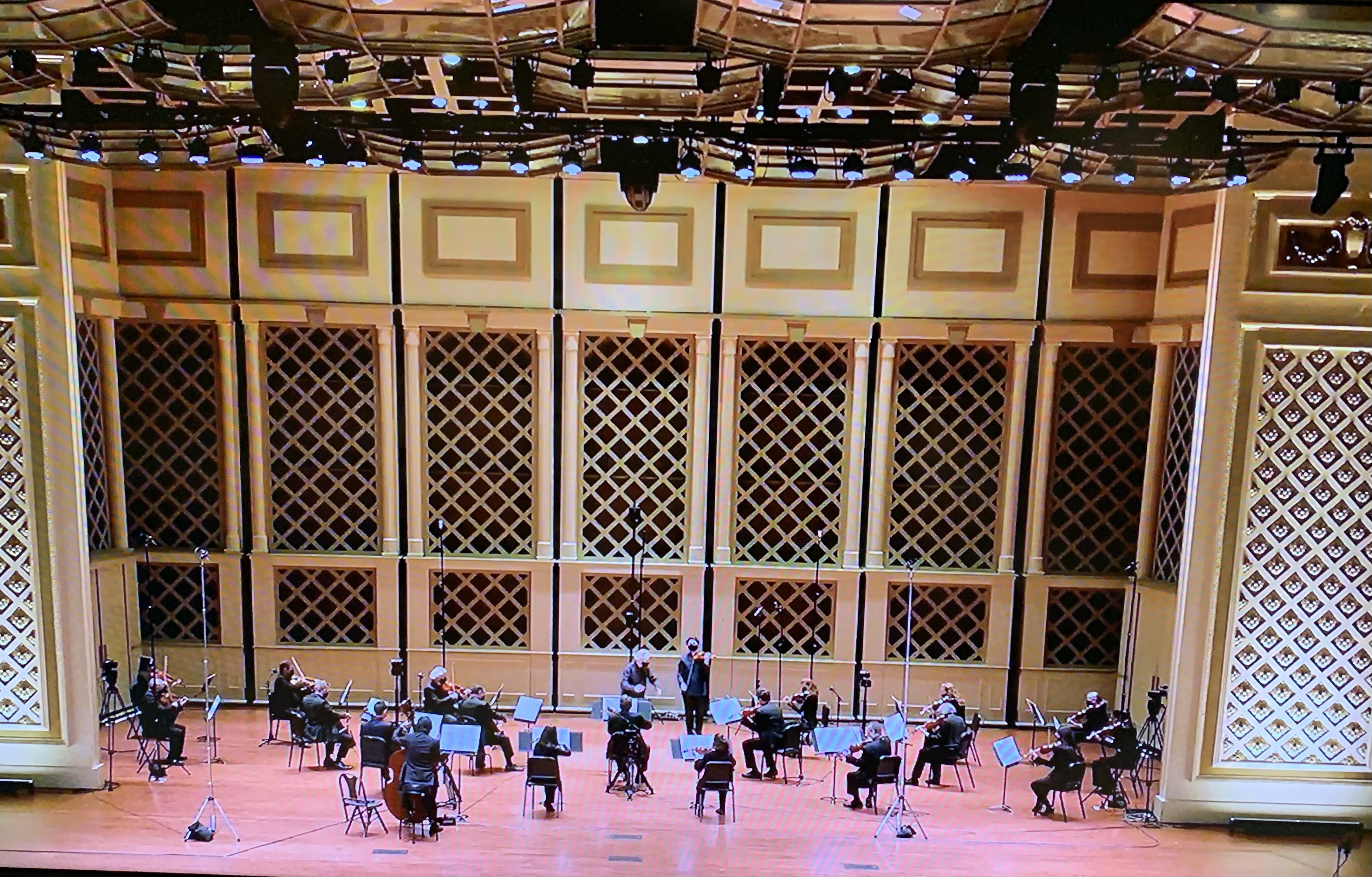
Discover more from janellesnotes
Subscribe to get the latest posts sent to your email.
