
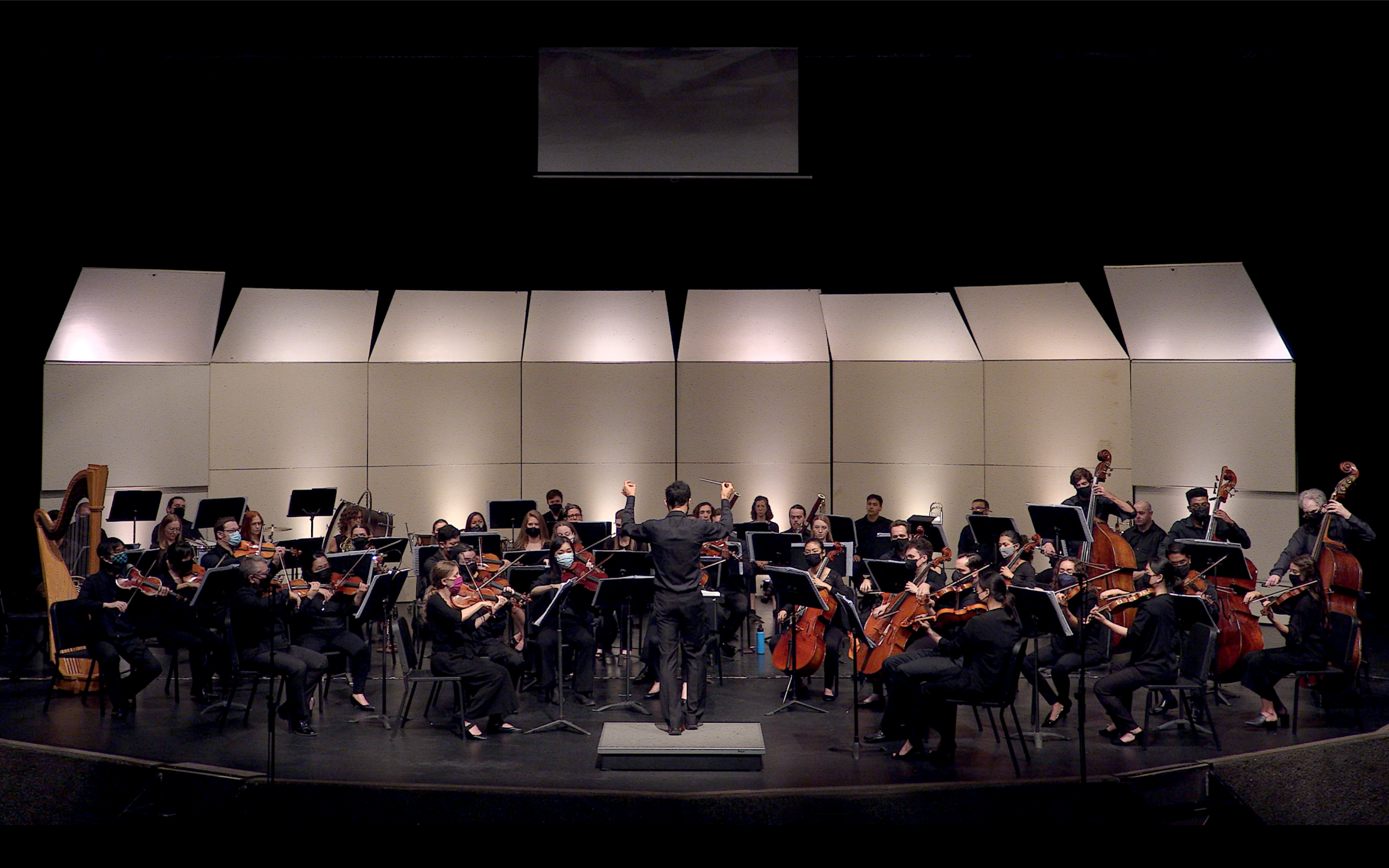
Isaac Selya, artistic director and conductor of Queen City Opera, is known for inventive productions, usually of lesser-known operatic repertoire. He often pairs operas with social issues. Even Act I from Wagner’s Walkure featured a partnership with Women Helping Women and a discussion about domestic abuse.
As the arts begin to emerge from Covid-19, it was a good time for Selya to present a non-operatic project. On Sept. 5 in Finneytown Performing Arts Center, he led a rare performance (and possibly the Midwest premiere) of Tchaikovsky’s unfinished Symphony No. 7 in E-flat Major, “Life.” Two excellent young opera singers, tenor M. Andrew Jones and soprano Raquel González, performed arias and scenes from Tchaikovsky’s operas “Eugene Onegin” and “Iolanta.”
Selya dedicated this program to all those who have died of Covid-19.
This was the first live, indoor performance that I attended since Cincinnati’s major arts organizations announced that audience members must wear masks at all times (even if vaccinated) and provide proof of Covid-19 vaccination or a negative Covid test for all indoor performances.
Queen City Opera had the same requirement. I showed a picture of my vaccine card on my iPhone and entered. No problem.
Tchaikovky’s Seventh Symphony was, quite simply, a terrific discovery and beautifully performed by the orchestra of local musicians, mostly CCM-trained. Selya explained its genesis — as a planned symphony left in sketches, intended to be an uplifting expression of life’s emotions. However, the composer recycled his sketches into other works. The first movement, for instance, became his Third Piano Concerto — orchestrated at about the same time that he was writing his more famous Symphony No. 6, “Pathetique.”
In the ’50s, Soviet musicologist/composer Semyon Bogatyrev reconstructed the symphony. It was recorded in 1962 by Eugene Ormandy and later by others, included Neeme Järvi. But in general, it has been forgotten.
To bring this work to life again was for Selya and the QCO Orchestra a formidable achievement. The first movement, Allegro brilliante, was masterful in the full Tchaikovsky sense of the word. There were thrilling, brass-filled climaxes and long-breathed, romantic melodies. Selya was sensitive to every detail. The string sound — even in the concrete block auditorium — was rich, the brass well balanced and Selya’s tempos had momentum.
The slow movement (which was used in at least two other pieces) was dark and its phrases emotional. Selya’s view was tender, ballet-like and almost delicate. The movement unfolded in an arc over a Tchaikovskian heartbeat in the basses, culminating in a brilliant climax. There was also a hymnlike section that alternated between the brass choir and strings. It was breathtaking.
The Scherzo opened with flourishes in the winds set against swirling strings (a la “Nutcracker”). At its center was a pastorale for flute solo.
The finale, an Allegro Maestoso, had one great theme after another. I liked the clarity of textures and the big, dramatic sweep of the brass and timpani. To me, though, this movement suffered from repetition in the middle…. A growing crescendo reminiscent of that of the Fifth Symphony led into a grand march in the trombones for a majestic conclusion.
We in the small but appreciative audience were all on our feet.
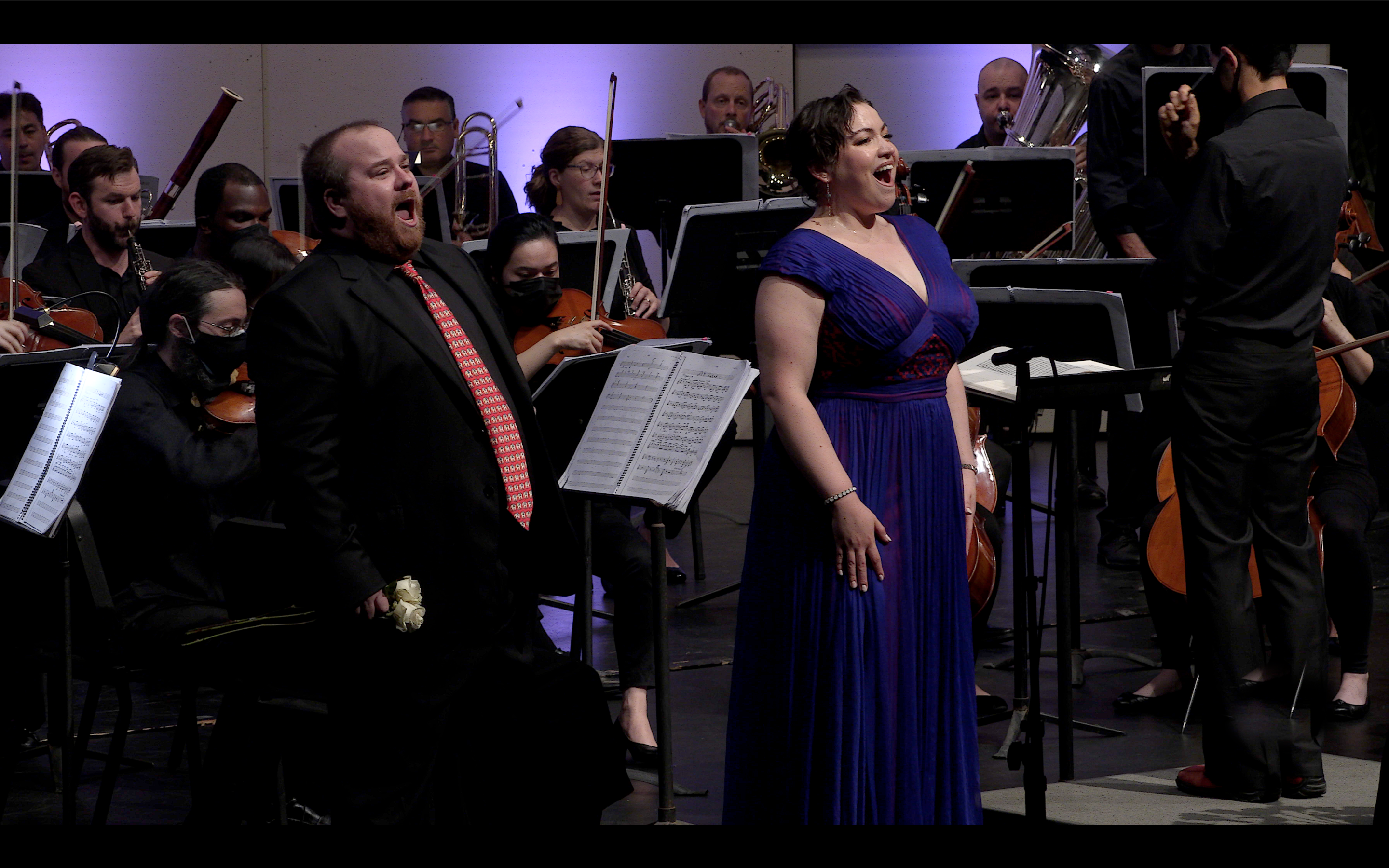
To open the concert, tenor M. Andrew Jones was soloist in Lensky’s Aria from “Eugene Onegin.” His voice is always a joy to behold — firm, heroic and full of emotion. Astonishingly, Selya sang Zaretsky’s small part in the introduction while conducting.
Soprano Raquel González performed a radiant rendition of the Letter Scene from “Onegin.” To conclude, the duo performed Tchaikovky’s Duet from “Iolanta,” a fairytale opera that QCO performed recently. They gave the “rose” scene in which Count Vaudémont pledges his love to the blind princess, who doesn’t realize she is blind. It was sung with passion and heartwarming beauty. One of the joys, though, was hearing this orchestra out of the orchestra pit and onstage with the singers. Selya drew impressive richness from their ranks.
Discover more from janellesnotes
Subscribe to get the latest posts sent to your email.
