
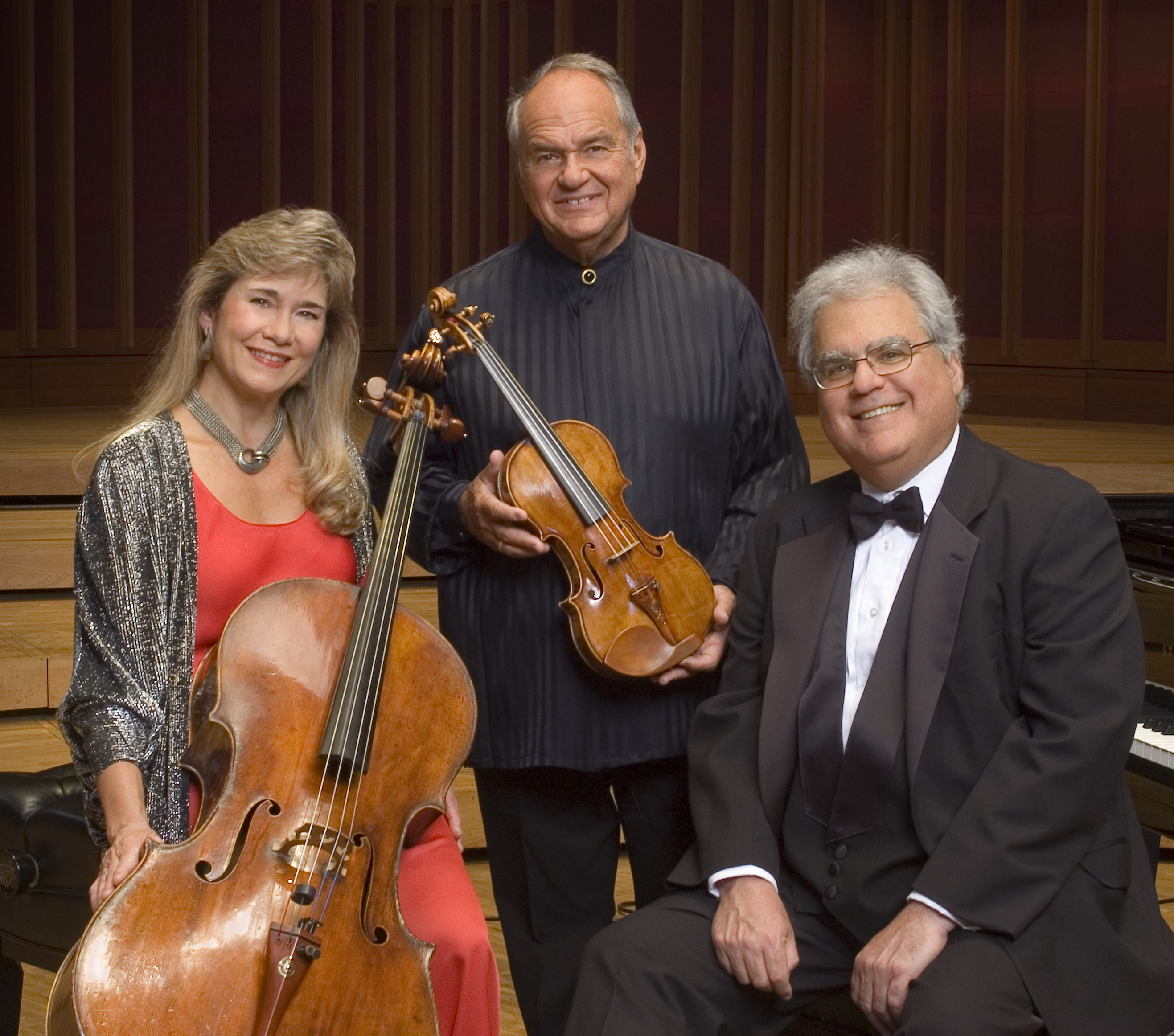
Cincinnati’s Linton Chamber Music Series lost an important friend last week. Pianist Joseph Kalichstein died on Thursday, March 31 of pancreatic cancer. He was 76. Known to all affectionately as Yossi, he was revered by Cincinnati audiences, who had the joy of hearing him annually perform with the Kalichstein-Laredo-Robinson Trio.
His colleagues of more than 45 years, Jaime Laredo and Sharon Robinson, are the series’ co-artistic directors.
Mr. Kalichstein was to have performed on Sunday with the trio. But when he became too ill to perform, the excellent pianist Ran Dank, a CCM faculty member who studied with him at Juilliard, stepped in on a week’s notice. The program was dedicated to his memory.
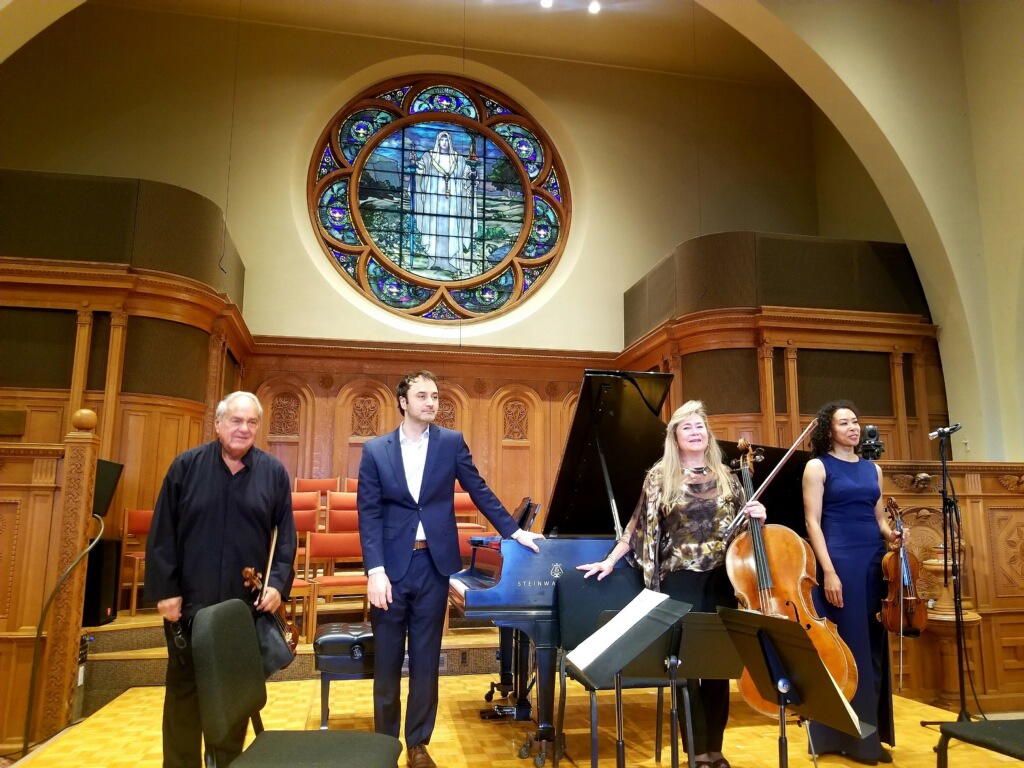
The concert included piano quartets by Mozart (E-flat Major, K. 493) and Brahms (No. 1 in G Minor), with Nokuthula Ngwenyama elegantly performing on viola. The centerpiece of the program was the world premiere of Ngwenyama’s “Elegy,” a commission of the KLR Trio and the Linton Series.
The performance of the Mozart sparkled, and Dank’s rippling runs and arpeggios were the picture of lightness. The slow movement had a stunning “smiling through tears” quality.
Ngwenyama composed her Elegy — also for piano quartet — as a work meant to mourn the souls lost to systemic racism. Later, she told me that Mr. Kalichstein had made suggestions about the piano part, and was especially looking forward to performing it. Although he didn’t have that opportunity, he knew the music well, she said.
Her work is a mini-tone poem, evoking the Middle Passage, with the rise and fall of the ship transporting enslaved people, as well as the struggles of 2020. Important dates were etched into keys and intervals, such as 1619. Although she was inspired by many writings as well as a visit to the Smithsonian’s National Museum of African American History and Culture, I found her own poems accompanying her work to be the most enlightening and moving, beginning with these words: “To remember, to let go. To be haunted, then free.”
It was well-crafted and evocative. The piece opened over a long pedal point, with fleeting motives emerging, until they finally became a lyrical theme. The counterpoint flowed, and the composer included percussive taps on the backs of instruments. The violist’s rolling of strings of her bow over the back of her instrument indicated the sound of rubbing ropes on the ship. The piece concluded with a section of hymnlike writing in unison, and a reference to Shostokovich’s Viola Sonata. It built to a shattering climax. Listeners were moved to a standing ovation.
After intermission, the quartet’s performance of the Brahms was heartfelt, and performed with all the brilliance and virtuosity one could wish for. The Hungarian “Rondo alla Zingarese,” a presto, was as energized as I’ve ever heard.
Afterwards, Laredo said that Mr. Kalichstein would have wanted them to continue with the concert. Just two weeks ago, he had been practicing for it.
I recall so many memorable performances by Mr. Kalichstein that we were privileged to hear in Cincinnati. I especially loved his beautiful tone and touch, as well as his communion with the trio. His artistry was thoughtful, imaginative and selfless — always elevating the music and never drawing attention to his own virtuosity. With the trio, we heard many premieres of new works by Ellen Taaffe Zwilich, Richard Danielpour and others.
Survivors include his wife, two sons and three grandchildren. According to Tim Page’s obituary in the Washington Post, Mr. Kalichstein gave his final performance in Phoenix on March 17, when the Kalichstein-Laredo-Robinson Trio played music by Schumann, Zwilich and Brahms.
Discover more from janellesnotes
Subscribe to get the latest posts sent to your email.
