
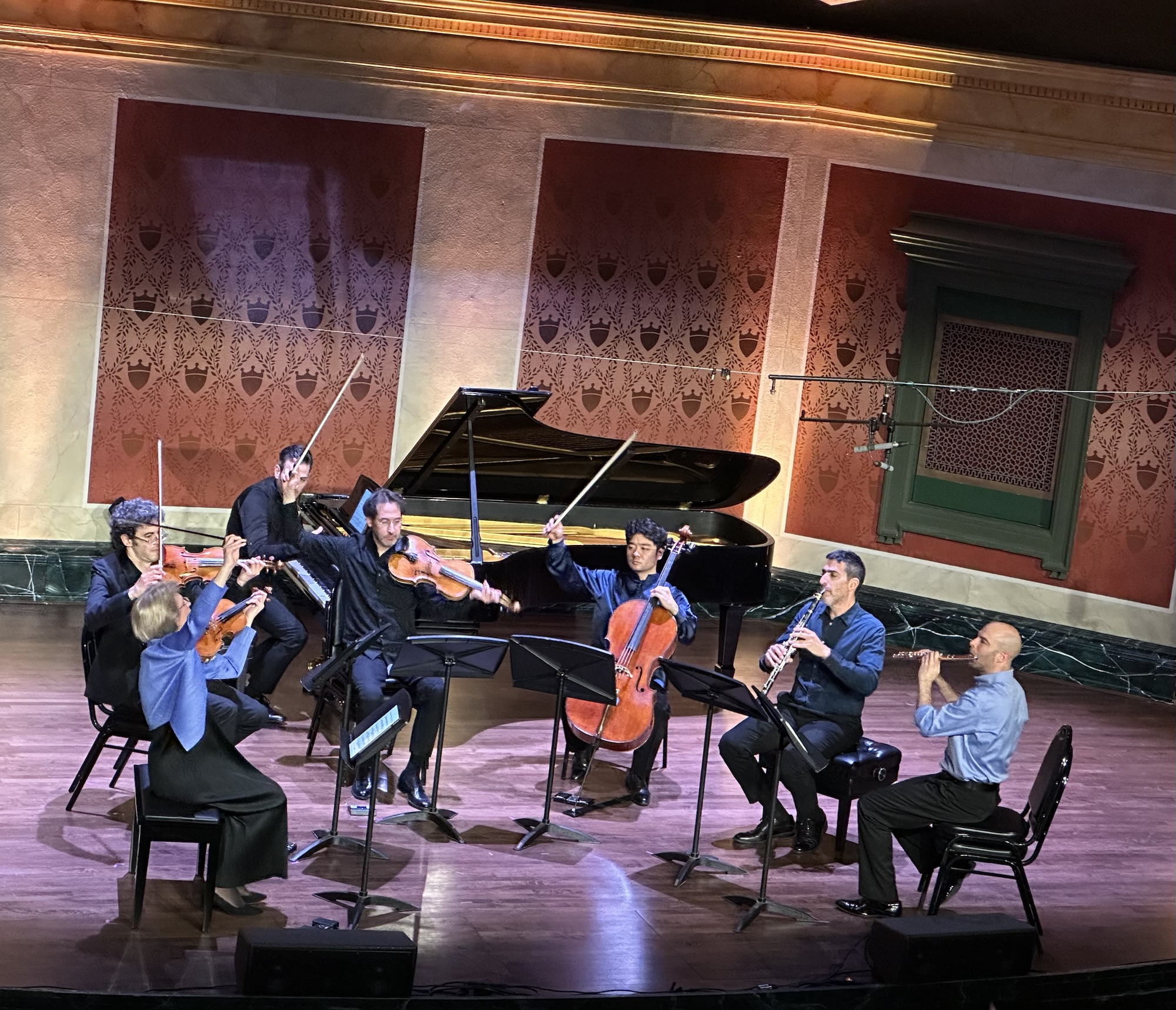
Imagine being a touring musician while your country is at war. Clarinetist Tibi Cziger and his wife cellist Michal Korman were in a safe room with their three children in Tel Aviv when their home was hit and damaged by a bomb from Iran. The couple, members of the Israeli Chamber Project, were on the brink of their North American tour. They quickly decided that Korman would stay home with their traumatized children, while Cziger would travel to the U.S.
So began an odyssey just to get here. Cziger, who is founder and artistic director of the Israeli Chamber Project, and flutist Guy Eshed, principal flutist of the Israel Philharmonic Orchestra, flew from Tel Aviv to Athens to Zurich to Chicago. (The others were coming from New York, Georgia and Germany.) From Chicago, the musicians were unable to get a flight to Cincinnati. The group, based in Israel and New York, had already been forced to make changes with some substitute players for their first two tour performances due to their travel woes. They decided to drive.
The fact that they arrived on time for their Chamber Music Cincinnati performance on March 24 in Memorial Hall was nothing short of a miracle. Their performance was not only a feat of superb artistry and virtuosity, but also of grit, determination and even courage. The audience stood for lengthy ovations at its conclusion.
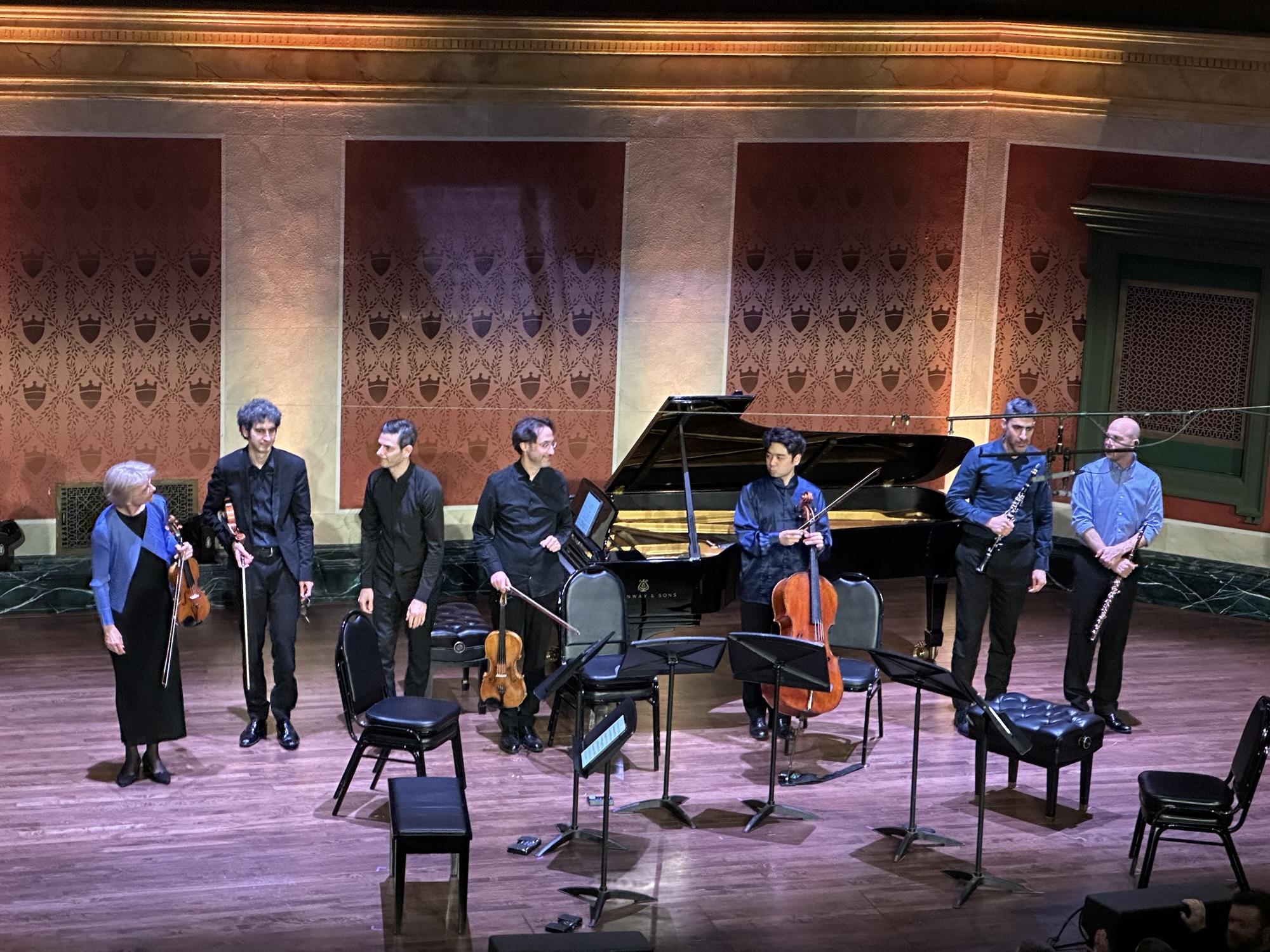
For the tour, the ensemble joined with the distinguished violinist Antje Weithaas, now a professor at Berlin’s Hochschule fur Musik, and named “Instrumentalist of the Year” at Germany’s 2025 Opus Klassic. Besides Cziger and Eshed, the ensemble was rounded out by violinist Itamar Zorman (winner of the 2013 Avery Fisher Career Grant and the 2011 International Tchaikovsky Competition); violist Guy Ben-Ziony (currently visiting professor at the Robert Schumann University of Music and Media in Düsseldorf); and pianist Assaff Weisman, a graduate of The Juilliard School where he now teaches. Cellist James Kim admirably stepped in at the last minute to play for Michal Korman for the whole tour. He is on the faculty of University of Georgia’s Hugh Hodgson School of Music and cellist of the Lysander Piano Trio.
They opened with Bernard Hermann’s “Souvenir de Voyage” for clarinet and string quartet. The first movement’s theme, a haunting tune set against lush strings, was ideal for the rich timbre of Cziger’s clarinet. Clarinet and violin traded themes much of the time, and their phrases were were tinged with nostalgia in the slow movement, Berceuse. The evocative finale was inspired by J.M. W. Turner’s Venetian watercolors, and began in the two violins, almost like a Kreisler miniature. Hermann, of course, is revered for his film scores, and these souvenirs were like small cinematic gems, and a wonderful discovery.
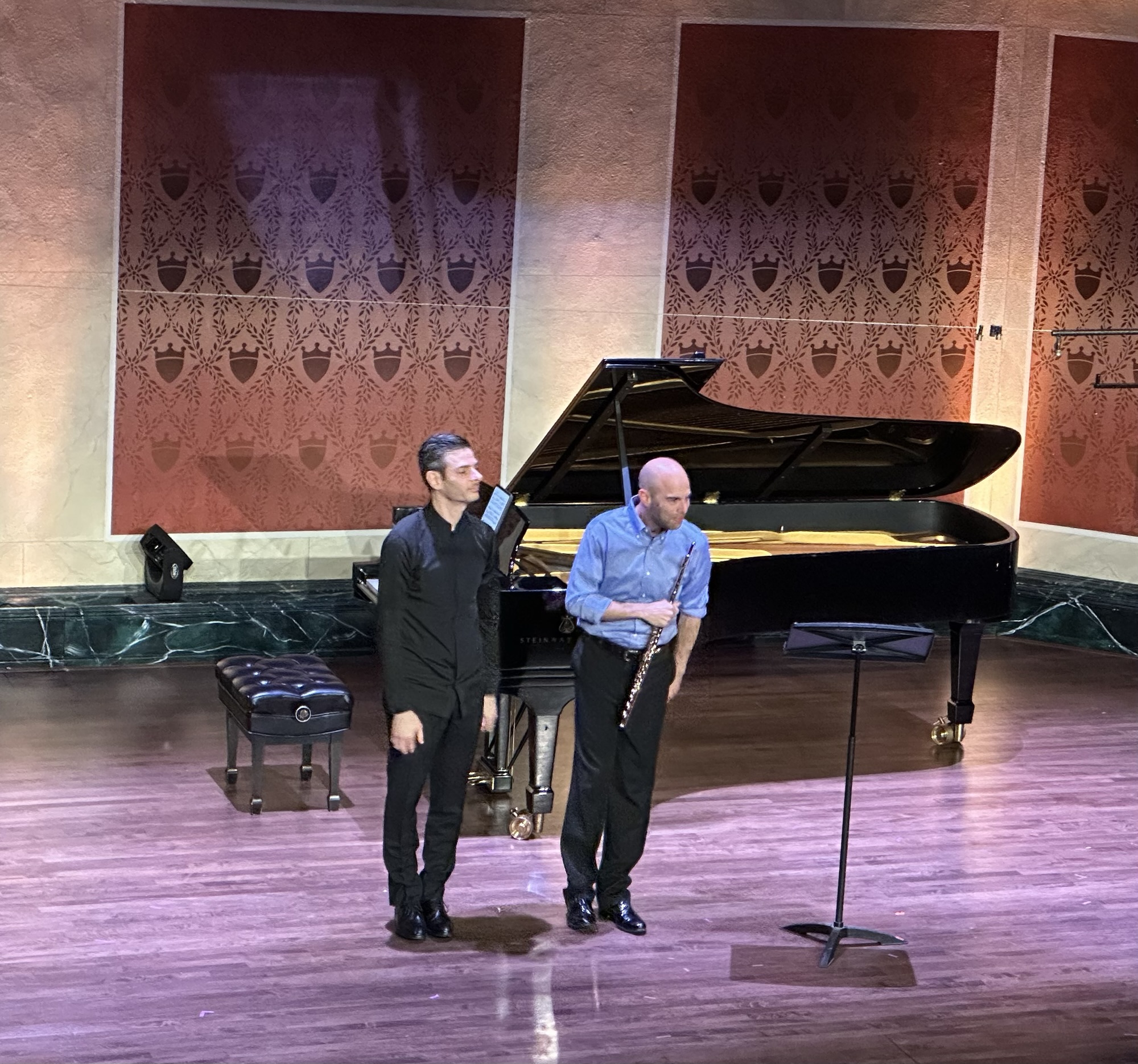 Erwin Schulhoff’s Sonata for Flute and Piano of 1927 followed. In recent decades, the Prague-born composer has been recognized for his vast musical talent that was extinguished with the rise of the Nazi regime, as he was both Jewish and a communist. As a composer, Schulhoff was influenced by many winds of change between the world wars, and it was fascinating to hear this flute sonata from the ’20s. It takes its cue from Debussy’s Impressionism as well as from early 20th-century Paris. Through its four movements, Eshed’s playing was a mix of effortless control and beautiful sound. The composer gave the flutist a lovely first-movement cadenza, a fleet scherzo and a bright perpetual motion for the finale. But I was especially struck by the third movement, named “Aria.” Here, Eshed’s luminous phrases set against Weisman’s subtle colors at the piano made a ravishing impression.
The ensemble’s tour program, named, appropriately, “Heroism and Remembrance,” concluded with an inventive transcription of Beethoven’s Symphony No. 3, “Eroica,” arranged by Yuval Shapiro. The idea of tyranny, both today and in 1804, when Beethoven furiously scratched out his dedication to Napoleon on the title page after Napoleon had declared himself emperor, was not lost on Cziger.
“This horrific war affecting us, as musicians it goes against everything we believe in,” he told the audience. “We could have easily given up. We needed to play this ‘Eroica’ much more than you needed to hear it.” The world in which they are living has caused them to stop taking everything for granted, he added. “This world of great composers represents what we feel…. Playing this piece is everything we believe in.”
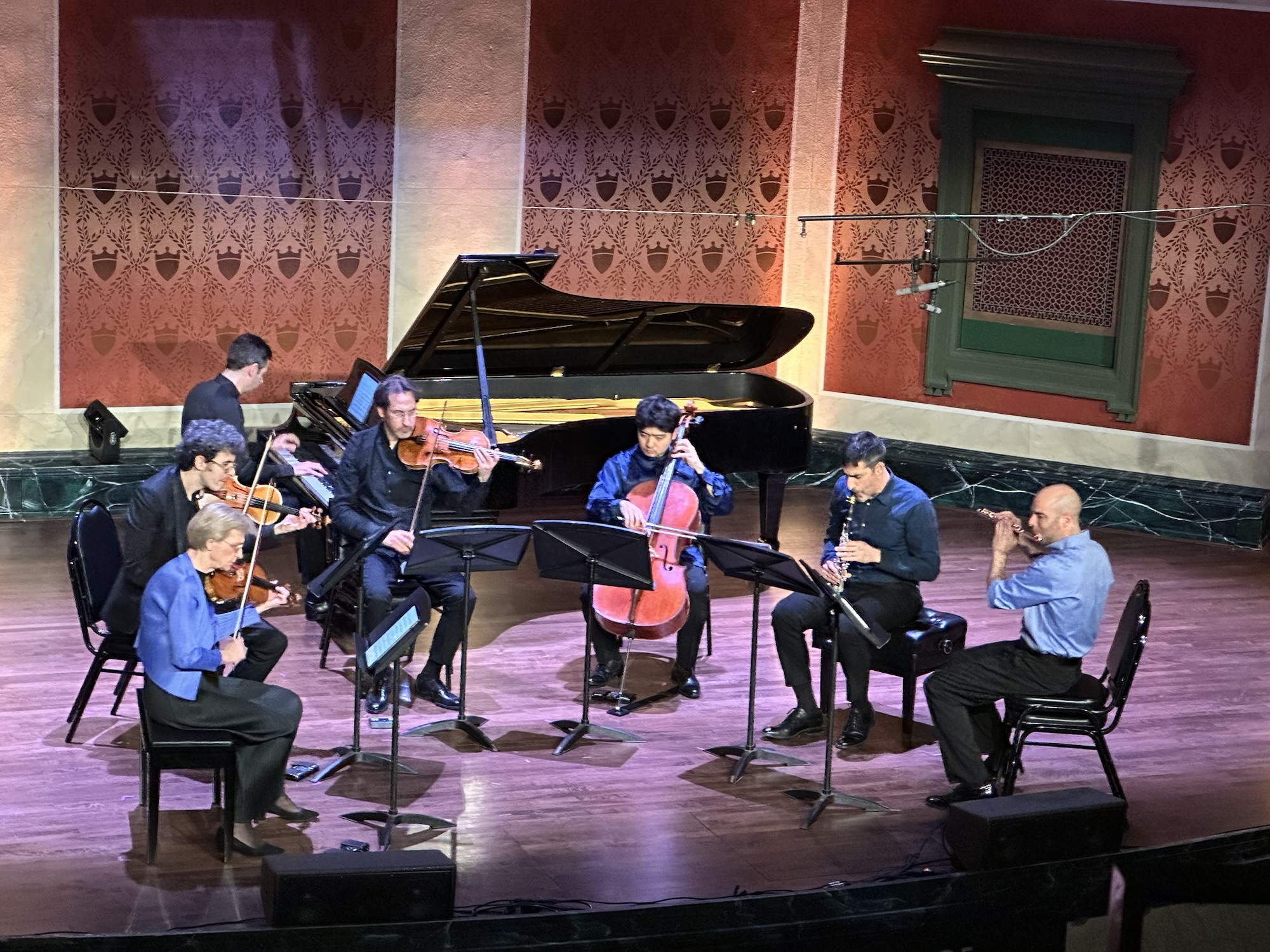 The chamber arrangement, scored for string quartet, flute, clarinet and piano, was a revelatory way to experience Beethoven’s well-known “Eroica.” With Weithaas leading from her first violin chair, the “Allegro con brio” was both energized and refined. Tempos throughout the four movements were excellent, and the listener could marvel at the clarity of counterpoint. The scoring allowed for intimate passages of chamber music, featuring perhaps only a solo flute or clarinet, yet the ensemble could make a mighty sound in Beethoven’s climaxes. The pianist performed seamlessly and filled in sonorities that were missing from the orchestration. I enjoyed the rumble of his bass notes in the funeral march, and his solo turn in the horn trio of the Scherzo.
The finale’s coda was electrifying. Perhaps it was partly an emotional release for these players who had overcome so many obstacles to get here. But for listeners, we knew we had witnessed something special and profound.
Discover more from janellesnotes
Subscribe to get the latest posts sent to your email.

You are so right about all of this! What a stimulating and beautiful concert! So nice to see you there.
Like you, I thought hearing the symphony in this iteration made it all new to my ears.
Sent from my iPhone
LikeLike