
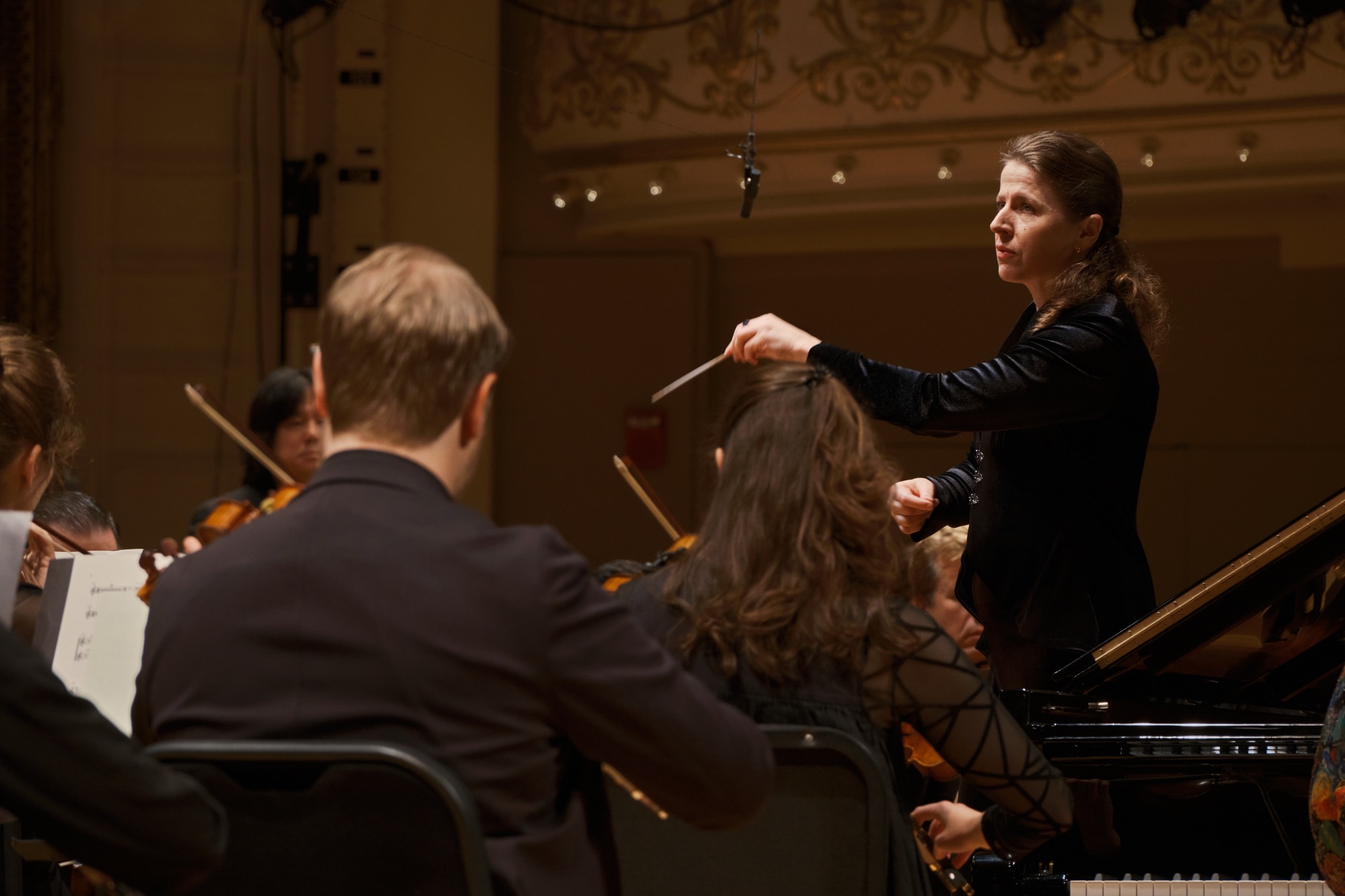
It’s no longer a rarity to see an accomplished woman conductor on the podium of a major orchestra. This season, the Cincinnati Symphony Orchestra is among those orchestras leading the way, with four presented this season, including the legendary Dame Jane Glover. But it’s not surprising either, to read about guest conductor Kristiina Poska, who made her CSO debut on April 17, and discover that she is the first woman to be appointed to several of her conducting posts around the globe. She is among a rising generation of talented women making strides, and someone to watch.
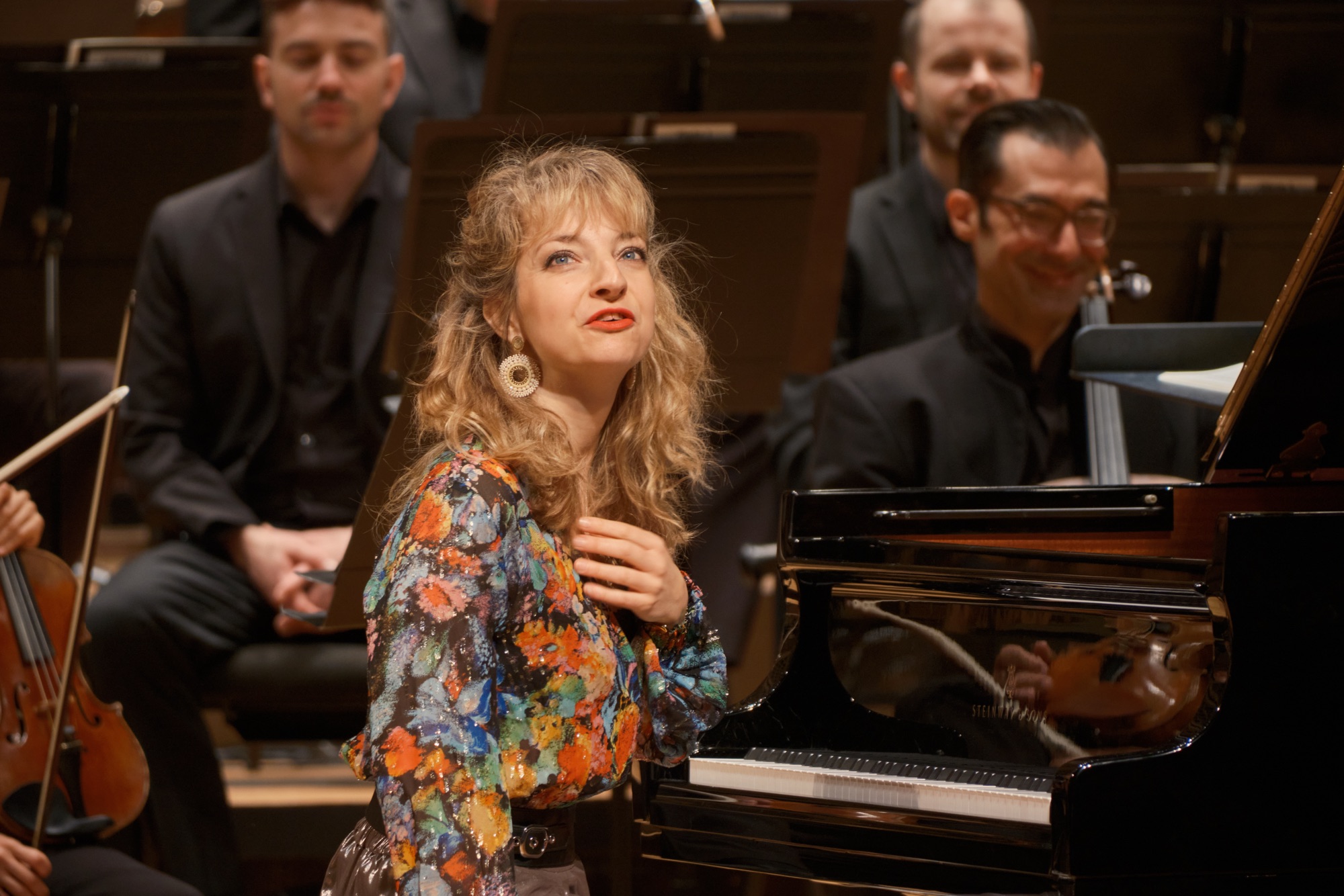
Poska, a native of Estonia, made an impression in an engaging program for a spring morning at Music Hall. She opened with “Underneath the Sheen” by Julia Adolphe, a gifted composer who is known to Cincinnati audiences, notably for her 2023 May Festival co-commission, “Crown of Hummingbirds.” The first half included Chopin’s Concerto No. 2 in F Minor featuring French pianist Lise de la Salle. Poska concluded the morning with a heartwarming reading of Mendelssohn’s Symphony No. 3, known as the “Scottish.”
Like many rising conductors, Poska holds several positions. She is chief conductor of the Flanders Symphony Orchestra and principal guest conductor of the Latvian Symphony Orchestra. She is also music director of the Orchestre Français des Jeunes, and in opera, she debuts this season at the Opéra de Dijon, France.
Mendelssohn was inspired to write his “Scottish” Symphony more than a decade after his travels to England, Italy and France around 1930. It has no specific program, but clearly evokes Scotland’s landscapes and folk music. He dedicated it to Queen Victoria.
Poska was an assured leader in the orchestra’s richly detailed performance. The opening, with its recitative-like phrases for the violins, was somber and expressive, and the string sound was sumptuous. The listener could enjoy Mendelssohn’s serene lyrical themes, expertly set against moments of agitated intensity.
Moving little as she conducted, Poska captured the dramatic sweep of the symphony’s four movements while warmly illuminating Mendelssohn’s lightness and charm. You could only smile at principal clarinetist Christopher Pell’s famous solo in the cheerful scherzo. The work was capped with a majestic hymn in the finale, and the listener could only marvel at this stroke of inspiration.
The orchestra has been sounding exceptional all season. The winds and brass ensembles were superb in this romantic work, yet occasionally I wished for more precise attack in the strings. The audience rose appreciatively with extended ovations.
The program opened with Adolphe’s “Underneath the Sheen,” a brief orchestral piece that she wrote for the LA Philharmonic under Gustavo Dudamel. She wrote poetically about her inspiration, “the endurance and quiet omnipotence of California’s Redwood trees” and the silent beams of light shining through mist and the giant, twisting roots.
All of this could be envisioned in her piece, with its mystical opening bars, and serene atmospheres that led into sudden dramatic bursts. Solitary voices emerged from this evocative texture: a violin theme, a mournful flute and a theme for horn. Adolphe’s orchestration was a glimmering palette that included vibraphone, piano and harp, as well as a majestic brass choir. The composer was present to take her own bow.
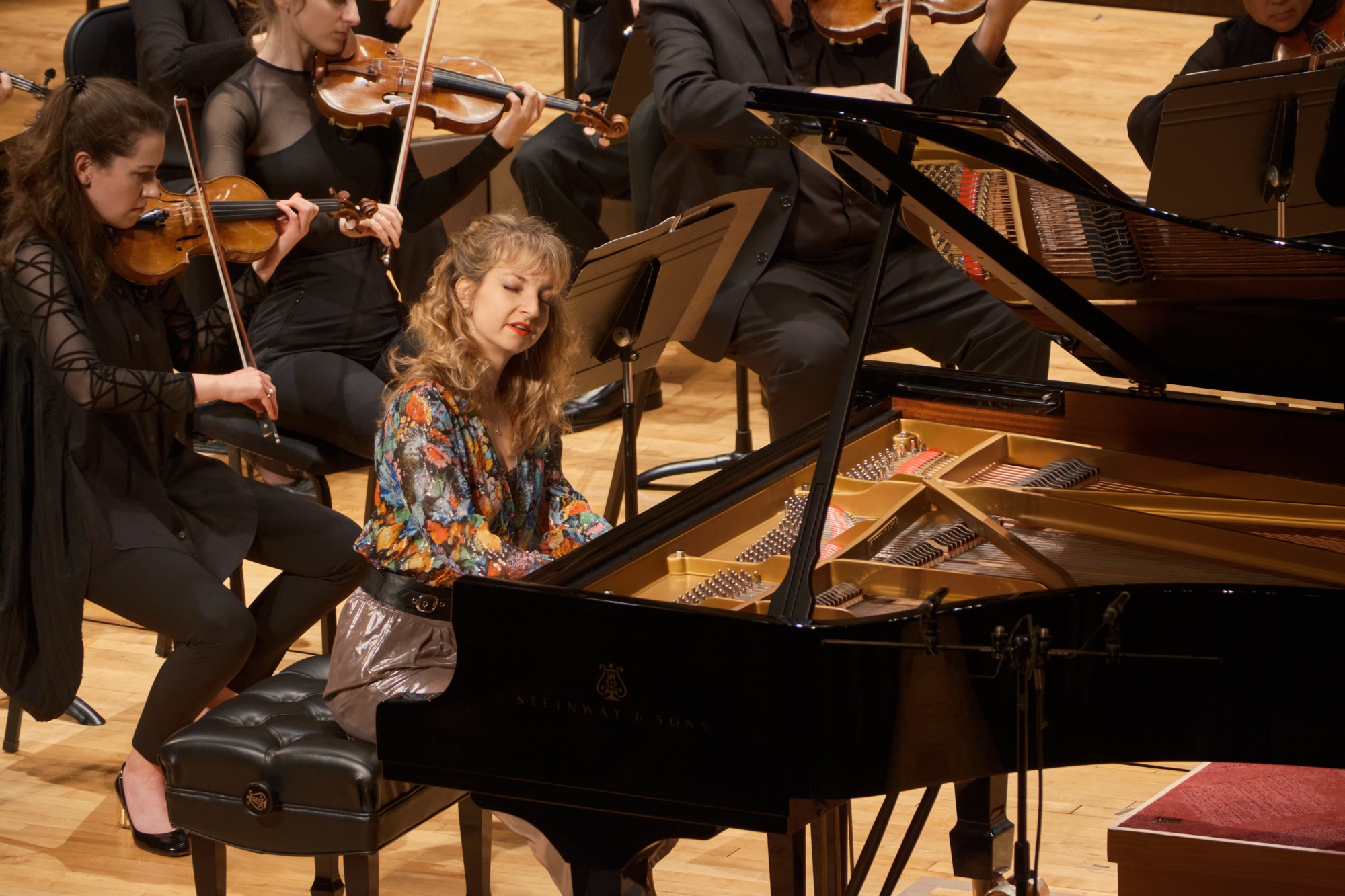 Chopin wrote his Piano Concerto No. 2 in F Minor when he was just 19, hoping to showcase his own talent before the public. Indeed, it is a showpiece, and Lise de la Salle possessed all the technical brilliance one could wish for in this performance. She also displayed an appealing lightness of touch through Chopin’s rippling cascades, though more ringing tone in themes would have enhanced this movement.
The heart of this work is its second movement, “Larghetto,” which annotator Jonathan Kregor of CCM describes as “a blend of nocturne and dramatic recitative.” De la Salle set an extremely slow tempo throughout this rapturous movement, her arpeggios and runs fluid and effortless. Associate principal bassoonist Martin Garcia collaborated nicely with the pianist in his obbligato passage. The finale sparkled, and I enjoyed the charming character of its mazurka-like theme. Poska was a fine partner throughout.
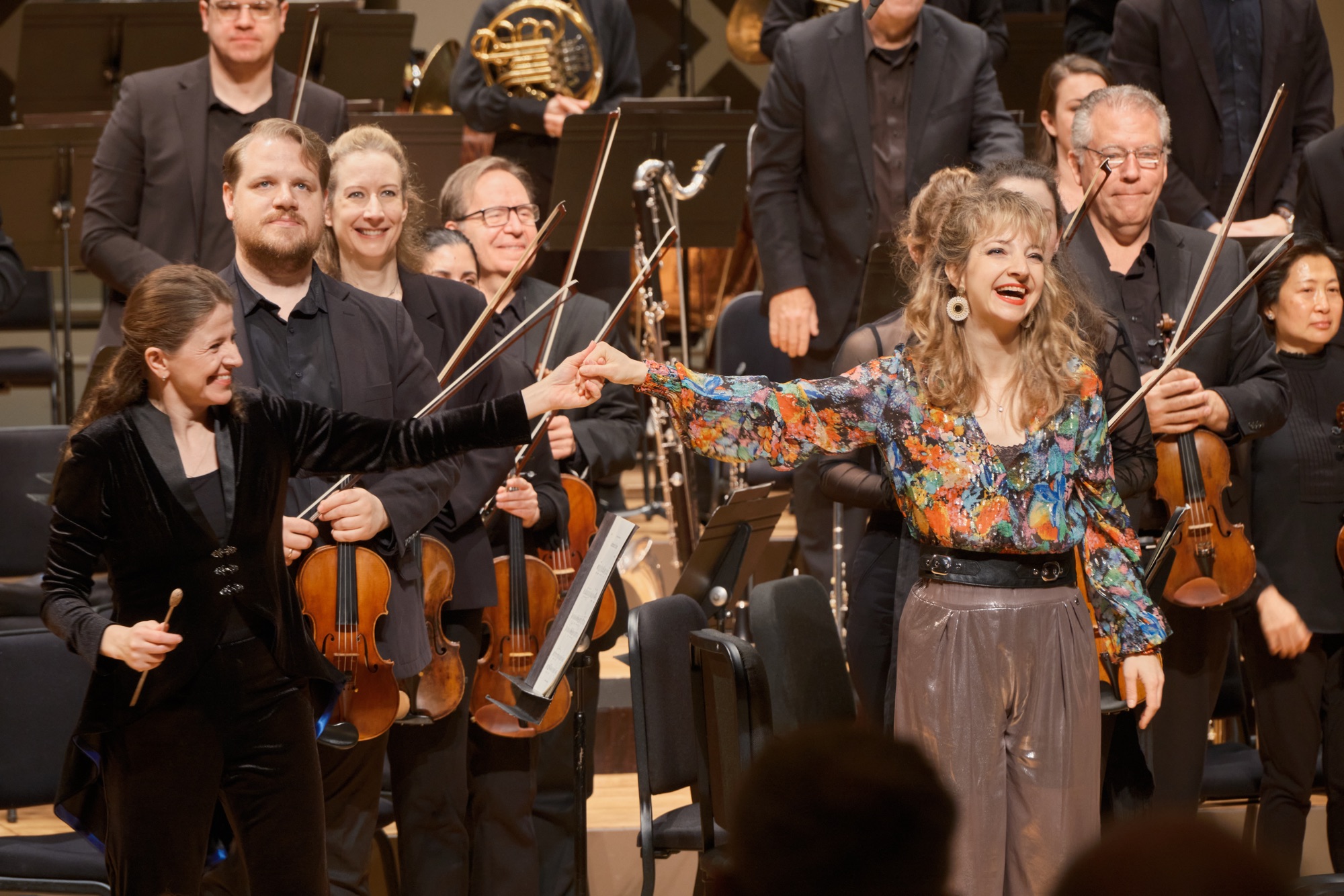 After an enthusiastic reception from listeners, de la Salle introduced her encore with a statement that I could not quite hear. But in general, it was a reminder that we can experience the beauty of music, and in this troubled world, she hoped her encore could offer peace. She performed J.S. Bach’s Siciliano from Flute Sonata No. 2, BWV 1031, arranged for solo piano by the great German pianist Wilhelm Kempff.
The concert repeats at 7:30 p.m. April 18. Tickets: 513-381-3300, cincinnatisymphony.org.
Discover more from janellesnotes
Subscribe to get the latest posts sent to your email.

Thank you.
LikeLike