
 ‘Tis the season for lots of music. I hope you are all taking advantage of the wealth of holiday concerts and shows happening right now. Here are a few of my picks.
Between the CSO, which has had some amazing concerts lately, I also try to take in other shows. (Look for Cincinnati’s arts news and reviews — FREE to read on the Cincinnati Business Courier’s Arts Front.)
As I look back over the year, here are a few thoughts about four other excellent shows I’ve recently seen:
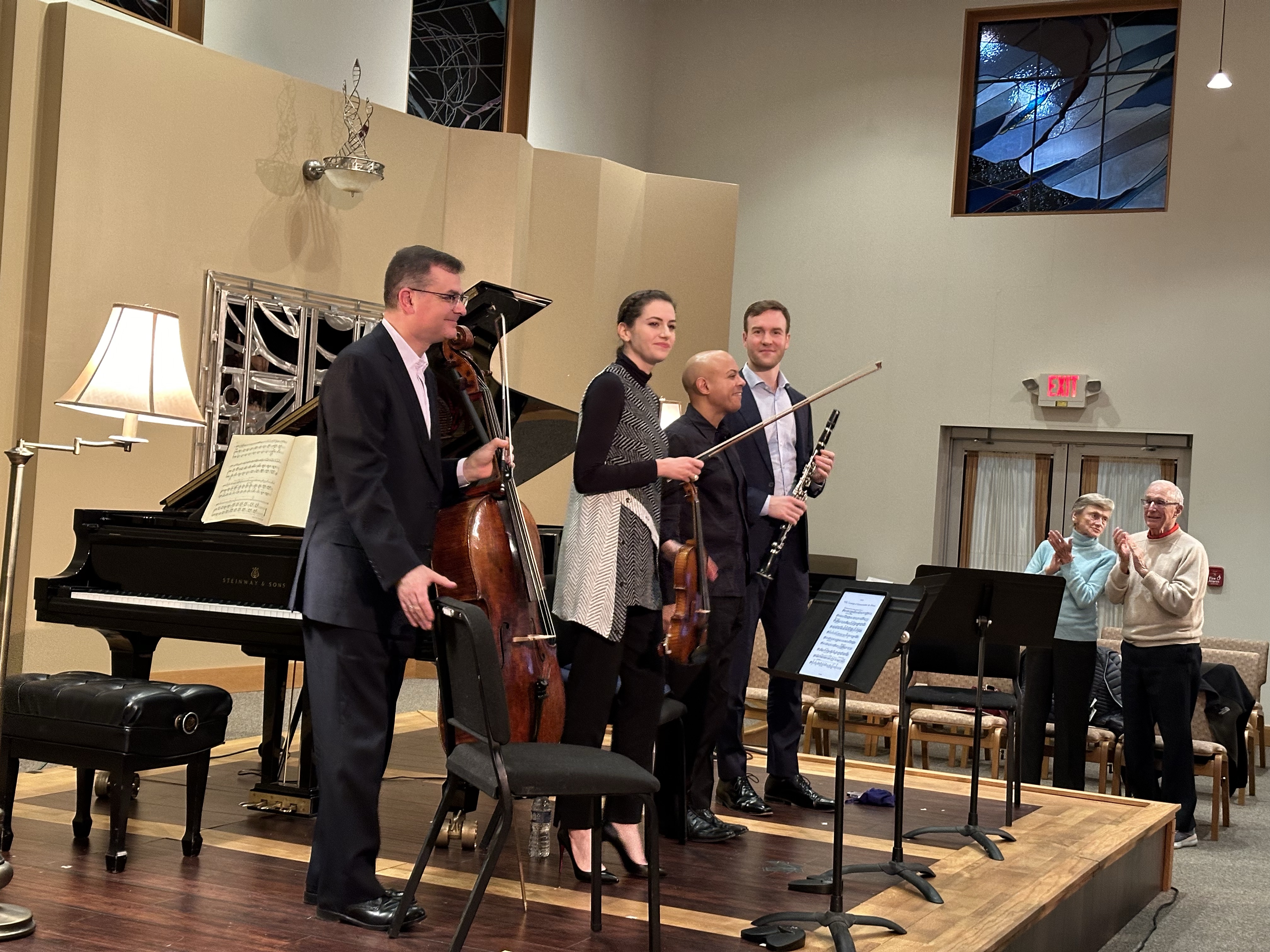
Quartet for the End of Time — Last month, the Linton Music Series presented Messiaen’s haunting quartet with pianist Stewart Goodyear, clarinetist Christopher Pell, violinist Stefani Matsuo, and cellist Ilya Finkelshteyn. The composer wrote it while a prisoner of war in a Nazi detention camp during his service with the French army in World War II. Messiaen drew his inspiration for the eight movements from Revelations 10: 1-2, 5-7. It balances the fierce imagery of the Apolcalypse and sublime paradise. These musicians reached for the soul of this work in a masterful performance. For the audience, who barely breathed, it was engrossing and deeply moving. Given Messiaen’s fascination with birdsong, I especially enjoyed Pell’s eloquent phrasing in “Abyss of birds.”
The program included Goodyear’s own Piano Quartet, a scintillating and astonishing work that he described as a combination of funk, calypso and Brahms. (Violist Gabriel Napoli joined for this quartet.) There was also a wonderful performance of Beethoven’s Clarinet Trio, with Pell impressing once more. (I heard the Encore! Linton concert at Congregation Beth Adam in Loveland.)
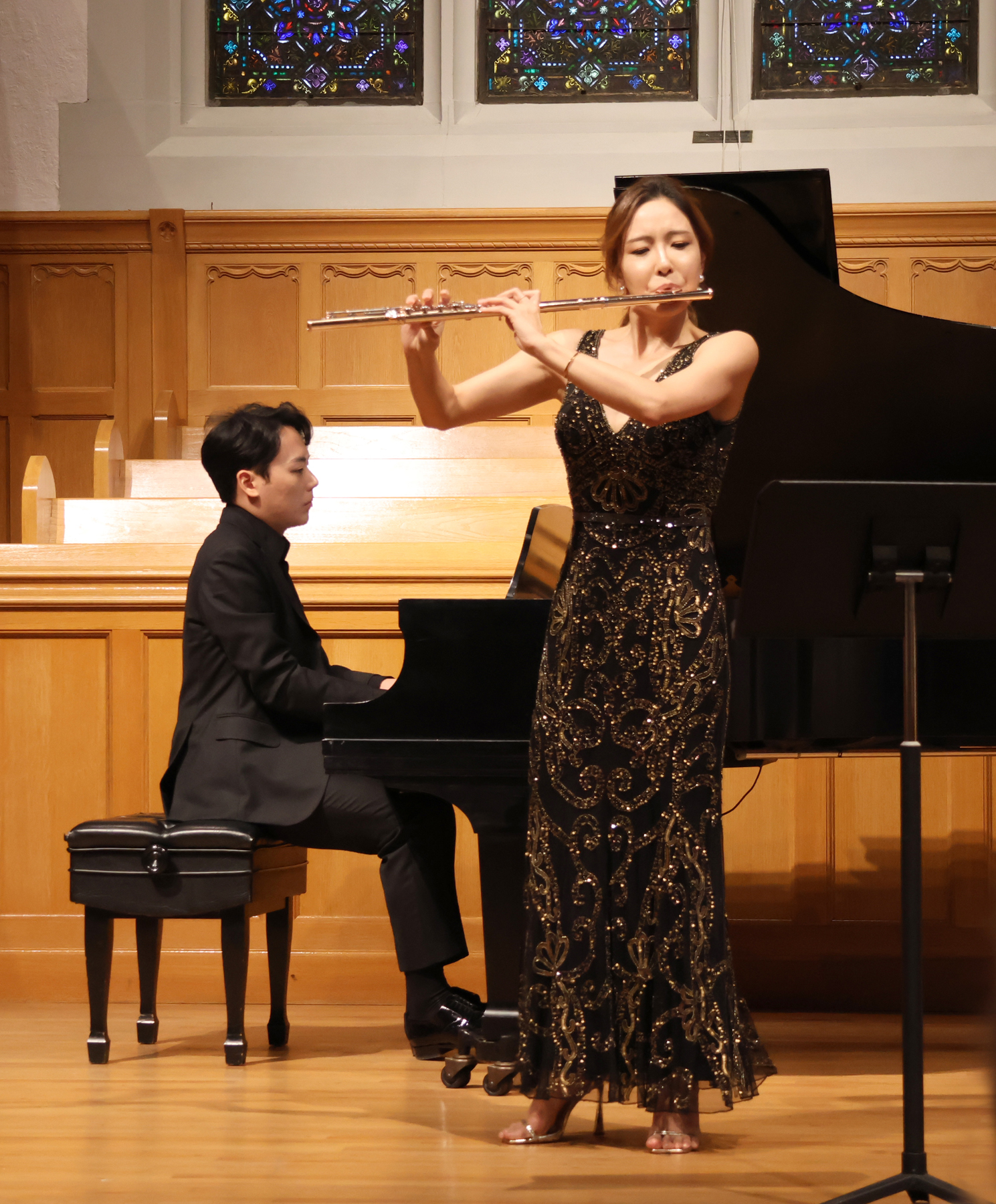
On Nov. 19, flutist Jasmine Choi made her recital debut at Matinee Musicale, performing a stunning program with the accomplished pianist Changyong Shin. Choi was associate principal flutist of the CSO, then directed by Paavo Järvi, and also former principal flute of the Vienna Symphony under Fabio Luisi, among many other credits. She is currently touring the world as a concert artist. It was a joy to hear her flawless technique and beautiful tone in her wide-ranging program.
She opened with Faure’s lovely “Morceau de Concours,” followed by Beethoven’s Serenade Op. 41 in D Major. Paul Schoenfield’s “Four Souvenirs” was a charming suite of movements that ranged from samba to Tin Pan Alley. Through it all, the duo communicated seamlessly, and both artists impressed for their expressive phrasing. For me, the highlight was Prokofiev’s Sonata in D Major, a dazzling tour-de-force.
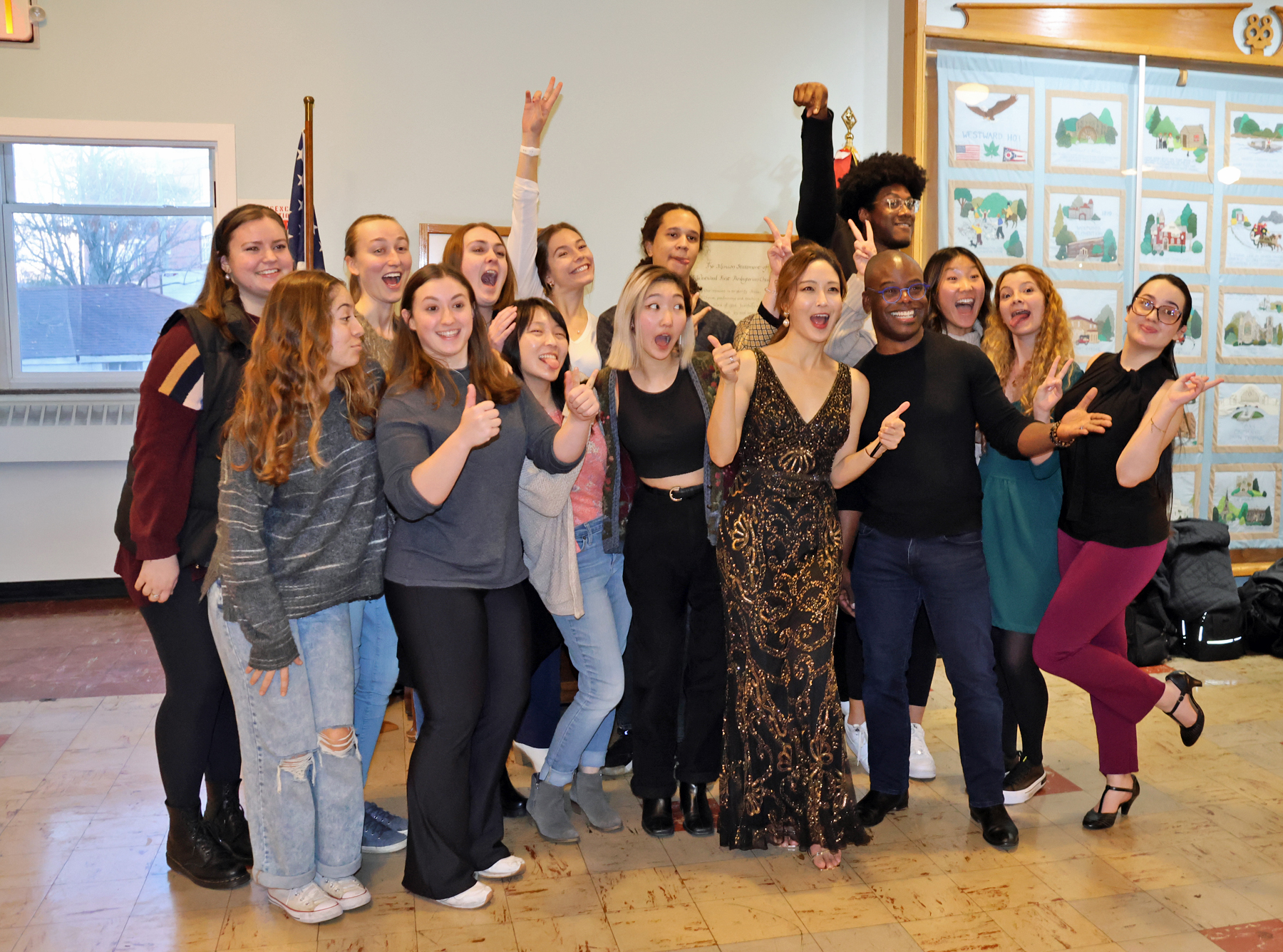
“Cincinnati nurtured me in my life and in music,” Choi told the standing-room-only audience (with many flute students) at Westwood First Presbyterian Church, before launching into two encores.
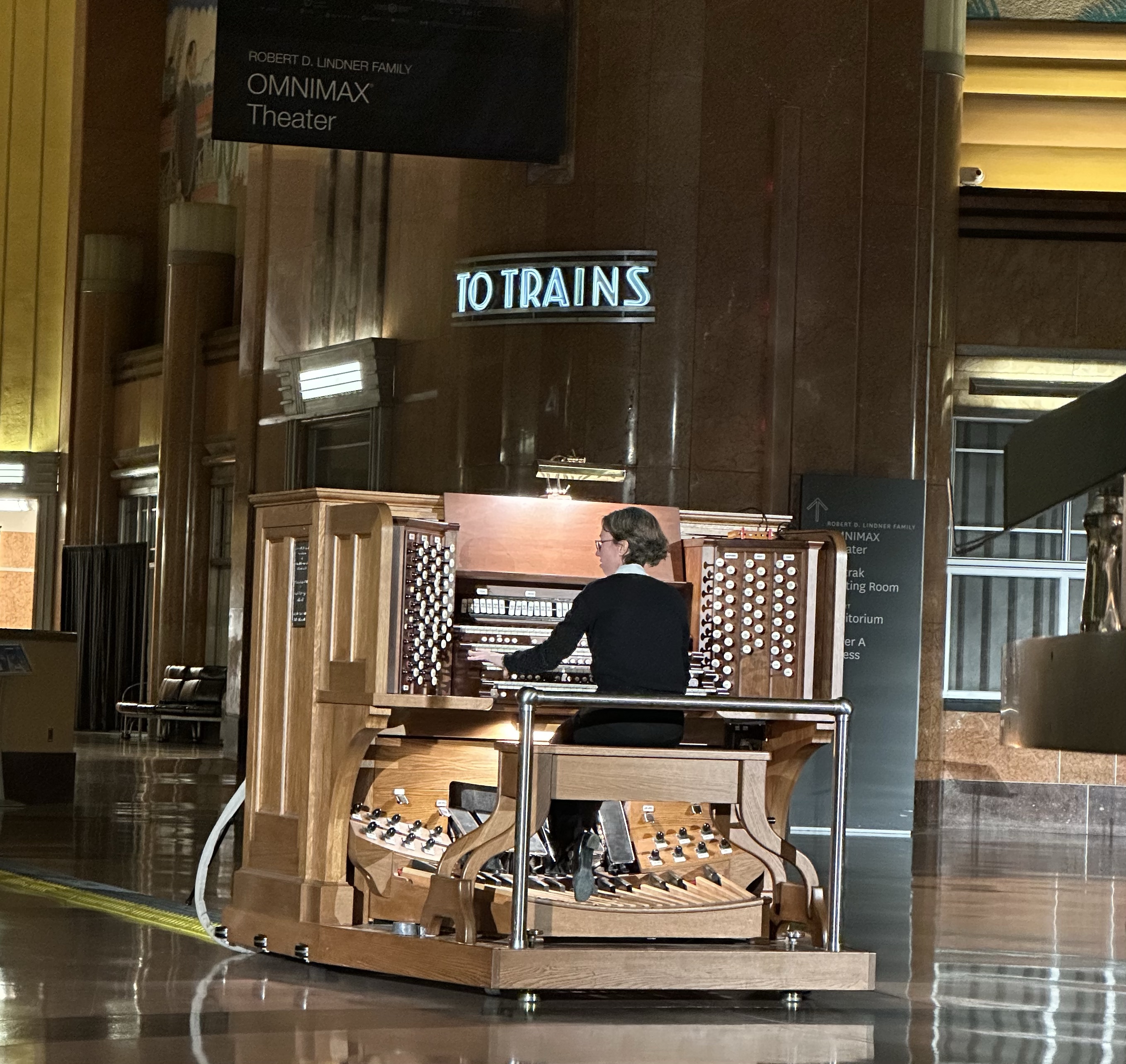
Music in the Museum — On Nov. 29, I joined hundreds of organ aficionados to hear organ virtuoso Isabelle Demers perform the first concert on the Music in the Museum series in eight years. The series features the Grand E.M. Skinner Organ in the cathedral-like acoustics of the Rotunda at Cincinnati Museum Center at Union Terminal. Demers performed a program that ranged from “Star Wars” selections to Three Impromptus by Samuel Coleridge-Taylor. For me, there were two standouts. Demers performed the Adagio movement of Joaquin Rodrigo’s Concierto de Aranjuez for guitar and orchestra, but instead of guitar, the soloist was Rick VanMatre on saxophone. He stood quite a distance from the organ, perhaps because of the reverberant acoustics, and his playing was mellow and beautifully phrased. VanMatre’s virtuosic cadenza wowed the audience. Demers provided her own wow factor in her transcription of Stravinsky’s “The Firebird Suite.” She reproduced every orchestral sound of the difficult score on the organ. It was a magical and thrilling performance.
In the audience was Michael Berone, host of “Pipedreams” on American Public Media, who told the large crowd assembled, “There is no other organ like this in this kind of setting, anywhere. You have a treasure.”
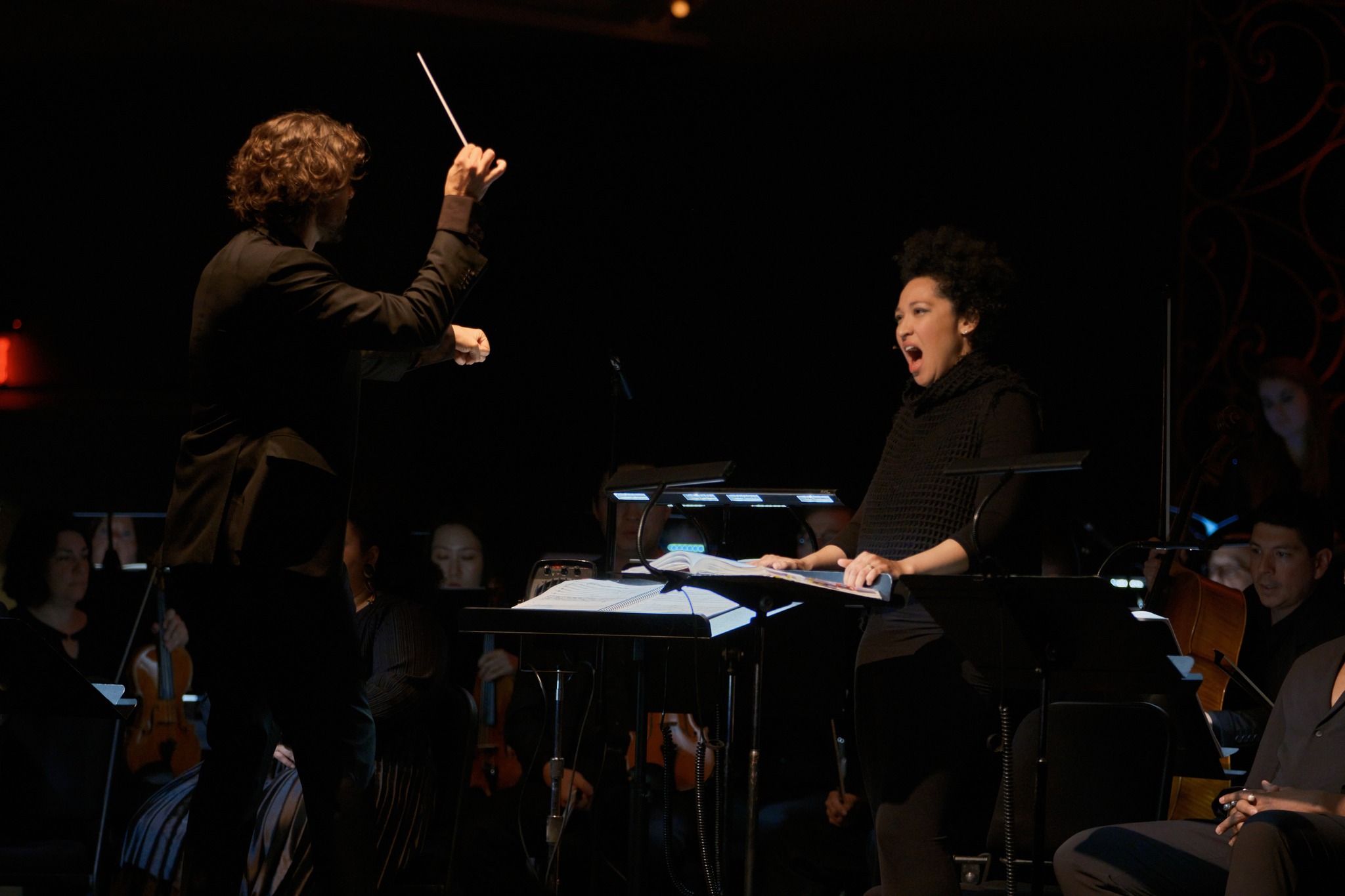
El Niño: Nativity Reconsidered — On Nov. 30, conductor Christian Reif returned to the CSO to lead a powerhouse cast of singers in “El Niño: Nativity Reconsidered,” a reimagining of the oratorio by John Adams, in a CSO Proof concert held in the Ballroom at Music Hall. Reif is credited with the arranging of the score. It is a collaboration with his wife, the soprano Julia Bullock, who said when she heard the original work by Adams and Peter Sellars, that she was inspired “to find a way to share it with as many people and communities as possible.”
Because we heard the full “El Niño” in the 2022 Cincinnati May Festival, it was fascinating to hear the one-hour version, performed by a chamber-sized orchestra of CSO musicians and small chorus. The superb cast included Bullock, performing with contralto Jasmin White, countertenor Anthony Roth Costanzo (instead of a trio of countertenors) and bass-baritone Davone Tines.
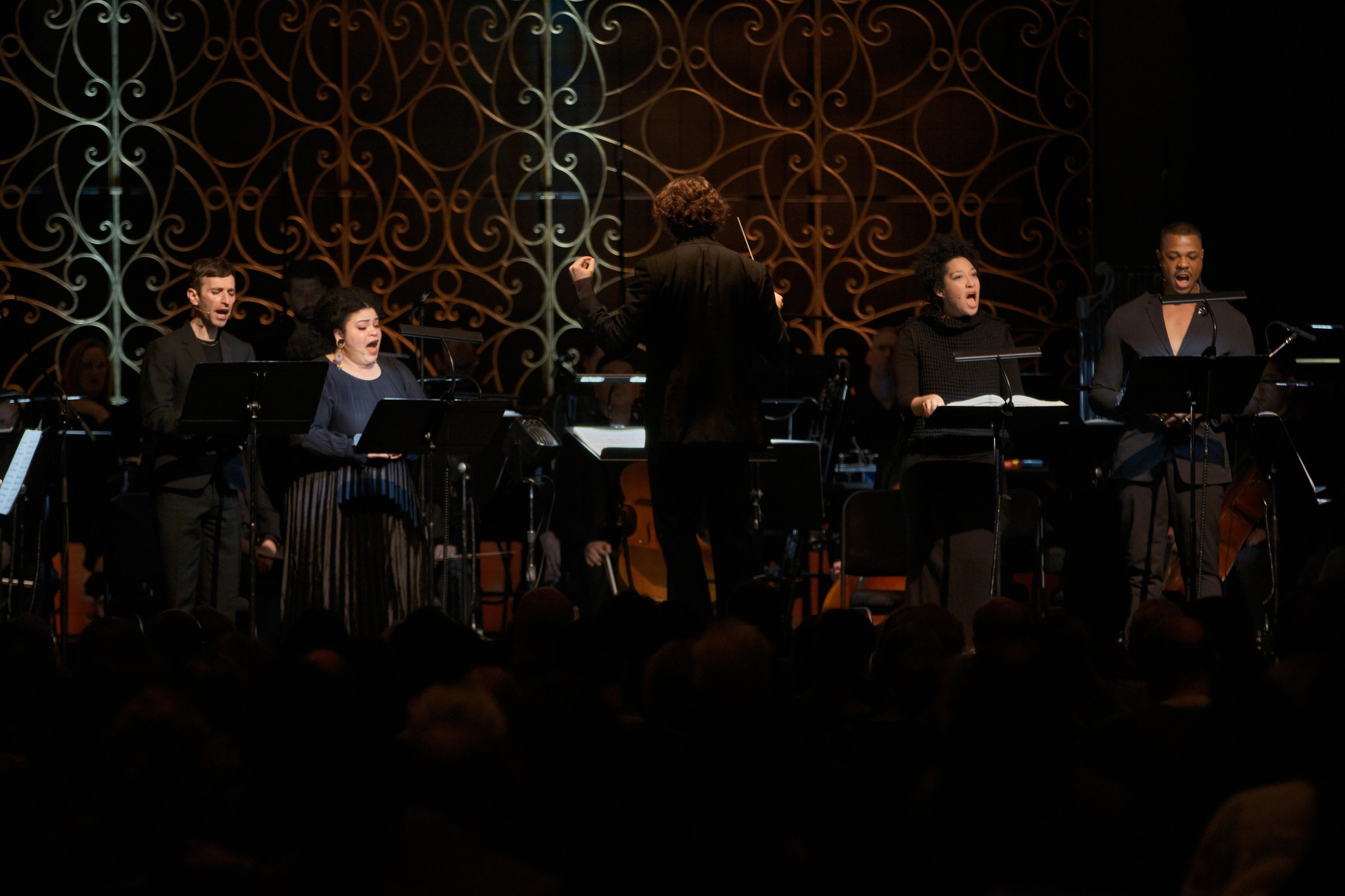 Adams wrote that he always wanted to write his own “Messiah.” His is a Nativity oratorio of a different kind, that refers to not only the birth of Jesus, but also the experience of a woman giving birth. The libretto by Adams and Sellars uses the King James Bible, but also poems by Rosario Castellanos, Gabriela Mistral, the 12th-century visionary Hildegard von Bingen and many others.
The soloists were superb. I especially enjoyed White’s contralto, both strong and rich, in “Because my Lord was born to suffer” (Sor Juana Ines de la Cruz). It included lovely singing from the chorus against the concertmaster’s ostinato and glinting sounds in the orchestra. Tines’ caught all the drama of “Shake the Heavens,” singing the vocal melismas with intensity. And it was a treat to hear Costanzo in the roles of the Three Wise Kings. He soared into his high voice seamlessly.
Bullock shone throughout, but especially in her dramatic and emotional performance of Castellanos’ “In Memory of Tlatelolco,” a poem about the 1968 massacre of government protestors in Mexico City. The searing power of her voice reflected the pain of the text as she related the story against red lighting.
It was a radiant performance. Others have dissected the differences between this version and the original. I did enjoy the small orchestra, which was evocative and captured the mystery and color of each moment. The small forces make it much easier to program, and it was especially relevant to this season. But when the charming folk tune “A Palm” arrived, I felt it was over all too soon. I hope it will awaken many others to want to hear the original piece.
Discover more from janellesnotes
Subscribe to get the latest posts sent to your email.

I don’t know why but I have never gotten use to theCincinnati tradition of publicizing concerts after their occurrence.
LikeLike