
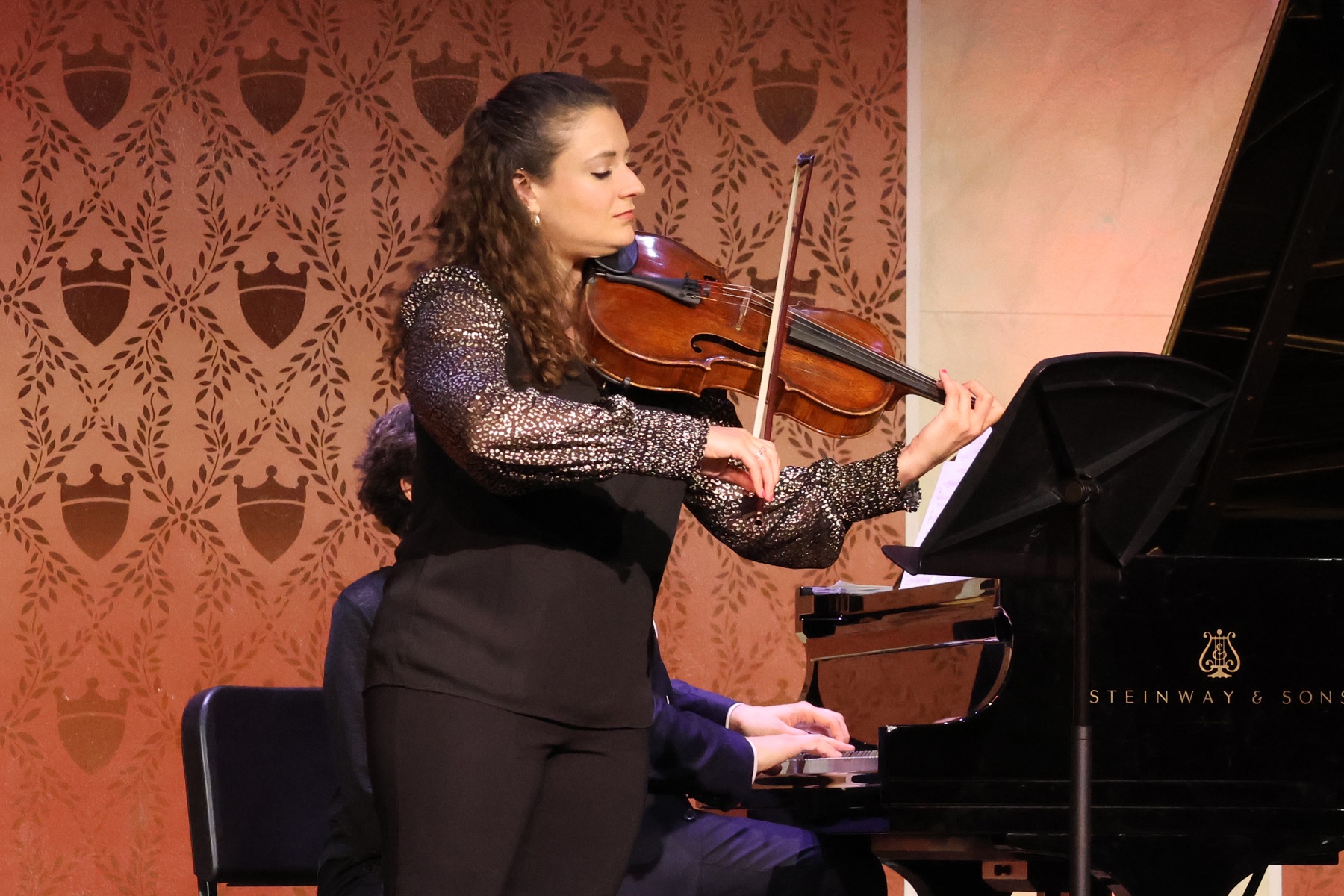
It’s unusual to hear an entire program of music written for the viola. The recital on Sept. 15 in Memorial Hall by violist Milena Pajaro-van de Stadt and pianist Adam Golka was a rare treat.
They opened the Matinee Musicale concert season with an inventive program that included music by two women composers, born 100 years apart. Pajaro-van de Stadt called it “a love letter to the viola.”
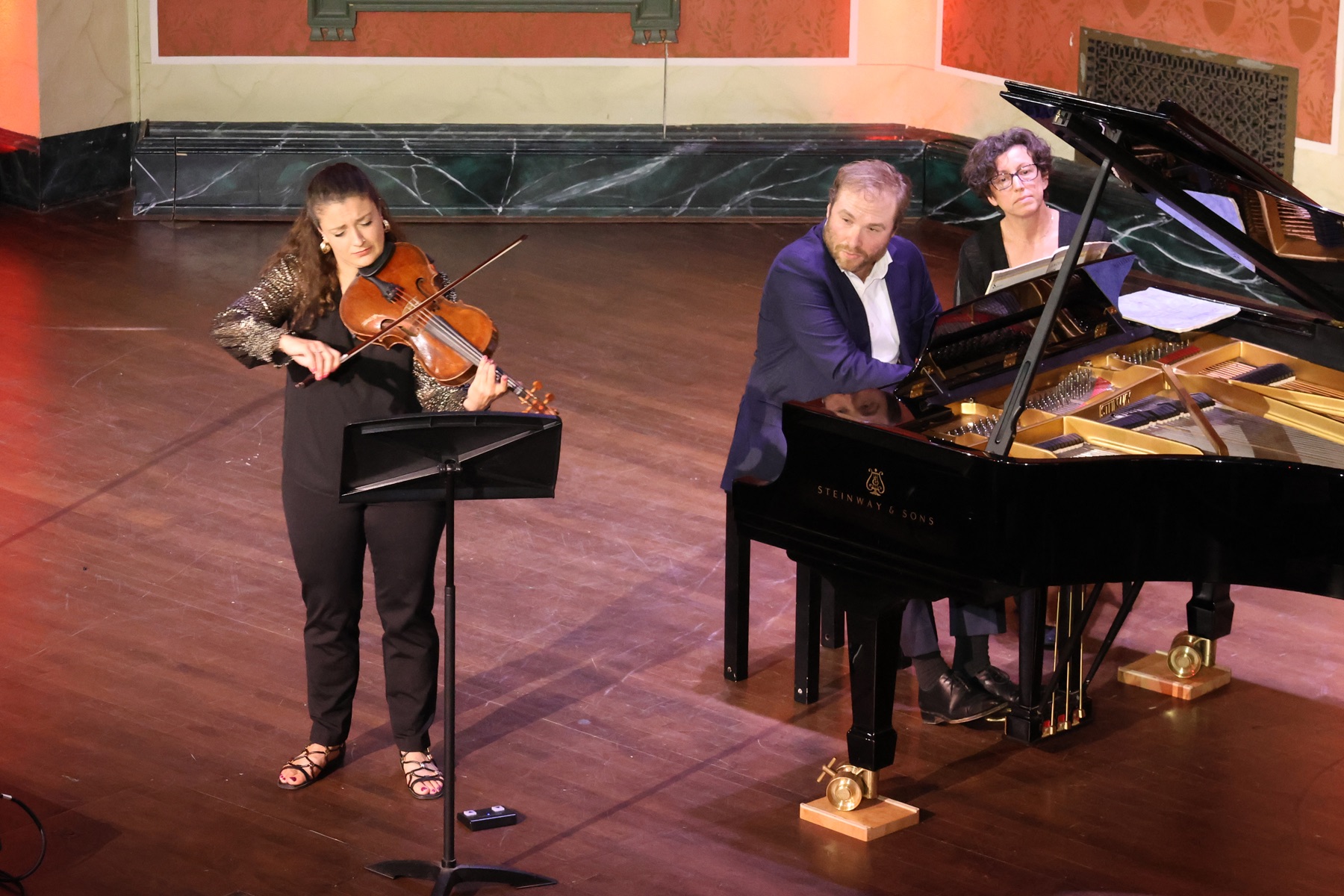 Brahms’ Sonata Op. 120, No. 2 in E-flat Major was the perfect introduction to this duo. (The work was originally written for clarinet and piano.) I was instantly struck by the rich, compelling tone of Pajaro-van de Stadt’s instrument. The warmth was palpable in her phrasing, and she took her time to allow the music to breathe in this wonderful, autumnal work.
Golka was a superb partner, and balanced her playing with beauty in the more intimate moments. He provided plenty of power in Brahms’ sudden outbursts for the piano, but I felt at other times, he needed to hold back to allow the viola to shine. Perhaps the issue was the very bright acoustics of the hall, or that fact that he elevated the piano a few inches on blocks to accommodate his long legs… However, it was a magnificent interpretation, deeply felt by each player, and they communed together as one.
Hindemith’s Viola Sonata in F, Op. 11, No. 4, was an early work (1919) by this composer, who was also a violist, and perhaps most familiar for his Mathis der Maler for orchestra. It was a massive fantasy that was full of contrasts. The duo soared through mountains of virtuosities that he wrote for each artist.
The artists opened the second half with “Where things weigh nothing at all,” by Michelle Ross, a young and gifted composer who, Golka said, was a friend of theirs. The pianist performed with the composer’s handwritten score, on which she had written inscriptions such as, “Of course it was a dream, of course it was a tale.” I loved this dream-like work, which built seamlessly to two peaks, featuring rhapsodic writing for the viola and delicate tones in the piano.
The program concluded with Rebecca Clarke’s Sonata for Viola and Piano of 1919. It takes its cue from Impressionism, and one could admire harmonies and atmospheres evoking both Debussy and Fauré.
The Sonata opened with a long cadenza for viola against lush chords in the piano. Pajaro-van de Stadt’s tone on her viola was stunning throughout its register, whether she was performing impassioned tremolos (once in muted harmonics on her strings) or long-breathed themes. I enjoyed the quick, staccato second movement, a “scherzo” that played out like a game of cat and mouse between the musicians. The finale was alternately impassioned and deeply interior. (Again, I wished for a bit less sound from the piano.) Their phrasing grew in intensity and color to an exciting finish.
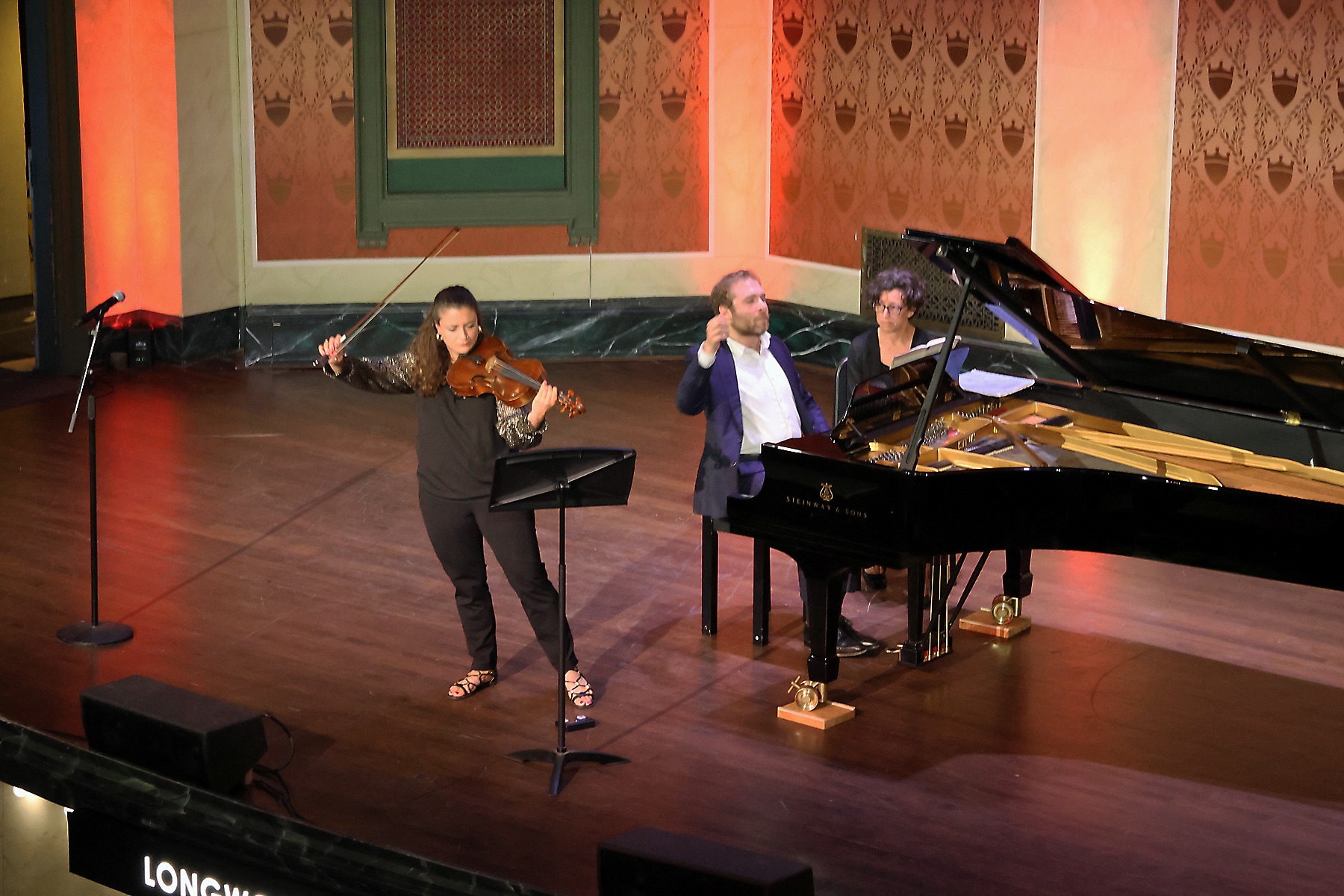 Pajaro-van de Stadt has a few ties to Cincinnati. Former CCM faculty member Michael Klotz (former of the Amernet Quartet) inspired her to take up the viola, she told me later. She was also founding violist of the twice Grammy-nominated Dover Quartet, which played for Matinee. And Linton Series aficionados also know that she is a member of the newly formed Espressivo! Piano Quartet, with Jaime Laredo, Sharon Robinson and Anna Polonsky.
CSO fans won’t want to miss the next concert of Matinee Musicale, 3 p.m. Oct. 13, when Richie Hawley, former CSO principal clarinetist, performs a recital with pianist Conor Hanick. Click here for tickets and more info: matineemusicalecincinnati.org/
Discover more from janellesnotes
Subscribe to get the latest posts sent to your email.
