
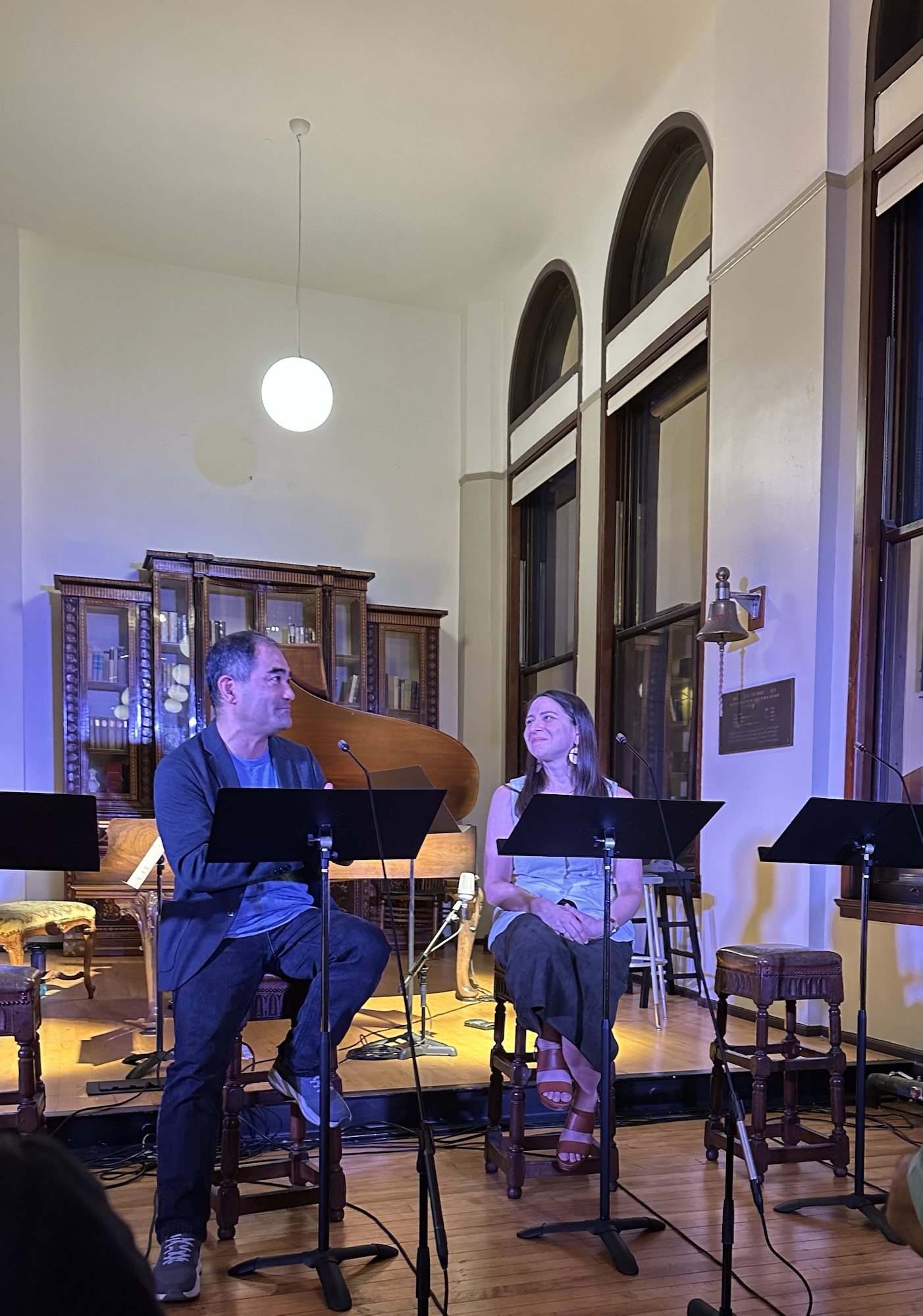
I witnessed an extraordinary work of “performance art” on Monday night (Sept. 29). The Cincinnati ensemble concert nova, now led by Brianna Matzke, presented the Cincinnati premiere of “Borrowed Landscape” by Dai Fujikura, to texts by the German playwright duo Tauchgold, at the Mercantile Library. Concert nova presented it as a memorial to the 80th anniversary of the bombing of Hiroshima and Nagasaki, in partnership with the Peace Resource Center at Wilmington College.
“Borrowed Landscape” tells the stories of three remarkable instruments and their owners, all connected to the war. There was a famous Stradivarius violin, which had gone silent in Budapest, a double bass from Poland, which was being restored years after its former owner had fled the Holocaust, and a Baldwin upright piano, which had survived the bombing of Hiroshima, although its young owner, Akiko, had not. Fujikura orchestrated his piano trio for violin, bass and piano according to their stories.
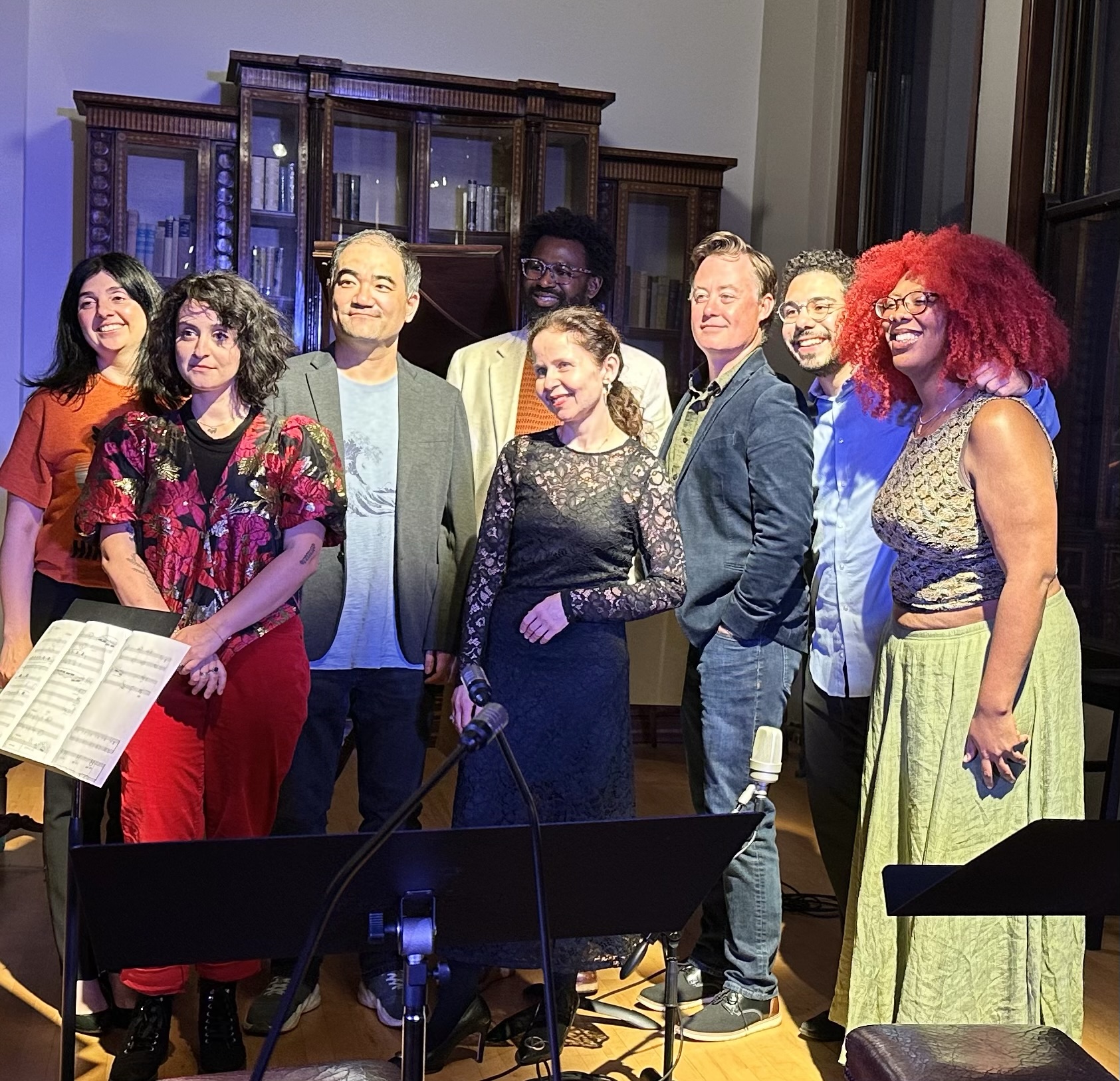
It was conceived as a “narratorio,” a hybrid of a narrative and oratorio. That description made sense when the work began. Four actors (TaShauna Jenkins, Darnell Pierre Benjamin, Daniela Nenova and Justin McCombs) enunciated the stories both as soloists and in ensemble, sometimes in a kind of echoing counterpoint that was quite effective. Their recurring “chorus” tied the piece together.
Fujikura’s music for the three instrumentalists — violinist Ann Reider, bassist Luis Celis and pianist Anna Vinnitsky — was alternately haunting, slightly humorous and ravishing. The music usually served as interludes between the stories.
The main theme played by Reider had a melancholy tinge, and she performed it with beautiful expression. The bass had jazz-inflected moments of pizzicato set against the spoken words. There was a wonderful staccato trio for the musicians, a haunting “song without words” for the violin, and a wailing solo for the bass. A lush, extensive solo for the piano ended with high cascades in the treble register, like shimmering stars.
The effect was lyrical, poetic and, in the end, even profound. It asked us to remember, and asked questions such as “Do objects carry memory?”
The composer for present for the premiere, and told the audience that it was fitting the work should be performed in Cincinnati, where the Baldwin Piano Company had been founded, and where Akiko’s piano had been built. It was also the first time he had witnessed this work in person. He explained a bit about its genesis, saying he had spent several weeks just experiencing the special piano, which had survived the bombing of Hiroshima and still has shards of glass embedded in it. He spent hours talking to the man who had restored the instrument, who was more interested in the fact that it was American than its story, he said.
Today, “Akiko’s piano,” the little Baldwin built in Cincinnati in 1926, remains in Japan as a symbol of peace.
Later, he told me he’d had misgivings while he was composing the piece, worrying that his music would be depressing. For me, it is a work of beauty, and its impact still lingers and makes me think. I hope that would be the goal of any composer.
Discover more from janellesnotes
Subscribe to get the latest posts sent to your email.

A terrific review! You really nailed it. Many thanks. Sent from my iPhone
LikeLike
Thank you for this edifying article, Janel
LikeLike